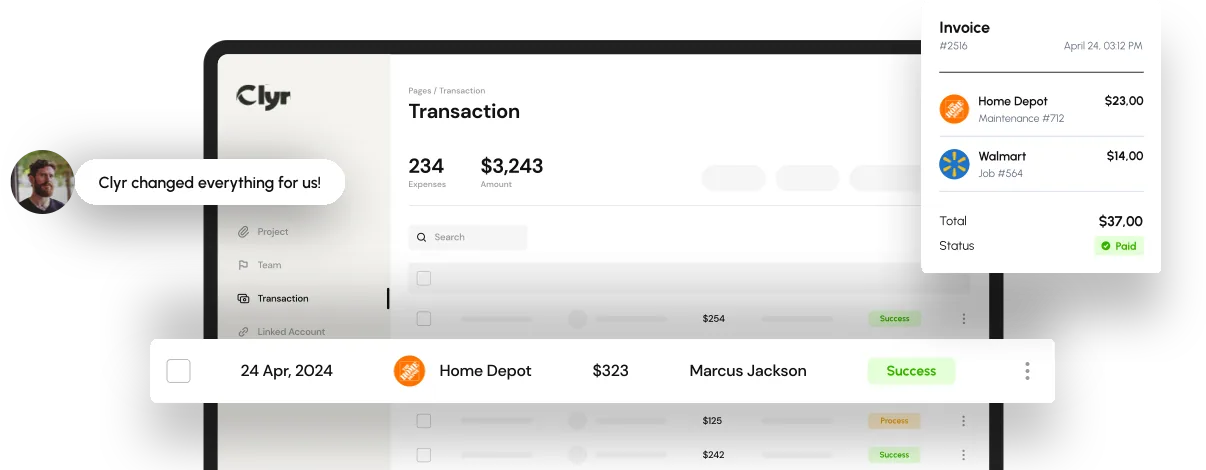

T&E stands for travel and expense, the costs employees incur while traveling for work and the process companies use to track, approve, and reimburse them. T&E covers airfare, hotels, meals, mileage, and client entertainment, along with the policies and software that keep those costs organized and compliant.
If you have seen "what is t and e" in a policy document or an accounting spreadsheet, it means the same thing: a spending category and the paperwork trail that follows it from purchase to reimbursement.
What Does T&E Actually Cover?
T&E covers every dollar spent getting an employee from their desk to a client site, a job, a conference, or back home, plus the meals and incidentals along the way. That includes flights, rental cars, rideshares, hotel stays, parking, tolls, and the meals purchased while traveling for business.
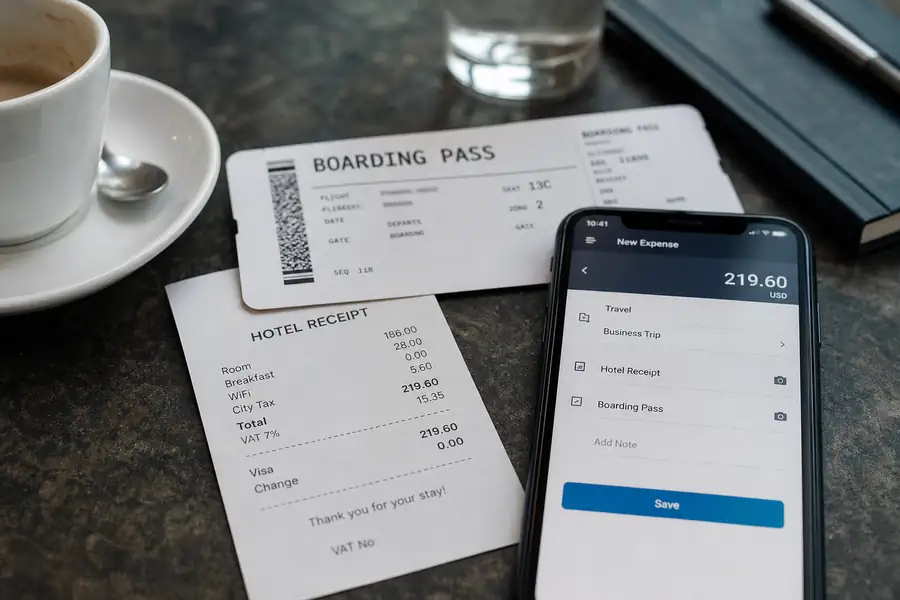
It also covers the administrative side: the expense report itself, the receipts attached to it, the approval that routes it to a manager, and the reimbursement that eventually lands in the employee's bank account. When people ask what T&E stands for, they usually mean both halves at once, the spending and the process wrapped around it.
Common T&E Expense Categories
Most T&E policies group spending into a handful of recurring categories, which makes it easier to budget, audit, and code costs correctly.
- Transportation: airfare, rail, rideshare, rental cars, and mileage for personal vehicles used on business trips.
- Lodging: hotels, extended-stay housing, and short-term rentals booked for work travel.
- Meals and per diem: individual meals or a flat daily allowance set by company policy.
- Client entertainment: meals, event tickets, or activities used to build or maintain a business relationship.
- Incidentals: parking, tolls, baggage fees, wifi, and other small trip costs that add up fast.
For a closer look at how these line items actually show up on a report, this guide to business travel expense reports walks through what finance teams expect to see and why.
Why the T&E Meaning Matters for Your Business
Getting the T&E meaning right matters because travel and expense spending is typically the second or third largest controllable cost for a company with a mobile workforce, right behind payroll. Left unmanaged, it is also one of the easiest categories to lose track of.
A vague or undefined T&E policy leads to inconsistent approvals, mismatched receipts, and coding errors that surface weeks later during month-end close. For a construction crew or a field service team, the stakes are higher still, because every trip and every purchase usually needs to tie back to a specific job. Clean T&E tracking, of the kind built into expense management for construction teams, keeps that job-costing data accurate instead of reconstructed after the fact.
For consulting firms and other client-billed businesses, T&E also determines what gets passed through to a client invoice and what the company absorbs. Get the categories wrong and you either eat costs you should have billed or bill a client for something you should not have.
How Companies Manage T&E Today
Most companies manage T&E through some combination of corporate cards, paper or digital expense reports, and accounting software, though the manual version of that process is what causes most of the pain. Someone still has to collect receipts, match them to card statements, and key the totals into the books by hand.
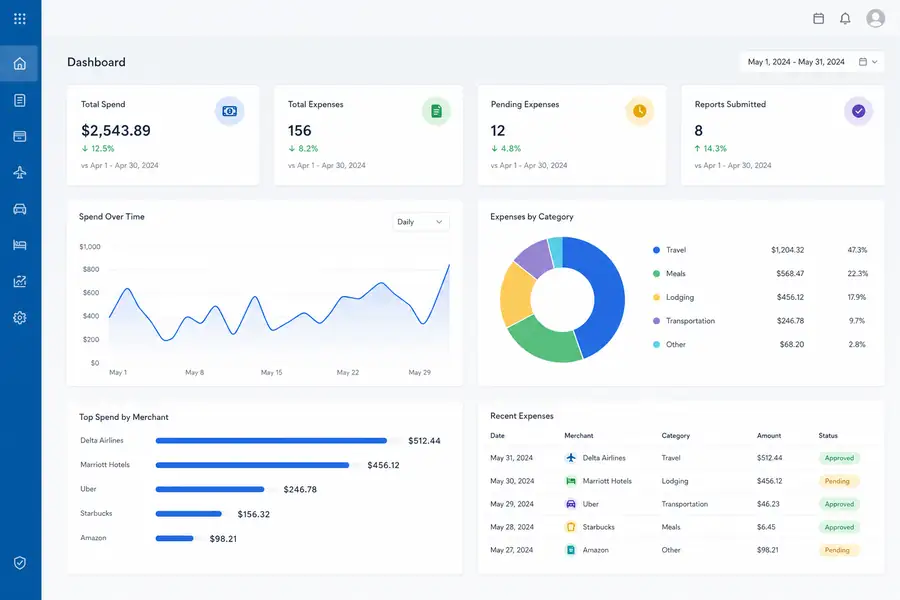
Modern expense management software replaces most of that manual work. Receipts get captured on a phone the moment a purchase happens, spending gets coded to the right job or client automatically, and approved transactions sync straight into the general ledger instead of sitting in a spreadsheet waiting for someone to type them in. This explanation of travel and expense management automation covers how that shift actually changes a finance team's week.
Clyr is built specifically for teams whose spending happens away from a desk. Field crews snap a photo of a receipt, the transaction is coded and matched in real time, and the data flows into QuickBooks without anyone re-entering it later.
T&E Mistakes That Cost Businesses Money
The most expensive T&E mistakes are almost always about timing and documentation, not the spending itself.
- Late submission: receipts turned in weeks after a trip are harder to verify and easier to miscode.
- Missing receipts: without a photo or paper trail, expenses either get rejected or accepted on trust, neither of which is good policy.
- No written T&E policy: managers approve inconsistently, and employees guess at limits that were never written down.
- Manual data entry: retyping card statements into a spreadsheet or accounting system introduces errors and duplicate payments.
Fixing this usually starts with picking a system built around how a team actually spends, whether that means job sites, client visits, or the road. If manual T&E tracking is still eating a week every month, it is worth seeing what changes when receipts and coding happen automatically. You can book a demo to see how Clyr handles card transactions and receipts for travel and field teams.
FAQs
What does T&E stand for in business?
T&E stands for travel and expense. It refers to the costs an employee incurs while traveling for work, such as flights, hotels, meals, and mileage, plus the reporting and reimbursement process built around those costs.
What is the difference between T&E and expense management?
T&E is a category of spending, specifically travel-related costs. Expense management is the broader system, covering software, policy, and workflow, that a company uses to track, approve, and reimburse all types of business expenses, T&E included.
Is per diem part of T&E?
Yes. Per diem is a flat daily allowance for meals and incidentals during business travel, and it is one of the most common categories inside a company's T&E policy. Some companies use per diem instead of requiring individual meal receipts.
What is a T&E policy?
A T&E policy is a written document that sets the rules for business travel spending: which expenses are reimbursable, what limits apply, how approvals work, and what documentation employees need to submit. A clear policy reduces disputes and speeds up reimbursement.
How do companies track T&E expenses?
Companies track T&E through corporate cards, expense reports, and accounting software, ranging from manual spreadsheets to automated systems that capture receipts and code spending in real time. The manual approach works for very small teams, but it tends to break down once travel volume or headcount grows.