Business travel is back in full force. Teams are flying to client meetings, conferences, site visits, and regional offices more than ever. But while travel activity has accelerated, many finance teams are still managing expenses using outdated processes that were never designed for today’s pace. This gap is exactly why travel and expense management automation has become a core operational priority for growing companies.
Manual reports, missing receipts, delayed reimbursements, and policy violations are no longer just annoyances. They directly affect cash flow, employee satisfaction, compliance, and financial visibility. Automating how travel expenses are captured, approved, and reported allows organizations to operate with clarity instead of chaos.
Key takeaways
- Travel and expense management automation replaces manual reporting with real-time, structured workflows
- Automation reduces errors, speeds up reimbursements, and improves policy compliance
- Finance teams gain live visibility into travel spending across cards, employees, and locations
- Employees spend less time on admin and more time on productive work
- Modern systems scale easily as travel volume increases

What Is Travel and Expense Management Automation?
At its core, travel and expense management automation refers to the use of software to handle the full lifecycle of employee travel expenses without relying on spreadsheets, paper receipts, or manual data entry.
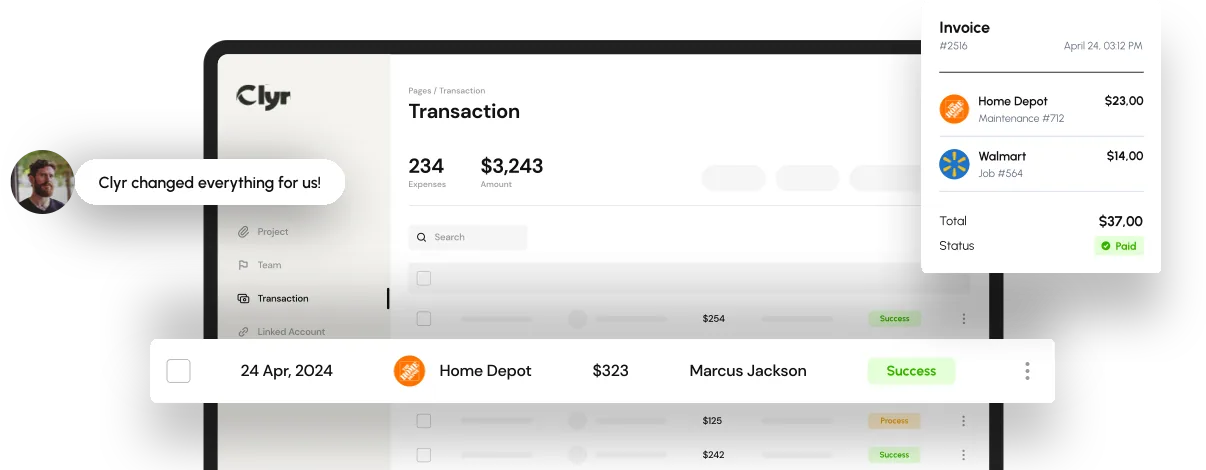
Instead of collecting receipts after a trip and submitting a report days or weeks later, automated systems capture expenses as they happen. Transactions are recorded in real time, receipts are attached automatically, and expenses are categorized and routed for approval based on predefined rules.
This approach eliminates the traditional back-and-forth between employees and finance teams. It also ensures that travel expenses are visible, compliant, and accurate from the moment they occur.
Why Manual Travel Expense Management No Longer Works
Many companies still rely on processes that made sense a decade ago: expense spreadsheets, email approvals, and monthly reconciliation. These methods break down quickly as travel activity increases.
Common issues include:
- Lost or unreadable receipts
- Expenses submitted weeks after the trip ends
- Incorrect categorization of hotels, flights, and meals
- Policy violations that are only discovered after reimbursement
- Long reimbursement cycles that frustrate employees
As travel becomes more frequent and more global, these problems multiply. Travel and expense management automation addresses these pain points by shifting expense control from reactive to proactive.
How Travel Expense Automation Changes the Workflow
Travel expense automation fundamentally changes how expenses move through an organization.
Instead of:
- Employee pays out of pocket
- Saves receipts
- Fills out a report later
- Finance manually reviews and corrects
The automated flow looks like this:
- Transaction happens on a company or personal card
- Employee receives a real-time notification
- Receipt is captured immediately via mobile or email
- Expense is automatically categorized
- Approval rules are applied instantly
- Data syncs to accounting systems
This shift reduces friction at every step. Employees no longer need to remember what they spent three weeks ago, and finance teams no longer chase missing information.
The Role of Travel and Expense Automation in Policy Compliance
One of the biggest advantages of travel and expense automation is policy enforcement.
In manual systems, policies exist mostly on paper. Employees may not remember spending limits, approved vendors, or per-diem rules. Finance teams often discover violations only after expenses are reimbursed.
Automated systems embed policy rules directly into the workflow. For example:
- Meal limits are checked automatically
- Hotel rates are validated against policy
- Restricted expense categories are flagged immediately
- Approval paths adjust based on amount or location
This doesn’t just improve compliance. It removes awkward conversations and retroactive corrections, creating a smoother experience for everyone involved.
Real-Time Visibility Into Travel Spending
Traditional expense management provides historical data. By the time finance teams see the numbers, the trip is already over and the money is already spent.
Travel and expense management automation provides real-time visibility instead. Finance leaders can see:
-Current travel spending by department or region
-Outstanding receipts and unsubmitted expenses
-Policy exceptions as they occur
-Trends across vendors, routes, and trip types
This live view allows companies to adjust budgets, spot inefficiencies, and make informed decisions while travel is still in progress, not weeks later.
Faster Reimbursements and Better Employee Experience
Few things damage employee trust faster than delayed reimbursements. When people pay for flights, hotels, or meals out of pocket and wait weeks to be reimbursed, frustration builds quickly.
With travel expense automation, reimbursements are processed faster because:
- Expenses are submitted immediately
- Data is already validated
- Approvals happen automatically
- Finance teams don’t need to correct errors
This leads to quicker payouts, fewer disputes, and a much better experience for employees who travel frequently.
Scaling Travel Operations Without Adding Headcount
As companies grow, travel volume increases. Without automation, this usually means hiring more finance staff just to keep up with expense processing.
Travel and expense management automation allows organizations to scale travel activity without scaling administrative overhead. The same finance team can handle more travelers, more trips, and more transactions simply because the system does most of the work.
Automation also standardizes processes across teams and locations, which is especially important for companies operating internationally.
Global Travel, Multiple Currencies, One System
Managing international travel adds complexity: multiple currencies, tax rules, card types, and local regulations.
Modern travel and expense automation platforms handle:
- Automatic currency conversion
- Consistent categorization across countries
- Centralized reporting regardless of where expenses occur
- Compliance with local tax and accounting requirements
This consistency is nearly impossible to achieve with manual processes, especially at scale.
Integration With Accounting and Financial Systems
Automation is most powerful when it doesn’t operate in isolation.
A key benefit of travel and expense management automation is seamless integration with accounting, ERP, and payroll systems. Approved expenses flow directly into the general ledger, eliminating duplicate entry and reconciliation work.
This integration improves data accuracy and shortens the month-end close process, giving finance teams more time to focus on analysis instead of cleanup.
Security and Control in Automated Expense Management
Automation doesn’t mean less control. In fact, it often means more.
Automated systems include:
- Role-based access
- Approval hierarchies
- Audit trails for every expense
- Secure data storage and encryption
Every action is logged, making audits simpler and reducing the risk of fraud or misuse.
Choosing the Right Travel and Expense Automation Approach
Not all automation solutions are created equal. The most effective platforms are flexible, intuitive, and designed to fit real workflows, not force teams into rigid processes.
When evaluating options, companies should consider:
- Ease of use for travelers
- Real-time receipt capture
- Customizable approval rules
- Multi-card and multi-currency support
- Strong integrations with existing systems
The goal of travel and expense management automation is not just efficiency, but clarity and control across the entire organization.
The Future of Travel and Expense Automation
As business travel continues to evolve, automation will become even more intelligent.
Emerging trends include:
- AI-driven expense categorization
- Predictive policy enforcement
- Real-time budget forecasting
- Deeper insights into travel behavior and cost optimization
Companies that adopt travel and expense management automation today are better positioned to adapt to these changes without disruption.
Travel and expense management automation refers to using software to handle the entire expense lifecycle automatically, from the moment a travel-related transaction happens to final reconciliation in accounting systems. In practice, this means expenses are captured in real time, receipts are attached immediately, categories are applied automatically, and approval workflows are triggered without manual intervention. The goal is to remove spreadsheets, emails, and delayed reporting while improving accuracy and control.
Basic expense tracking simply records what was spent, often after the fact. Travel and expense management automation goes much further by enforcing policies, applying approval logic, integrating with accounting systems, and providing real-time visibility. Instead of reacting to expenses at the end of the month, finance teams can monitor travel spending as it happens and address issues immediately.
Yes, and this is one of its strongest benefits. Travel and expense automation embeds company policies directly into the expense workflow. Spending limits, approved categories, and required approvals are checked automatically at submission time. This prevents violations from slipping through unnoticed and reduces uncomfortable retroactive corrections after reimbursement.
Travel expense automation significantly shortens reimbursement cycles. Since expenses are submitted immediately with complete data, approvals happen faster and finance teams don’t need to chase missing receipts or correct errors. Employees get reimbursed more quickly and consistently, which improves trust and reduces friction for frequent travelers.
Absolutely. Modern travel and expense management automation platforms are built to support global operations. They handle multiple currencies, different card types, and centralized reporting across countries. This allows finance teams to maintain consistent oversight of travel expenses, even when employees are traveling internationally and spending in different currencies.