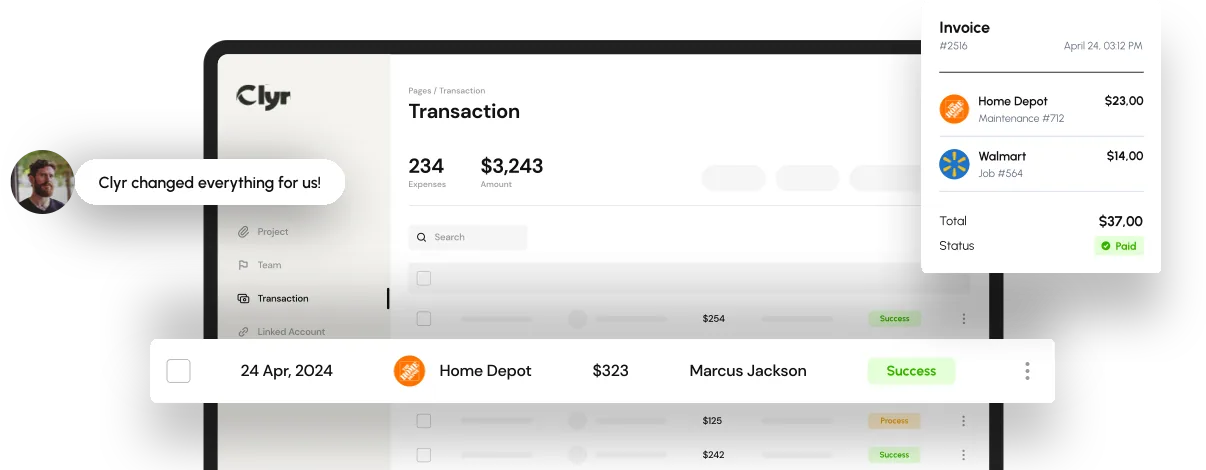

Receipt management represents far more than administrative efficiency - it’s a strategic opportunity to transform your financial operations.
With businesses achieving 300-500% ROI within 12 months of implementing modern receipt management solutions, understanding the landscape has become critical for competitive advantage.
The challenge isn’t finding a receipt management app; it’s selecting a solution that addresses your specific operational pain points while positioning your business for future growth.
This guide examines what business leaders actually need to know when evaluating receipt management technology.

Why Traditional Receipt Management Fails Modern Businesses
The Hidden Cost of Manual Processes
The hidden costs of manual processes extend far beyond obvious inefficiencies. Employees spend 30% of their workday searching for documents and receipts, creating bottlenecks that impact customer service, project delivery, and strategic initiatives.
Consider the cascading effects: field workers lose receipts between job sites, forcing teams to reconstruct expenses from memory or credit card statements. Finance teams chase employees for missing documentation weeks after transactions occur.
Projects face budget reconciliation delays that impact client relationships and cash flow management. Property management companies face unique challenges in tracking expenses across multiple properties.
Industry-Specific Operational Challenges
Industry-specific challenges reveal why generic solutions often disappoint. Construction workers resist complex interfaces, preferring simple text-based submission.
Healthcare organizations require HIPAA compliance integration with existing systems. Service companies need real-time expense allocation to maintain accurate project profitability.
The compliance burden grows heavier each year. Tax audits demand detailed documentation, while regulatory requirements vary by industry and geography. Manual systems create gaps that expose businesses to penalties and audit complications.

The AI Revolution in Receipt Management Technology
OCR and Processing Breakthrough
OCR accuracy has reached 99%+ with leading AI-powered solutions, fundamentally changing what’s possible. Modern systems excel at reading poor-quality images, handwritten receipts, and international formats while supporting 80+ languages, capabilities that seemed impossible just three years ago.
The cost efficiency proves remarkable: advanced AI processes 6,000 receipts for approximately $1, making enterprise deployment economically viable for businesses of all sizes.
More importantly, AI-powered categorization learns from your existing coding practices, achieving 95% accuracy in expense classification after minimal training.
Real-Time Processing Capabilities
Real-time processing eliminates traditional workflow delays. Employees photograph receipts at the point of purchase, with AI instantly extracting vendor information, amounts, dates, and tax details.
Automated policy checking flags violations immediately, while integration with corporate cards provides transaction matching within seconds. Learn more about real-time receipt capture and coding capabilities.
Mobile-First Design Evolution
Mobile-first design reflects changing work patterns, with 75% of businesses adopting mobile apps for expense management by 2025.
Modern solutions work offline, sync automatically, and provide push notifications for pending submissions, addressing the mobility requirements of field-based teams.
Essential Features vs. Marketing Hype: What Actually Matters
Real user feedback reveals significant gaps between vendor promises and actual experiences. While marketing materials claim 75% time reduction in expense processing, actual users report 30-50% time savings after full adoption, still substantial, but requiring realistic expectations for planning purposes.
Feature Evaluation Framework for Decision-Makers
When evaluating receipt management solutions, focus on capabilities that directly impact your operational efficiency and compliance requirements:
| Must-Have Features | Why It Matters | Nice-to-Have Features |
| 95%+ OCR Accuracy | Prevents costly manual corrections and audit issues | AI-powered vendor prediction |
| Native Accounting Integration | Eliminates double data entry and reconciliation delays | Advanced analytics dashboards |
| Mobile Offline Functionality | Ensures field workers can capture receipts anywhere | Customizable approval workflows |
| Real-time Policy Compliance | Prevents violations before they occur | Multi-language support |
| Bank-level Security (SOC 2) | Protects sensitive financial data | Blockchain verification |
| Automated Categorization | Reduces manual coding from hours to minutes | Predictive spending analytics |
Critical Functionality Assessment
High OCR accuracy (minimum 95%) across various receipt formats, including thermal paper, handwritten receipts, and poor lighting conditions. This isn’t just about convenience, accuracy directly impacts audit compliance and financial reporting reliability.
Seamless accounting integration with QuickBooks, Xero, SAP, and major ERP systems through APIs and dedicated connectors. Real-time synchronization eliminates reconciliation delays while automated journal entry creation reduces manual bookkeeping requirements. Discover how QuickBooks integration streamlines your financial workflows.
Mobile functionality with offline capabilities ensures field workers can capture receipts without internet connectivity, with automatic synchronization when connections are restored. This proves essential for construction, service, and sales teams working in remote locations. Explore advanced mobile receipt solutions.
Automated categorization and coding that learns from your existing practices, reducing manual classification from hours to minutes. Advanced systems integrate with your chart of accounts, project codes, and cost centers for accurate financial reporting. Discover how automation transforms expense management workflows.
Advanced features driving real value include AI-powered fraud detection that identifies duplicate submissions and suspicious patterns, multi-currency support for international operations, and custom approval workflows that reflect your organizational structure.
Security and Compliance: Non-Negotiable Requirements
Enterprise Security Standards
Enterprise-grade security has become the baseline expectation rather than a premium feature. SOC 2 Type II certification, GDPR compliance, and PCI DSS adherence are mandatory for serious business consideration. Leading providers implement 256-bit encryption, automated breach notification, and comprehensive audit trails.
Cloud security advantages outweigh on-premise concerns for most organizations. Major cloud providers offer military-grade security with dedicated security teams, automatic updates, and scalable threat detection. 94% of businesses report improved cloud security compared to on-premise alternatives.
Compliance Automation Benefits
Compliance automation reduces audit preparation time by 70% through built-in policy checks and regulatory requirement adherence. Real-time compliance monitoring prevents violations before they occur, while automated reporting capabilities support regulatory submissions and internal audit requirements.
Data ownership and portability remain critical considerations. Ensure contracts specify data ownership rights, export capabilities, and deletion procedures. Leading providers offer comprehensive data portability tools and transparent data handling policies.
Industry-Specific Receipt Management Requirements
Different industries face unique challenges that require specialized approaches to receipt management. Understanding your industry’s specific needs ensures you select a solution that addresses real operational problems rather than generic features.
Industry Requirements Overview
| Industry | Key Requirements | Critical Integrations | Compliance Focus |
| Construction | SMS-based submission, rugged mobile apps | Project management, job costing systems | Tax documentation, prevailing wage compliance |
| Healthcare | HIPAA compliance, audit trails | EHR systems, specialized accounting | Patient privacy, regulatory reporting |
| Professional Services | Client billing integration, time tracking | CRM, project management tools | Client confidentiality, engagement profitability |
| Manufacturing | Multi-location support, ERP integration | MRP systems, complex approval workflows | Global compliance, cost center allocation |
| Small Business | Affordable pricing, QuickBooks integration | Basic accounting software, minimal training | Tax preparation, cash flow management |
| Property Management | Multi-property tracking, vendor management | Property management systems, tenant billing | Real estate regulations, owner reporting |
Detailed Industry Considerations
Construction and Field Services require rugged mobile solutions that work in challenging environments. Simple SMS-based submission often proves more effective than complex apps for field workers. Integration with project management software and job costing systems ensures accurate project profitability tracking. See how construction companies optimize expense management.
Healthcare Organizations need HIPAA-compliant solutions with audit trails meeting regulatory requirements. Integration with EHR systems and specialized healthcare accounting platforms proves essential for operational efficiency and compliance management.
Professional Services benefit from client billing integration, allowing direct expense pass-through with proper documentation. Time and expense synchronization ensures accurate client billing while supporting profitability analysis by engagement. Explore specialized solutions for service companies.
Manufacturing Companies require integration with ERP systems and support for complex approval workflows reflecting organizational hierarchies. Multiple location support and currency handling accommodate global operations. Learn about manufacturing-specific expense management solutions.
Small Businesses need affordable solutions that integrate with basic accounting software like QuickBooks Online. User-friendly interfaces and minimal training requirements prove crucial for successful adoption with limited IT resources. Discover comprehensive expense management guidance for small businesses.
Implementation Strategy: From Evaluation to Optimization
Evaluation methodology should begin with extensive free trials using real data rather than demo accounts. Test OCR accuracy with your actual receipts, evaluate integration capabilities with your existing systems, and assess mobile functionality in your typical work environments.
Pilot program structure should involve 20-50 users representing different roles and locations. Focus on power users initially, employees who process significant expenses and influence others’ adoption. Their success creates momentum for a broader rollout while identifying implementation challenges early.
Best practices include executive sponsorship, phased rollout, and comprehensive training programs that address both technical functionality and behavioral change. Communication should emphasize benefits like faster reimbursements and easier submission processes rather than focusing solely on efficiency gains.
Success metrics should focus on measurable operational improvements: reducing processing time from 30-45 minutes to 5-10 minutes per report, increasing submission timeliness from 43% to 80%+ within 7 days, and decreasing error rates from 20% to under 5%.
Change management proves crucial for adoption, as resistance affects 60-70% of implementations. Training programs should provide multiple learning formats, ongoing support systems, and clear escalation procedures for technical issues. Bookkeepers can benefit from specialized automation workflows that enhance client service delivery.
Market Landscape and Vendor Selection Criteria
The digital receipt market is projected to reach $5.2 billion by 2034, driven by sustainability initiatives and operational efficiency demands. This growth attracts new entrants while forcing existing providers to enhance capabilities and competitive pricing.
Vendor landscape evolution shows SAP Concur maintains 49.6% market share, while emerging cloud-native platforms challenge traditional players through superior user experience and competitive pricing. The market experiences consolidation through strategic acquisitions, particularly in AI capabilities.
Technology investment priorities reveal businesses achieving $3.7 return on AI investments. Average AI deployment takes less than 8 months with value realization within 13 months, making AI-powered receipt management a strategic priority rather than experimental technology.
Immediate evaluation criteria should prioritize solutions with 99%+ OCR accuracy, native integration with existing accounting systems, and proven mobile capabilities. Security certifications (SOC 2, ISO 27001) are non-negotiable, while phone support and transparent pricing indicate vendor maturity and long-term viability.
Future-Proofing Your Receipt Management Strategy
Emerging Technology Integration
Emerging technologies like blockchain verification and generative AI interfaces are reshaping operational possibilities. Blockchain provides enhanced security and immutable audit trails, while generative AI enables ChatGPT-style interfaces for expense queries and policy clarification.
API-First Architecture Evolution
Integration evolution moves toward API-first architectures that connect seamlessly with emerging financial technologies. Open banking capabilities enable direct bank feed integration, while real-time payment systems reduce reimbursement delays from weeks to hours.
Sustainability and Environmental Impact
Sustainability initiatives drive digital receipt adoption, with environmental benefits complementing operational efficiency. Companies report a 40-60% reduction in paper consumption while improving document accessibility and retention compliance.
Predictive Analytics Capabilities
Predictive analytics capabilities enable proactive expense management through spending pattern analysis, budget variance prediction, and fraud detection. Advanced systems identify unusual patterns before they become problems, supporting proactive financial management.
Making the Strategic Decision
Receipt management technology represents a convergence of operational efficiency, compliance requirements, and strategic advantage. Organizations that approach selection strategically - focusing on user experience, security compliance, and integration capabilities, achieve substantial competitive advantages beyond simple cost reduction.
Setting Realistic ROI Expectations
Success depends on realistic expectations about implementation timelines and change management requirements. While ROI typically reaches 300-500% within the first year, implementation periods often increase workload before benefits are realized. Executive sponsorship and sustained organizational commitment prove essential for realizing full benefits.
Long-Term Strategic Positioning
Long-term positioning requires evaluating vendors based on both current capabilities and future roadmaps. The convergence of AI, automation, and regulatory pressure creates unprecedented opportunity for competitive advantage through financial operations efficiency.
Strategic Opportunity Assessment
The strategic opportunity extends beyond expense management to encompass financial visibility, compliance automation, and operational intelligence. Modern receipt management systems provide the foundation for data-driven financial decision-making while reducing administrative burden on high-value employees.
Conclusion: Transform Financial Operations with Strategic Receipt Management
Receipt management solutions offer transformational potential when approached strategically rather than tactically. The technology has matured beyond simple digitization to encompass AI-powered automation, real-time integration, and predictive analytics that redefine financial operations efficiency.
Success requires selecting solutions that address real operational problems while positioning for future technology advances. Organizations that recognize receipt management as a strategic capability gain sustainable competitive advantages through improved financial visibility, reduced compliance risk, and enhanced operational agility.
Clyr’s AI-driven receipt management platform provides the comprehensive solution business leaders need, combining 99%+ OCR accuracy, seamless accounting integration, and industry-specific workflows that transform expense management from an administrative burden to a strategic asset. The question isn’t whether to modernize - it’s how quickly you can implement technology that positions your business for continued growth and competitive advantage.
FAQs
Look for a minimum of 95% across real receipt formats, including thermal paper, handwritten receipts, and poor lighting conditions. Leading AI-powered solutions now reach 99%+ and handle international formats across 80+ languages.
Businesses typically report 300-500% ROI within 12 months. Marketing materials often claim a 75% reduction in expense processing time, but actual users report 30-50% time savings after full adoption, with processing dropping from 30-45 minutes to 5-10 minutes per report.
Six capabilities separate a working system from a demo: 95%+ OCR accuracy, native accounting integration, mobile offline functionality, real-time policy compliance checks, bank-level security, and automated categorization that learns your coding practices.
SOC 2 Type II certification, GDPR compliance, and PCI DSS adherence are baseline requirements, alongside 256-bit encryption, automated breach notification, and comprehensive audit trails. Contracts should also spell out data ownership rights, export capabilities, and deletion procedures.
Start with a free trial using real receipts, then pilot with 20-50 users across different roles and locations before a phased company-wide rollout. Plan for change management, since resistance affects 60-70% of implementations and workload often rises before benefits appear.
Significantly. Construction and field teams need rugged mobile or SMS submission tied to job costing, healthcare needs HIPAA-compliant audit trails, professional services need client billing integration, manufacturing needs ERP and multi-location support, and property management needs multi-property tracking with vendor management.