
 Compliance leaderboard
Make missing receipts a competition nobody wants to lose
The leaderboard ranks every cardholder by receipt and coding compliance. Automatic reminders nudge the stragglers. Peer pressure does the rest.
 What you get with Clyr
A number, a nudge, and nobody to chase

Compliance, scored
Every cardholder gets a score: receipts submitted (or properly marked lost) and coding completed. No judgment calls, no arguing with the number.

Nudges that do the chasing
Weekly reminders by text and email go to the people with open items, so managers never play collections agent.

A scoreboard, not a wall of shame
Top standings can be shared with the team; stragglers hear about it privately, from a bot, not their boss.
The problemReceipt compliance you do not have to chase
Every finance team has a collections job nobody applied for: chasing the same five people for the same missing receipts every month. Policy memos get read once. Spreadsheet shame lists get stale. And the person doing the chasing burns an afternoon a week being the bad guy.
Clyr already knows which transactions are missing receipts or coding, because every swipe is tracked from the moment it happens. The leaderboard turns that tracking into a score everyone can see and nobody can argue with.
How the score worksOne number per person, no judgment calls
A transaction counts as compliant when the receipt is submitted, or properly marked lost, and the coding is complete. That is the whole formula.
 Receipt submitted, or marked lost
Coding complete
Compliant transaction
Receipt submitted, or marked lost
Coding complete
Compliant transaction
Because Clyr captures receipts by SMS at the moment of the swipe, most of your team scores high without thinking about it: swipe, get a text, reply with a photo, done.
The score simply makes visible who closes their loop in the parking lot and who leaves it for month-end. Missing items are flagged on the transaction itself, so anyone can see exactly which receipts stand between them and a clean score.
How receipt capture works →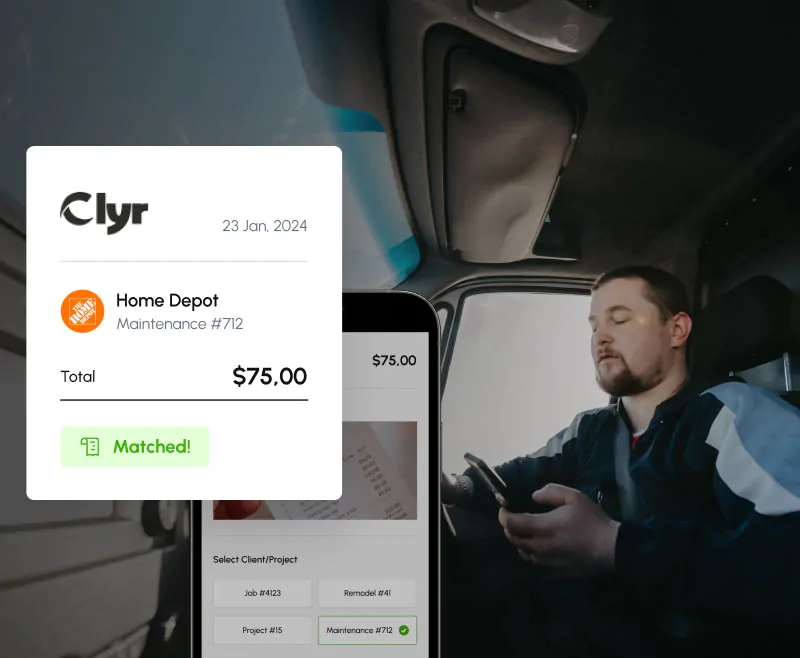
 Automatic nudges
The reminder comes from the system, not the boss
People with open items get a reminder by text and email on a weekly rhythm, listing exactly what is missing. It reads as a task notification, not a reprimand, and it keeps arriving until the item is closed. Your bookkeeper stops writing awkward follow-up emails; the follow-up writes itself.
Only the people with open items. Everyone else is left alone.
Exactly which transactions still need a receipt or coding.
Weekly, by text and email, until the items are closed.
 The design principle
Praise in public, chase in private
Share the top of the board with the team; let the bottom hear about it one-on-one, from the software. Recognition is public and cheap to give. Correction is private and automatic.
That split is the design principle behind the whole feature: the feedback is immediate, it is personal, and only the good half is public.
FAQFrequently asked questions
What counts as compliant?
A transaction with its receipt submitted, or properly marked lost, and its coding completed.
How do the reminders work?
Weekly, by text and email, sent only to people with open items, listing exactly which transactions need attention. They stop when the items are closed.
Is the whole ranking public?
No. The design is praise in public, chase in private: top standings can be shared with the team, while stragglers are reminded individually.
What do employees have to do to score well?
Reply to the text Clyr sends when they swipe. A photo of the receipt and their part is done; coding rules handle the rest.
Does gamification really work for receipts?
The leaderboard does not rely on competitiveness alone. The score makes missing items visible, the reminders make closing them effortless, and the public half only ever celebrates. People fix what they can see.
Get a demoSee it on your own spend
Book a 20-minute demo. Bring last month’s statement; we will show you exactly who would be top of your board, and how fast the bottom catches up.