Virtual cards and physical cards solve different problems for finance and operations teams, and most companies end up needing both, not one or the other. Virtual cards for business give instant issuance and a spend limit locked to one vendor, which makes them the right call for subscriptions, one-off vendor payments, and remote staff who need purchasing power without a card mailed to them. Physical cards still win at the pump, at in-person vendors, and anywhere a terminal requires a swipe or tap. The real question in the virtual vs physical card decision isn't which type wins, it's which fits each spending scenario across your team.
Key Takeaways
- Instant issuance: virtual cards for business generate in seconds, so a new hire or vendor payment doesn't wait on the mail.
- Locked spend limits: a virtual card can be capped to one vendor or one purchase, tightening spend control before money moves.
- Universal acceptance: physical cards still work at gas pumps, job-site suppliers, and any terminal that needs a swipe or tap.
- Lower fraud exposure: a virtual card number tied to a single merchant is far less useful to a fraudster than a physical card that stays live indefinitely.
- Most teams need both: field crews often carry a physical card for supply runs and use virtual cards for recurring vendor accounts.
Virtual vs Physical Card: Quick Comparison
A virtual card issues instantly and locks spend to a single vendor or purchase, while a physical card takes days to arrive but works anywhere a card reader exists. That tradeoff between speed and control against universal acceptance drives most of the decision below.
| Attribute | Virtual Cards | Physical Cards |
|---|---|---|
| Issuance speed | Instant, generated on demand | Days to ship, plus activation |
| Spend control | Locked limit per vendor or purchase | Broader limit, harder to restrict per use |
| Fraud exposure | Low: single-use or vendor-locked numbers | Higher: number stays live until canceled |
| Best for | Subscriptions, online vendors, remote staff | In-person purchases, fuel, job-site supply runs |
| Merchant acceptance | Online and card-not-present only | Anywhere a card reader exists |
| Loss or theft risk | None, no physical card to lose | Card can be lost, stolen, or shared |
What Is a Virtual Card for Business Teams?
A virtual card is a card number generated digitally for a specific vendor, employee, or purchase, with no physical plastic ever issued. It lives in a dashboard or app, gets assigned a spend limit and an expiration date, and can be shut off the moment the purchase or subscription ends.
What virtual cards do well
Virtual cards for business excel at recurring software subscriptions, one-time vendor payments, and giving a remote hire purchasing power without mailing plastic. Because each card can be locked to one merchant or one dollar amount, a manager can approve a $500 supply order without exposing the rest of the company card to that vendor. That kind of spend control is the main reason finance teams add virtual cards to a program that used to run on physical plastic alone.
Where virtual cards fall short
Virtual cards don't work at a card-present terminal, so a crew buying lumber at a counter or fueling a truck at the pump can't use one. Security is generally stronger than a physical card, since a compromised virtual card number only exposes the single vendor it was issued to, a point covered in more depth in our piece on virtual credit card security. But a program built entirely on virtual cards will leave field staff stuck at the register.

What Is a Physical Card for Business Teams?
A physical card is the plastic (or metal) card issued to an employee that works at any card-present terminal, from a gas pump to a supply counter. It ships to the cardholder, takes a few days to activate, and stays active until the company cancels it.
What physical cards do well
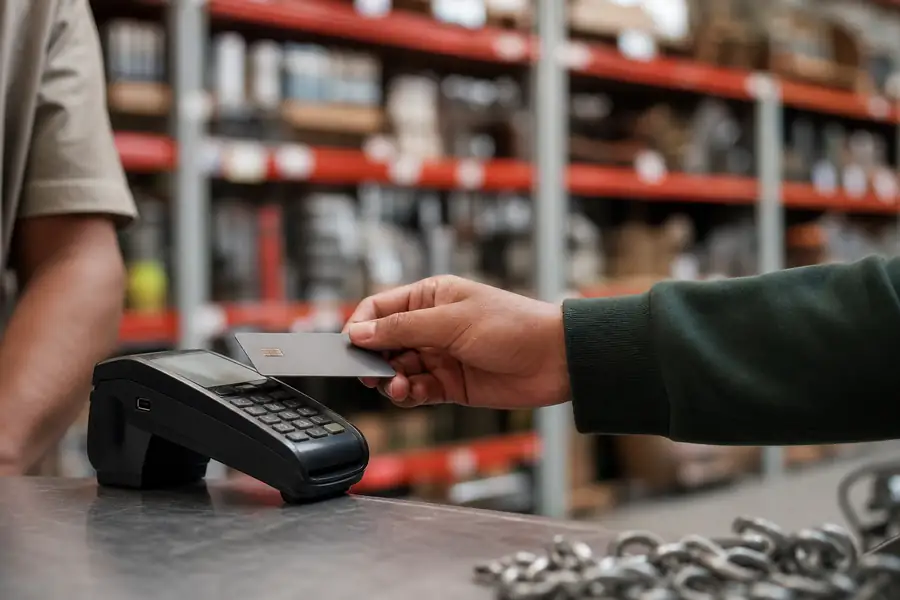
Physical cards are the only option anywhere a merchant requires a physical swipe or tap: fuel stations, hardware stores, and most in-person vendors. Field service and construction crews depend on them for the same-day supply runs that come up on a job site, where waiting on an online checkout isn't practical.
Where physical cards fall short
A physical card carries broader risk once issued. It can be lost, shared among a crew, or used well past the purchase it was meant for, since the number stays live until someone cancels it. That ongoing exposure is exactly why many finance teams pair physical cards with tighter expense management software that flags unusual spend and requires a receipt for every charge.
When Virtual Cards Make Sense vs When Physical Cards Do
The right card type depends on where the purchase happens and who is making it, not on a blanket company policy. A property management company paying a recurring landscaping vendor should issue a virtual card locked to that vendor and that monthly amount. A construction crew buying rebar at a supply yard needs a physical card in hand.
- Remote or hybrid staff: virtual cards let finance issue purchasing power without mailing anything.
- Field crews and job sites: physical cards cover same-day, in-person purchases a virtual card can't touch.
- Software and subscriptions: virtual cards locked per vendor prevent surprise renewals from draining a shared card.
- One-off vendor payments: a single-use virtual card closes the account the moment the invoice clears.
- Fuel and fleet spend: physical cards remain the practical default at the pump.
Choosing the Right Card Mix for Business Teams
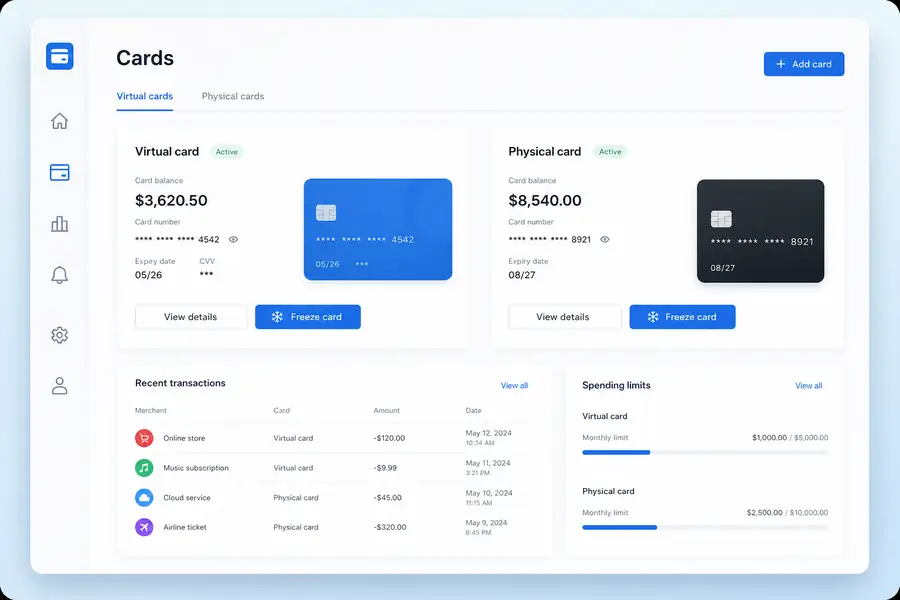
Most finance and operations leaders land on a mix: physical cards for field and in-person spend, virtual cards for vendors, subscriptions, and remote staff. The harder part isn't picking the mix, it's keeping receipts, coding, and accounting in sync once both card types are live.
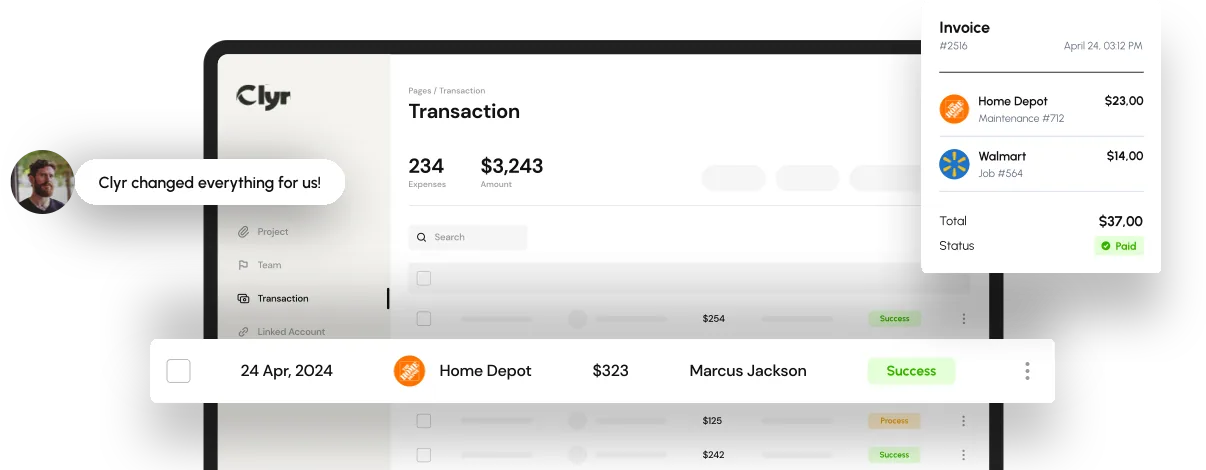
Clyr issues both virtual and physical cards and captures the receipt and coding in real time as each purchase happens, which matters most for field teams who would otherwise hand in a stack of paper receipts weeks later. Transactions sync to accounting automatically, including through Clyr's QuickBooks integration, so a controller isn't re-keying charges from two separate card programs at month-end.
If your team is still deciding how to split spend between virtual and physical cards, or your current program can't enforce limits per vendor, book a demo with Clyr to see how the two work together in one dashboard.
FAQs
Are virtual cards safer than physical cards?
Virtual cards generally carry less fraud risk because each one can be locked to a single vendor, a specific dollar amount, or a one-time purchase. A physical card number stays active and reusable until someone manually cancels it, which gives a thief or a misused card more time to cause damage.
Can a business use only virtual cards and skip physical cards entirely?
Only if no one on the team ever needs to pay in person. Virtual cards can't be swiped or tapped at a register, a pump, or a supply counter, so any business with field staff, drivers, or in-person purchasing needs at least some physical cards.
Do virtual cards work for recurring subscriptions?
Yes, and this is one of the strongest use cases. A virtual card locked to a specific vendor and monthly amount will flag or decline a charge that doesn't match, which catches price increases or unauthorized renewals before they hit the books.
How do virtual and physical cards affect month-end close?
Close slows down when virtual and physical card transactions live in separate systems with receipts collected by hand. Matching each charge to accounting in real time, rather than reconciling two card feeds after the fact, is what keeps the close on schedule.