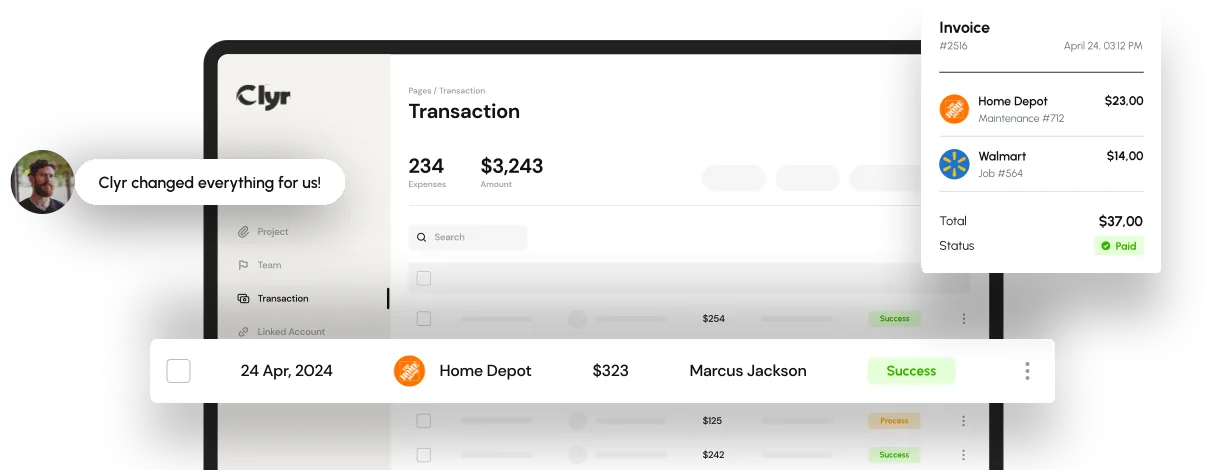
Bring Your Own Card (BYOC) Expense Model
Bring your own card (BYOC) is an expense management setup where a business keeps the credit and debit cards it already has, from any bank, and connects them to expense software instead of switching to cards issued by a spend platform. The company keeps its credit lines, rewards and bank relationships while capturing receipts and coding every charge.
An electrical contractor with 15 technicians can connect its 15 existing bank cards to expense software, so a $340 order of conduit at the supply house gets a receipt and job code the same day without anyone applying for a new card.
 Expenses
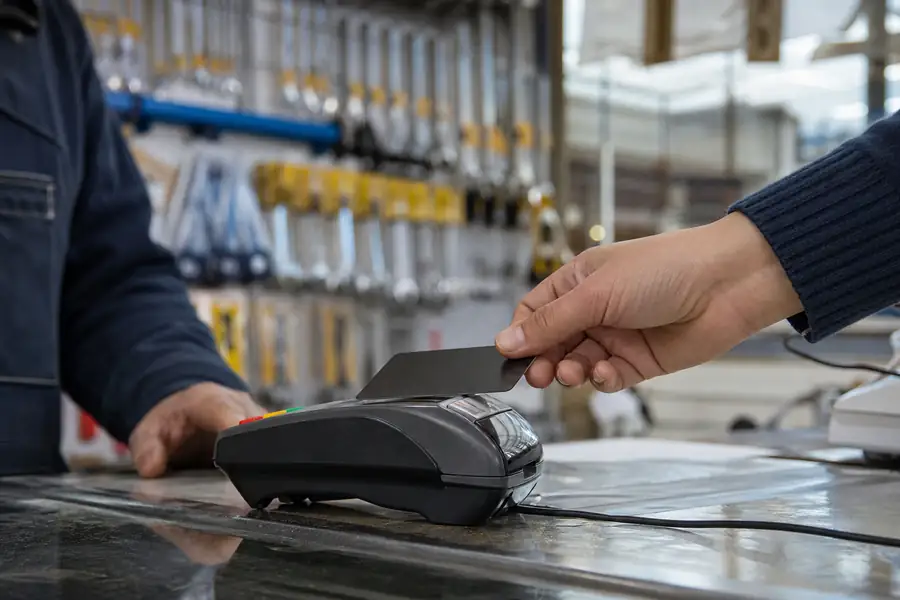
Bring your own card (BYOC) is an expense model where a business keeps the credit and debit cards it already has, from any bank, and connects them to expense software instead of switching to cards issued through a new corporate card program. Under a bring your own card setup, the cards stay with the bank the business already uses, and expense software captures the receipt, codes the spend to the right job or GL account, and reconciles it against the transaction. Finance keeps the same visibility and control it would get from a company-issued card program, without requiring anyone to close an account, reapply for credit, or wait on a new card to ship. A purchase on an employee's personal card is a different thing: it is handled as a reimbursement.
- No forced bank switch: the business keeps using the cards it already holds.
- Any card expenses get captured through software, not through a single bank's card program.
- Finance keeps full visibility through receipt capture and GL coding across many different cards.
- Field crews keep spending on the company cards they already carry, with no wait for a new card program.
- Most teams run a hybrid: some cards from a spend platform plus the company's existing bank cards for everyone else.
How the Bring Your Own Card Model Works
A bring your own card program separates the payment method from the expense process. Instead of one bank issuing every employee a card tied to a single account, each person uses a company card the business already holds, from any bank. The card itself stops being the control point.
The control point moves to software instead. Every purchase gets photographed, matched to policy, coded to a job or department, and synced to the general ledger, regardless of which bank issued the card. That is where dedicated expense management software becomes the backbone of the model: it replaces the bank's card controls with software-level rules on category, limit, and approval.
Why Finance Teams Adopt Bring Your Own Card Instead of Switching Banks
Most corporate card platforms require you to switch banking relationships to get their cards. That means re-underwriting the business, moving deposit accounts, retraining every cardholder, and often losing rewards or vendor terms that were already in place. Bring your own card removes that requirement entirely.
Finance still needs to see spend as it happens, not at month-end. An expense tracker that logs each purchase the moment it happens gives finance the same real-time picture a company card program promises, without the bank switch. Businesses that make this shift often describe it as the point where they finally take control of their finances instead of chasing receipts after the fact.

Bring Your Own Card for Field Teams and Any Card Expenses
Field teams are where bring your own card earns its keep. A crew lead buying lumber at a supply yard, a technician grabbing parts between job sites, a property manager paying a contractor on the spot: any card expenses like these need to be captured fast, not reconstructed from a paper receipt weeks later.
This is the scenario Clyr is built for. Clyr pairs card-agnostic receipt capture with automatic coding, so a purchase made on any of the company's existing cards gets photographed, tagged to the right job, and synced to QuickBooks without anyone re-entering it later.
Construction crews, service techs, and property managers moving between sites benefit most, because the alternative, waiting on a new card program to ship cards to every crew and job site, slows the work down. Teams researching expense management for construction run into this exact problem when a new card program has not shipped cards to a crew yet.
Bring Your Own Card vs Company-Issued Cards
Bring your own card and a company-issued card program solve the same problem differently, and the right choice depends on how fast your team grows and how spread out it is.
| Factor | Bring Your Own Card | Company-Issued Card Program |
|---|---|---|
| Onboarding speed | Immediate for cards the company already holds | Days to weeks for approval and shipping |
| Bank dependency | None, works with any card | Tied to one issuing bank or network |
| Card rewards | Company keeps its existing card rewards and credit lines | Rewards go to the company card program |
| Spend visibility | Depends on software capturing receipts | Built into the card platform itself |
| Best fit | Field teams, contractors, fast-growing teams | Centralized offices, high-volume spend |
Most companies do not pick one model exclusively. A hybrid is common: a handful of company cards for recurring vendor spend, and the company's existing bank cards for field staff and anyone who needs to keep spending without waiting for a new card to arrive.
Common Mistakes with a Bring Your Own Card Program
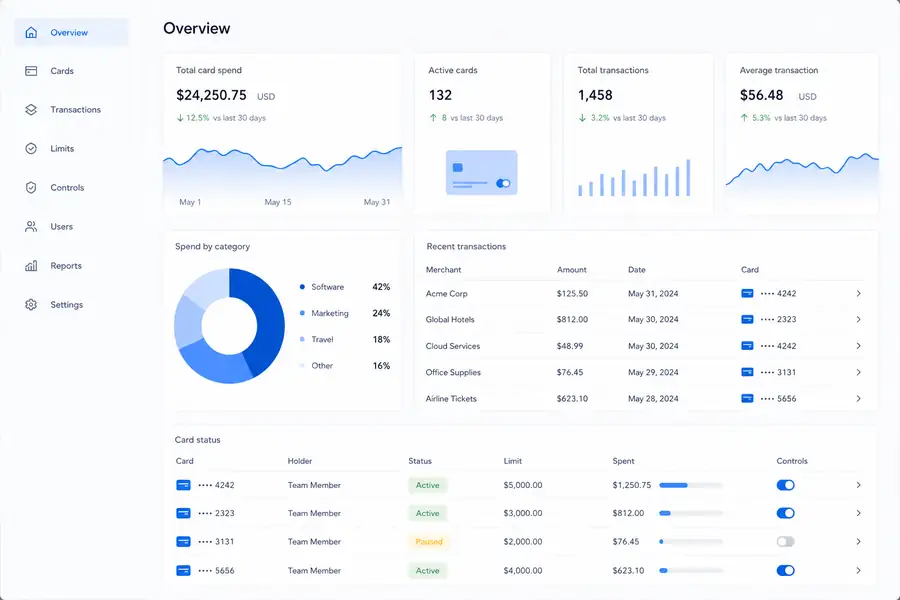
A bring your own card model fails the same way any expense process fails: when the rules and the follow-through are missing.
- Treating BYOC as policy-free: employees still need clear rules on what qualifies as a business purchase and what dollar amounts require approval, even on cards the team has used for years.
- Letting receipts pile up: waiting until month-end to collect and match receipts brings back the exact manual work bring your own card is supposed to eliminate.
- Skipping job or GL coding at the point of purchase: coding after the fact turns a five-second task into a research project once memories and paper trails fade.
- No reconciliation cadence: reconciling weekly, not monthly, catches personal charges or duplicate submissions before they turn into a bigger cleanup job.
Making Bring Your Own Card Work With the Right Software
Bring your own card only works as well as the software behind it. The card is not the control point anymore, so receipt capture, coding rules, and accounting sync have to do the job a single bank's card program used to do.
Clyr handles this by capturing receipts in real time from any card, coding spend automatically to the right job or GL account, and keeping business expenses organized as a team grows, whether that team is five people or five hundred.
See how Clyr supports a bring your own card model for your team. Book a demo to walk through your current card setup.
FAQs
What does "bring your own card" mean in expense management?
Bring your own card (BYOC) means a business connects the credit and debit cards it already holds, from any bank, to expense software instead of moving to cards issued under one central corporate card program. Expense software captures the receipt, codes the purchase, and reconciles it, so finance keeps full visibility without requiring a new bank relationship.
Is bring your own card the same as expense reimbursement?
No. Reimbursement means the employee spends their own money and waits to be paid back, often weeks later. Bring your own card uses the company's own cards, so the business pays the card bill directly and each transaction is captured and coded close to real time. A purchase on an employee's personal card is still a reimbursement.
Can a business use any card under a BYOC model?
Yes, in most bring your own card programs any company card from any bank works, as long as each purchase follows company policy, since the software, not the bank, enforces category limits and approval rules. A purchase on an employee's personal card goes through reimbursement instead. Some companies still cap which card types qualify, such as excluding cards with rotating rewards categories that complicate coding.
Does bring your own card work for field teams and contractors?
Bring your own card fits field teams especially well, because crews and technicians keep buying materials or fuel on the company cards they already carry, without waiting for a new card program to ship cards. Receipts get captured on a phone and coded to the job as soon as the purchase happens.
Is bring your own card secure for finance teams?
Bring your own card is secure when it is paired with software that enforces spend policy and captures every receipt automatically, since finance sees each transaction as it happens rather than at month-end. The risk is not the card itself, it is skipping the software layer that would otherwise catch duplicate or out-of-policy charges.