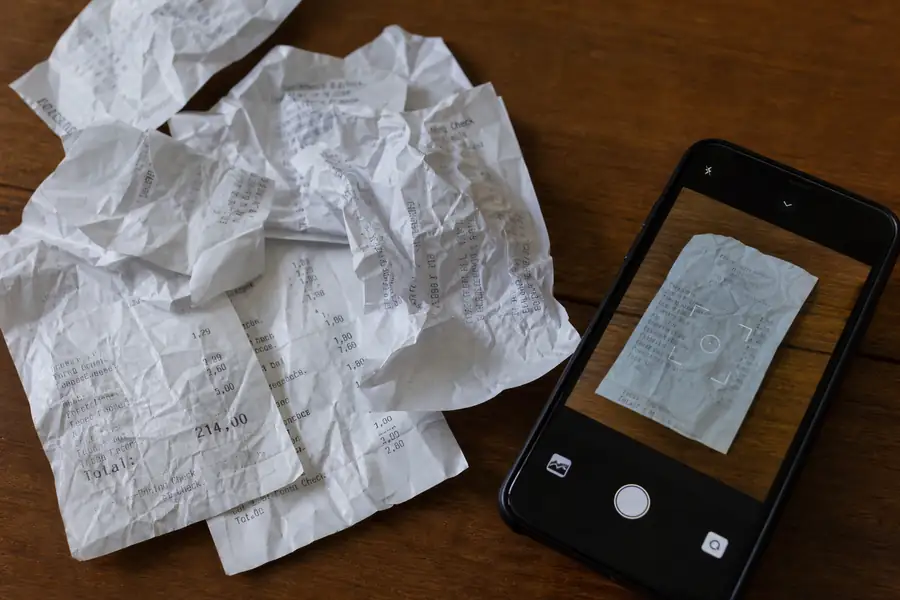
A receipt is a document a vendor gives a buyer as proof of purchase, showing what was bought, how much it cost, and when the transaction happened. A valid receipt for expense reporting also lists the vendor name, an itemized breakdown of charges, the payment method, and the total paid.
That distinction matters more than it sounds. A credit card statement shows that money moved, but it does not show what was bought, so it does not satisfy most expense policies or audit requirements. Field teams that submit statements instead of itemized receipts are the most common reason expense reports get kicked back.
Types of receipts you'll run into
Receipts come in more forms than most field teams expect, and knowing the difference helps you grab the right one on the spot instead of scrambling later.
| Type | What it shows | Where it shows up |
|---|---|---|
| Paper receipt | Printed at checkout, often on thermal paper that fades within weeks | Retail, gas stations, hardware stores |
| Digital or e-receipt | Emailed or texted copy that does not fade and forwards easily | Online orders, many retailers by default now |
| Itemized receipt | Breaks out each product or service line by line with individual prices | Job costing, tax deductions, larger purchases |
| Card statement | Shows the charge amount and merchant name only, no line items | Not accepted as a substitute for a receipt in most policies |
| Invoice | A bill for the amount owed, issued before or at time of payment | Vendor billing, not proof that payment occurred |
An itemized receipt is the one most expense policies actually require, because it proves what was purchased instead of just how much was charged. For a full breakdown of what has to appear on one, see this explanation of what is an itemized receipt.
What information does a valid receipt need to include?
A valid receipt for expense reporting needs five things: the vendor name and location, the date of purchase, an itemized list of what was bought, the payment method, and the total amount charged.
- Vendor name and location: who was paid and where the purchase happened.
- Date of the transaction: when the purchase happened, so it can be checked against travel or job dates.
- Itemized line items: each product or service listed with its own price, not just a lump total.
- Payment method: cash, card, or check, so it can be matched against a statement or reimbursement request.
- Total amount paid: including tax and tip, matching what actually left the account.
Missing any one of these is usually enough for a bookkeeper or approver to send the report back for a redo.
Why receipts matter for expense reports and taxes
Receipts matter because they are the only proof that a purchase happened the way the expense report claims it did. Without one, an approver has no way to confirm the amount, the vendor, or whether the purchase was even business related.
Tax authorities generally expect documentary evidence, meaning a receipt or similar record, for business expenses above a set dollar threshold, and many company expense policies set the bar even lower than that. Falling short during an audit can mean the deduction gets disallowed, not just delayed.
Receipts also settle disputes before they start. If a card charge looks off during reconciliation, the receipt shows exactly what was bought and closes the question in seconds instead of an email chain.
Common receipt mistakes field teams make
Field teams lose more reimbursement dollars to sloppy receipts than to actual overspending.
- Thermal receipts left in a truck cab or pocket, faded past reading by the time they reach the office.
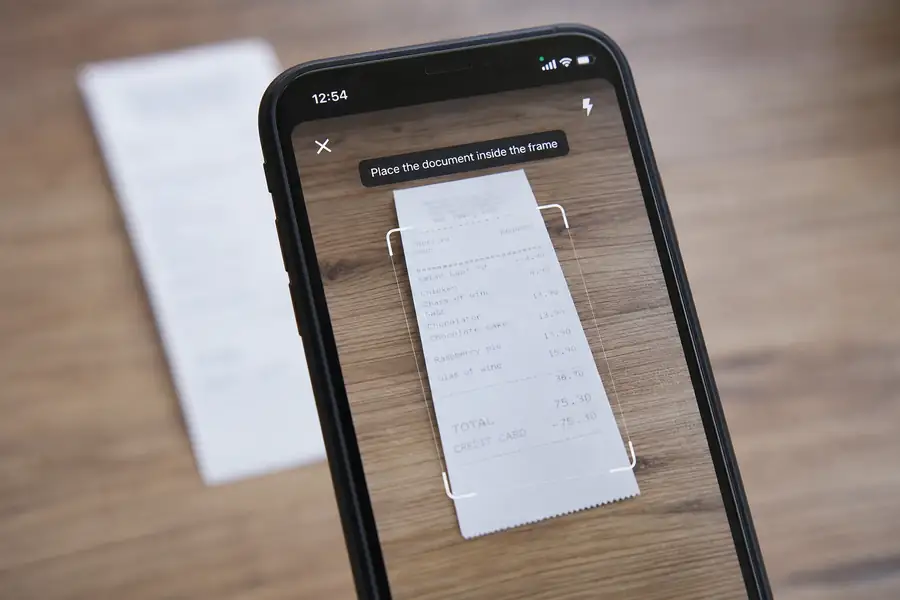
- Photos taken at an angle that cuts off the total or the itemized lines.
- Card statements submitted in place of the actual receipt.
- Receipts turned in days or weeks after the purchase, once the paper is gone and the memory is fuzzy.
Building a habit around capturing receipts the same day avoids most of this. This guide on how to keep track of receipts covers a few simple systems that actually stick.
How to make receipt capture easier for field teams
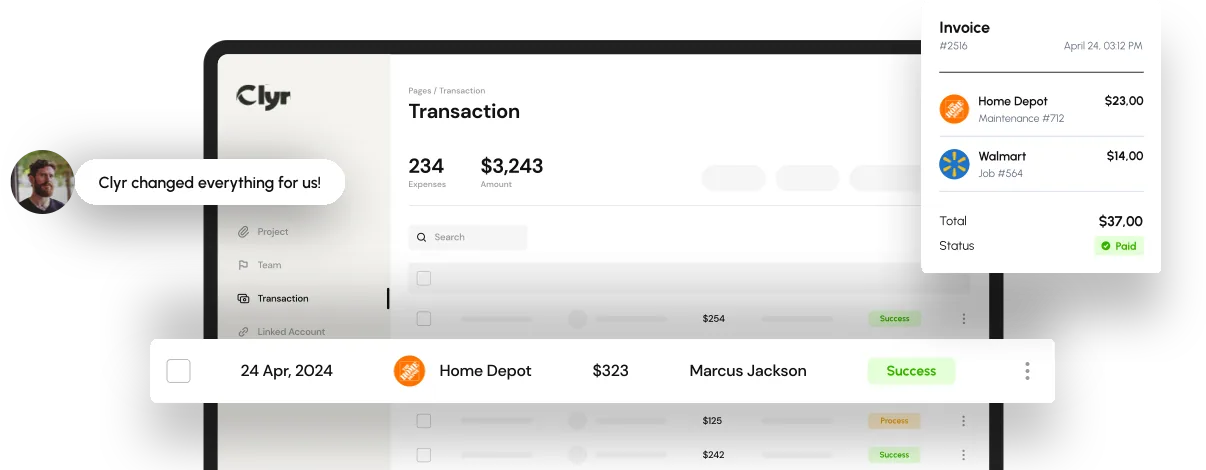
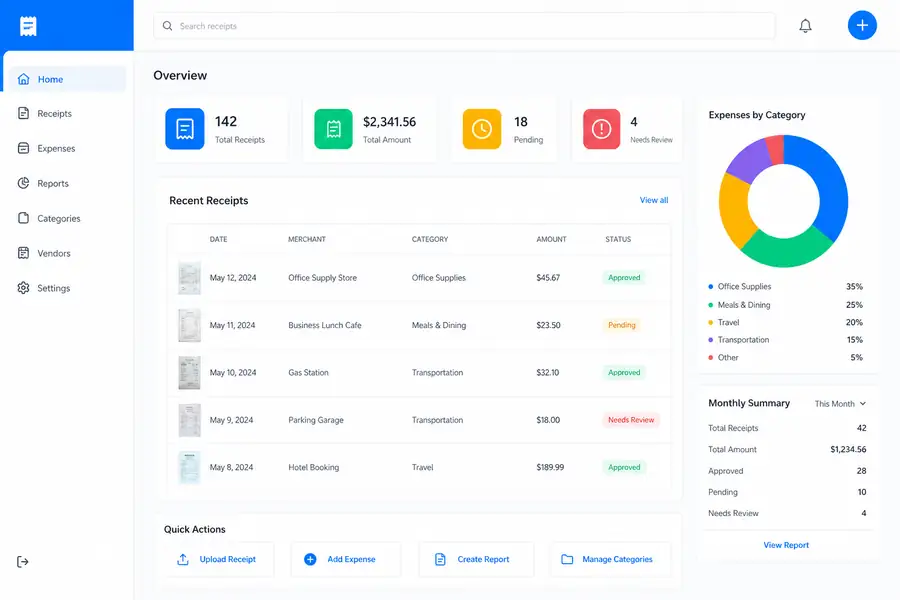
The fastest fix for unclear receipt requirements is removing the manual step entirely. Clyr pairs a company card with a mobile app that captures the receipt the moment a crew member taps to pay, then codes it to the right job automatically instead of waiting for someone to type it in later.
That kind of real-time receipt capture and coding matters most for teams that spend on the move, like construction crews buying materials mid-project or field service techs picking up parts between jobs. Companies using expense management for construction see fewer missing receipts specifically because the capture happens at the point of sale, not at month-end.
Once a receipt is captured, it syncs straight through to QuickBooks, so the bookkeeper is not re-entering anything or chasing a crew member for a photo.
See how real-time receipt capture works for your team and book a demo to try it with your own field crew.
FAQs
What counts as a receipt for tax purposes?
Any document showing the vendor name, the date, an itemized list of what was purchased, and the amount paid counts as a receipt, whether it is printed on paper or sent digitally. What matters is that all four details are present and legible.
Is a bank or credit card statement the same as a receipt?
No. A statement shows the merchant name and charge amount, but not what was actually purchased, so it does not meet most expense policies or documentation standards. You need the itemized receipt from the point of sale to back up the charge.
Do I need a paper receipt, or is a photo okay?
A clear photo or digital copy is fine, as long as it shows the vendor, date, itemized charges, and total. Digital copies are often better than paper because thermal receipts fade within weeks and photos do not.
What is the difference between a receipt and an invoice?
An invoice is a bill requesting payment, usually sent before or at the time of a sale. A receipt is proof that the payment was actually completed, which is why only a receipt satisfies most expense and tax requirements.
How long should a business keep its receipts?
Most businesses keep receipts for at least three years to cover a typical audit window, and longer for equipment or property purchases tied to depreciation. Check with your accountant for guidance specific to your situation, since retention needs vary by expense type.