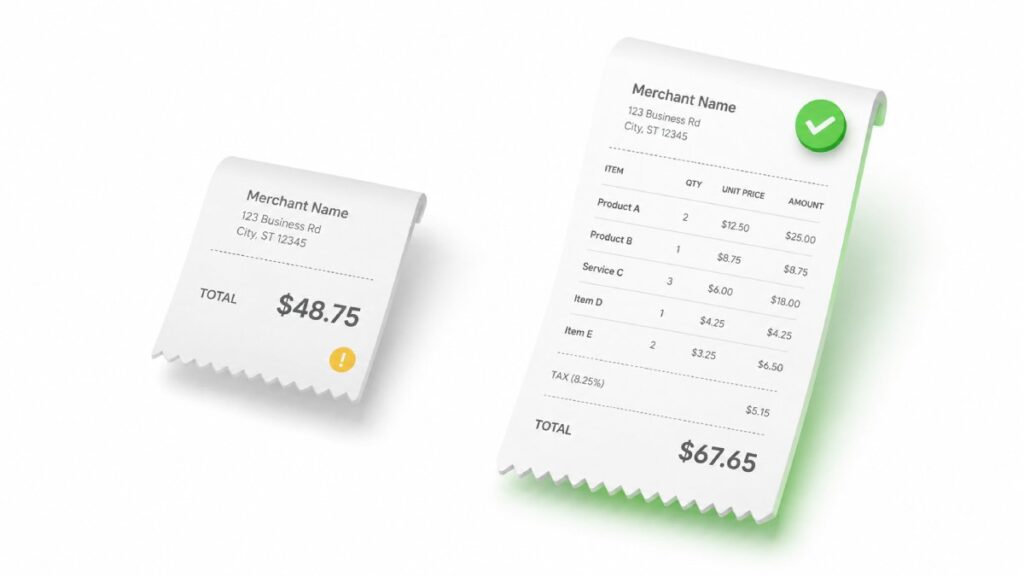
An itemized receipt lists each product or service in a transaction separately, with its description, quantity, unit price, and any tax or fees, alongside the vendor name, date, total, and payment method. Unlike a credit card slip that shows only the amount charged, it proves exactly what was bought, which is what makes it valid for reimbursement, tax deductions, and audits.
That distinction is the whole point. A card slip tells your accounting team how much left the account. An itemized receipt tells them what it was spent on, which is what a reimbursement approval, a tax deduction, or an auditor actually needs. A $180 charge at a warehouse store could be office supplies or a personal grocery run. Only the line items settle it.
What an itemized receipt must include
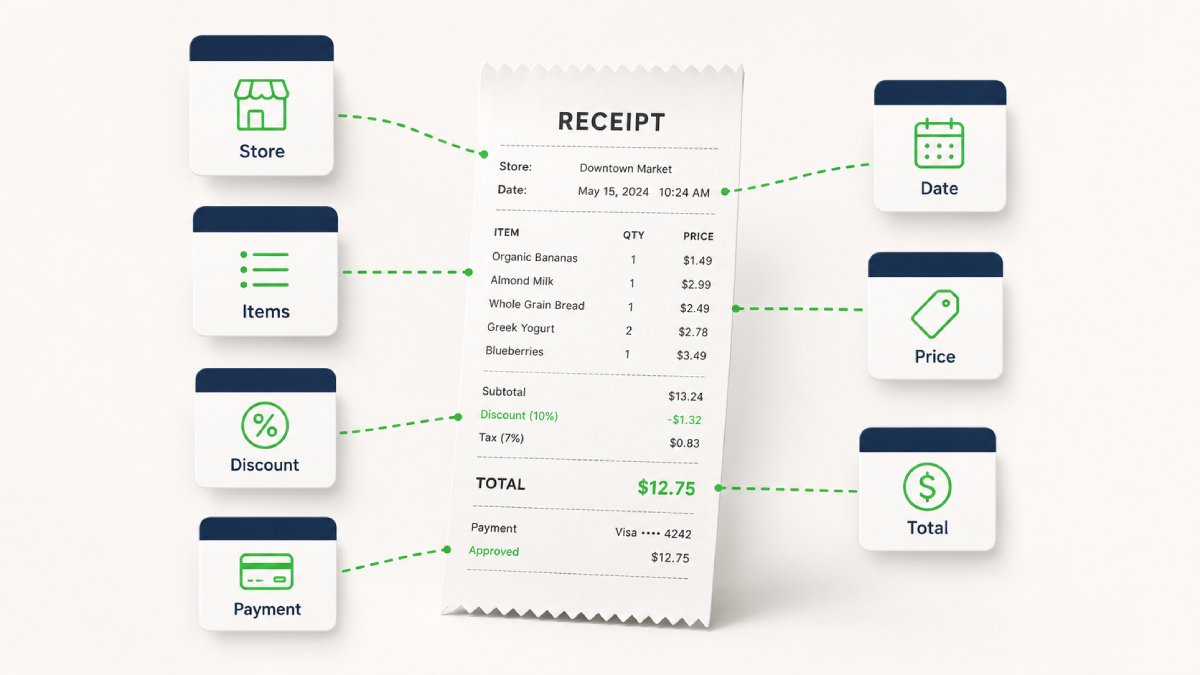
A receipt only counts as itemized when it carries enough detail to reconstruct the purchase on its own. At minimum, that means:
- Vendor name and location: Who was paid and where.
- Date of the transaction: When it happened.
- Line items: Each product or service listed separately, with a description.
- Quantity and unit price: How many, and the price of each.
- Taxes and fees: Broken out from the subtotal.
- Total amount: The full charge.
- Method of payment: How it was paid.
Here is the catch most people miss: sometimes one piece of paper does not carry all of it. Restaurants are the classic case. The kitchen ticket lists the food and drinks but not how you paid, and the card slip shows the payment but not the meal. You often need both. The IRS accepts a combination of documents that together prove the expense, so a detailed invoice plus a card statement can stand in for a single perfect receipt.
Itemized receipt vs. regular receipt
A regular receipt, or a credit card signature slip, shows the total and little else. An itemized receipt breaks that total into its parts. On a dinner bill, that difference decides whether the expense is even reimbursable.
Say an employee submits a $140 restaurant charge. Without itemization, you cannot see that $45 of it was alcohol, which many company policies and tax rules treat differently from the meal itself. The line items let you separate food from alcohol, flag anything out of policy, and code the rest correctly. This is also why a bank or credit card statement is not a substitute: it proves payment happened, not what was purchased.
When you actually need an itemized receipt
There are two separate authorities deciding this: the IRS, and your own expense policy. They do not use the same threshold, and confusing the two is where teams get caught out.
For the IRS
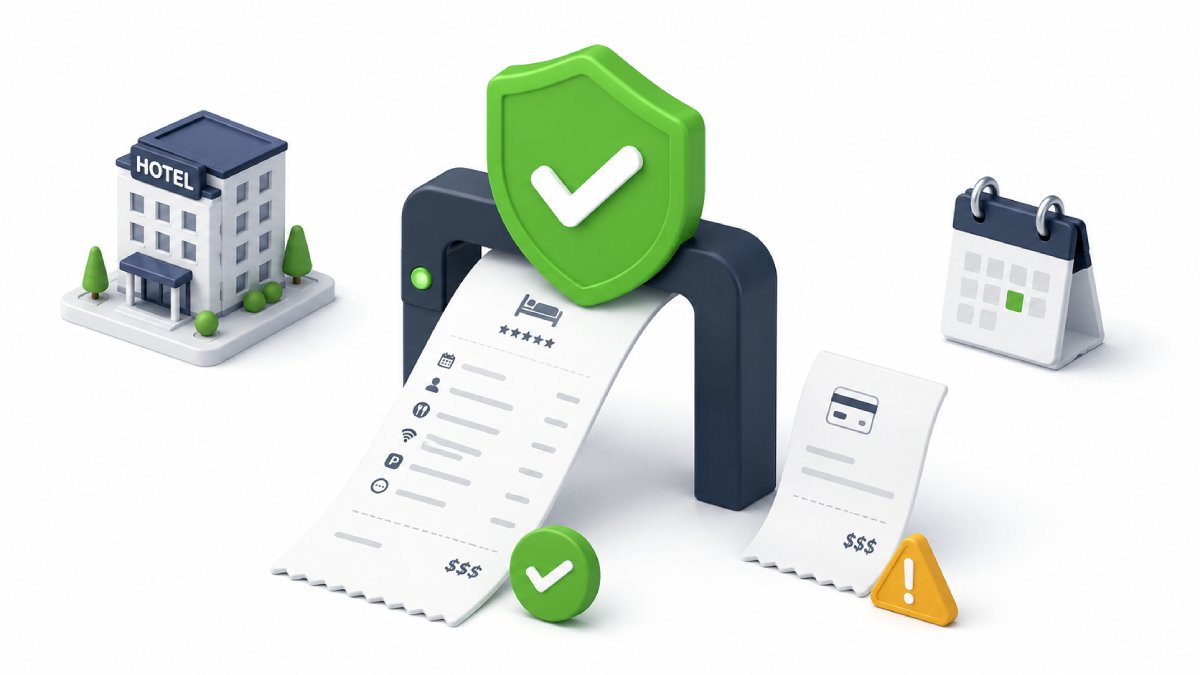
Under IRS rules, documentary evidence like a receipt is generally required for any travel, meal, or gift expense of $75 or more, and for all lodging regardless of amount. That threshold comes from Treasury Regulation 1.274-5 and is spelled out in IRS Publication 463. A hotel receipt specifically has to show the property name and location, the dates of the stay, and separate amounts for lodging, meals, and other charges, which is exactly why a folio that lists only one bundled total falls short.
The part people misread: under $75 does not mean no documentation. You still have to prove the amount, date, place, and business purpose (and for meals, who was there). The rule waives the receipt, not the record. Keep records for at least three years, since that is the standard window the IRS has to open an audit.
For your expense policy
Most companies set their own bar lower or stricter than the IRS. It is common to require an itemized receipt for any reimbursement over a set amount, often $75 or $25, and to require one for meals and travel no matter the size. Government contractors usually have to itemize everything. The policy threshold is a business decision, not a tax one, so pick a number your approvers can enforce consistently and write it down.
How to get an itemized receipt when you only have the total
Travel and field spend is where the itemized version goes missing, because people leave with just the card slip. A few habits fix most of it:
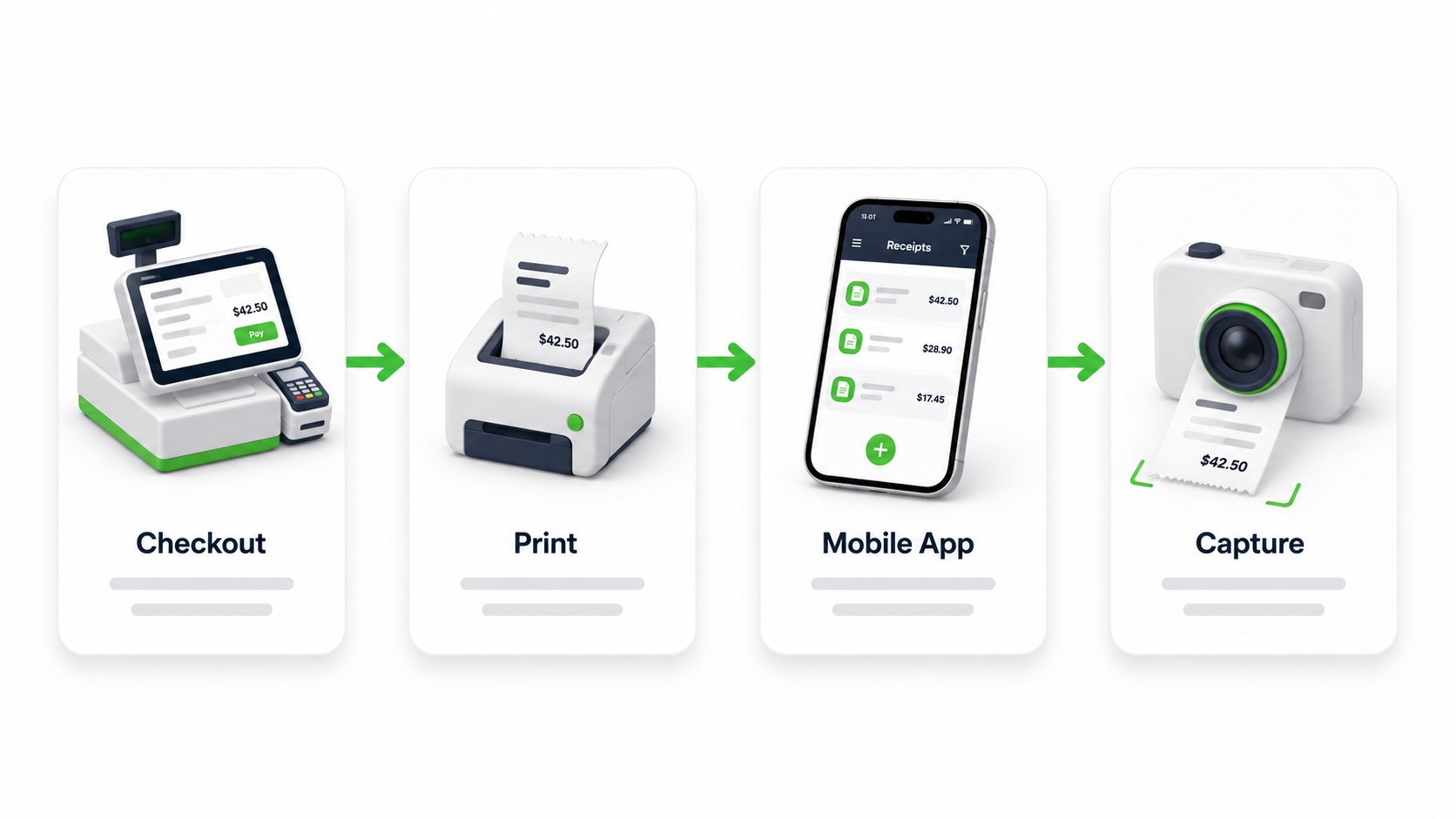
- Ask at the point of sale: For hotels and restaurants, request the detailed receipt or folio at checkout. Most vendors can print one; the hard part is remembering before you walk out.
- Go back to the vendor: A restaurant or hotel can usually reprint a detailed folio or transaction history after the fact.
- Pull it from the app: Rideshare and many online vendors let you download a full itemized receipt from your account history.
- Capture it digitally, right away: Photograph or forward the receipt the moment you have it. Digital copies are valid for the IRS as long as they are legible.
Where itemized receipts break down: field and job-site spend
Generic advice about asking the waiter for a detailed receipt does not survive contact with a crew buying materials across three job sites in a day. This is the real failure point, and it is specific to how field-based teams actually spend.
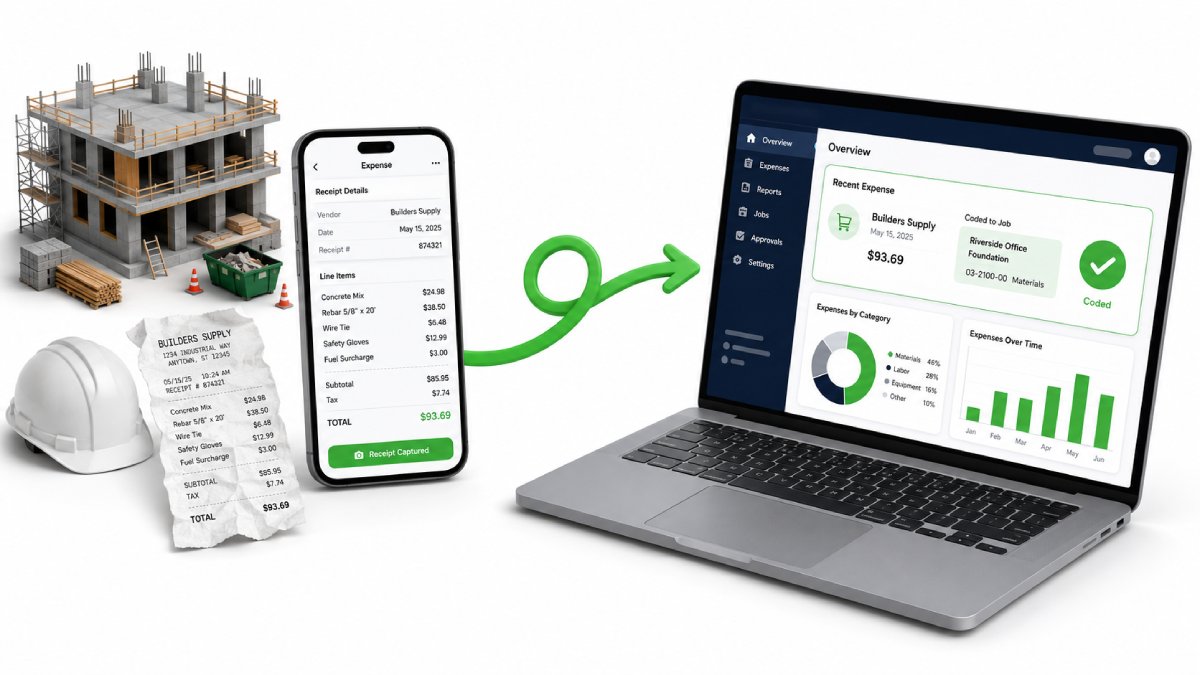
On a construction job, a technician grabs lumber and fixtures at a supply store, and that receipt has to be coded to the right job to keep job costing accurate. If it turns into a crumpled slip in a truck console, the line items are gone and someone reconstructs the expense from a card statement weeks later, usually wrong. In property management, the same maintenance receipt has to split cleanly to the right property or unit, or the owner statement is off. The itemization is not paperwork here, it is the data your cost accounting runs on.
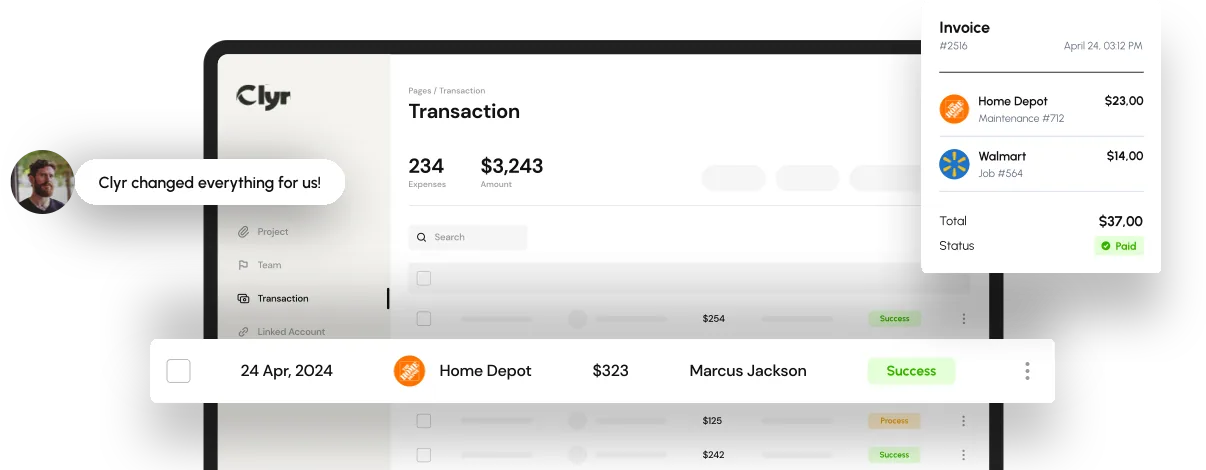
This is the problem Clyr was built around. With real-time receipt capture, field staff submit a receipt by SMS, email, or web browser the moment they spend, OCR pulls the line items, date, and vendor, and the expense is coded to the right job or property automatically. Using a card also triggers a text prompting the person to capture the receipt on the spot, before it goes missing. For teams running spend outside the office, that timing is the difference between clean itemized records and a month-end scramble, and the coded result syncs straight into accounting through the QuickBooks integration and 25+ other platforms. If your team lives in the field, that is worth building into your expense management process rather than hoping people hold onto paper.
FAQs
What is the difference between an itemized receipt, an itemized bill, and an itemized invoice?
They all break a charge into line items; the difference is timing and direction. An itemized receipt is proof of a completed purchase. An itemized invoice is a request for payment you send or receive before paying. An itemized bill is essentially an invoice for services already rendered, like a hotel folio. For reimbursement and tax purposes, you want the itemized receipt that proves the money was actually spent.
Does a credit card statement count as an itemized receipt?
No. A statement proves you paid a total to a vendor, but it does not show what you bought, so it fails the documentary standard on its own. It can serve as corroborating evidence alongside a detailed receipt, and it can help reconstruct a record if the original is lost, but it is not a replacement.
Is a photographed or digital receipt acceptable?
Yes. The IRS accepts digital copies as long as they are legible and accurately reflect the original. Capturing receipts digitally right after a purchase is also the most reliable way to keep track of them and stop them from disappearing before month-end.
What happens if a receipt is missing at month-end?
You reconstruct it from corroborating evidence: the card statement showing the charge, the vendor’s transaction history, a calendar entry, or an emailed confirmation. It satisfies most reviews but takes far more work than capturing the receipt at the time, which is why real-time capture and automated reminders exist.
Do I need itemized receipts for per diem meals?
No. If you reimburse travel meals at or below the federal per diem rate under an accountable plan, you substantiate the amount with the per diem method instead of meal receipts. You cannot claim per diem and expense the same meals.