Travel Expense Fraud: How to Spot & Prevent It
 Expenses
Travel expense fraud is any travel cost an employee submits that is inflated, duplicated, or invented outright: padded mileage, meals that never happened, a hotel folio split across two separate reports. It thrives specifically in travel spend because the paper trail is naturally messy, with multiple cities, multiple receipts, and days or weeks between the trip and the expense report. A manager approving a stack of travel expense reports at month end has no easy way to tell a padded number from a real one just by looking at it, which is exactly why travel costs are one of the most expensive categories of fraud finance teams deal with.
This guide breaks down the patterns that actually show up, the red flags that catch them early, and the process changes that stop travel expense fraud before a reimbursement goes out the door.
Key Takeaways
- Four recurring patterns: mileage padding, duplicate submissions, personal charges coded as business, and fabricated vendors or per diem claims.
- Field and remote teams carry more risk: managers rarely see the trip firsthand, so the paper trail is the only evidence.
- Red flags cluster together: round mileage numbers, late receipt dates, and claims just under the approval threshold.
- Expense fraud prevention works as a system: policy, real-time capture, and matching at submission, not a once-a-quarter audit.
- Automation closes the gap manual review misses: matching card charges to receipts the moment they happen removes the days of distance fraud depends on.
What Counts as Travel Expense Fraud?
Travel expense fraud covers a narrow set of behaviors that repeat across almost every industry. The four most common are inflated mileage, duplicate or split receipts, personal expenses coded as business travel, and fabricated vendors or per diem claims with no matching trip.
Mileage padding is the easiest to miss because most teams still rely on an employee's own log instead of a mapped route. A rep who drives 40 miles round trip but reports 55 pockets the difference every time, and across a team doing that weekly, the overstatement adds up fast.
Duplicate submissions happen when the same charge gets filed on a card statement and a separate expense report, or split across two trips to stay under an approval threshold. Personal charges disguised as travel, a client dinner that was really a birthday dinner, a room upgrade billed as a "necessary" amenity, are harder to prove on sight but show up reliably wherever policy enforcement is weak.
Common Signs of Travel Expense Fraud
Travel expense fraud usually shows up as a pattern across several reports, not one suspicious receipt. The table below lists the signals finance teams see most often and what each one usually means.
| Red flag | What it usually means |
|---|---|
| Round mileage or tip amounts | Estimated after the fact, not logged in real time |
| Receipt dated well after the return date | Reconstructed from memory, not captured during the trip |
| Repeat vendor with no itinerary to match | Possible fabricated trip or charge |
| Several claims just under the approval limit | Likely split to avoid manager review |
| Same amount on a personal card and the company card, same day | Possible double submission |
Why Travel Expense Fraud Is Easy to Miss on Field and Remote Teams
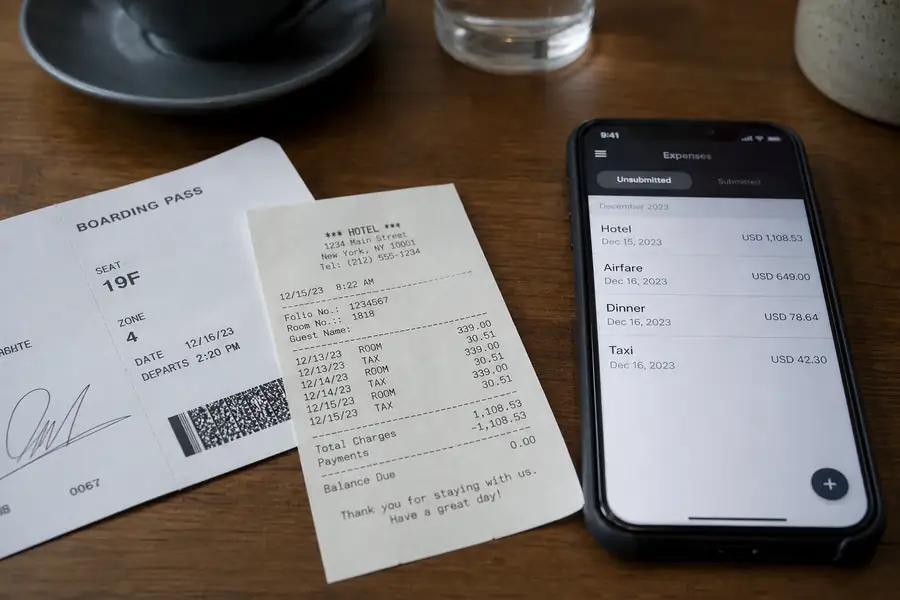
Travel expense fraud slips through fastest on teams where the manager never sees the trip happen. Field service crews, construction superintendents, and reps covering a regional territory submit travel costs from the road, often days after the fact, with no one in the office able to confirm the mileage or the meal actually happened.
That blind spot is why expense management for construction crews and other field-heavy teams needs a different fix than a desk-based office: the check has to happen at the point of capture, not during a month-end review. The same gap shows up on fully remote and multi-location teams, and the fixes overlap enough that it's worth reading how Clyr covers preventing expense fraud in distributed teams as a companion to the field-specific risks here.
How to Build a Travel Expense Fraud Prevention Process
Effective expense fraud prevention combines policy, real-time capture, and matching before a report reaches approval, not an audit after the reimbursement has already gone out. The sequence matters:
- Capture receipts and mileage in real time, from the traveler's phone, not from memory at the end of the trip.
- Match each charge automatically to the corresponding card transaction so duplicates surface immediately.
- Code the expense to the trip, client, or job as it happens, not in a batch weeks later.
- Route anything that breaks policy, a missing receipt, an odd vendor, a round mileage number, for review before payment.
- Sync approved expenses straight into the general ledger so nothing gets re-keyed or re-approved twice.
Automating travel expense management is what makes that sequence realistic for a growing team. Mileage is a good example: automated mileage reimbursement tracks the actual route instead of an employee's typed-in estimate, which removes the single easiest number to pad.
How Clyr Helps Prevent Travel Expense Fraud
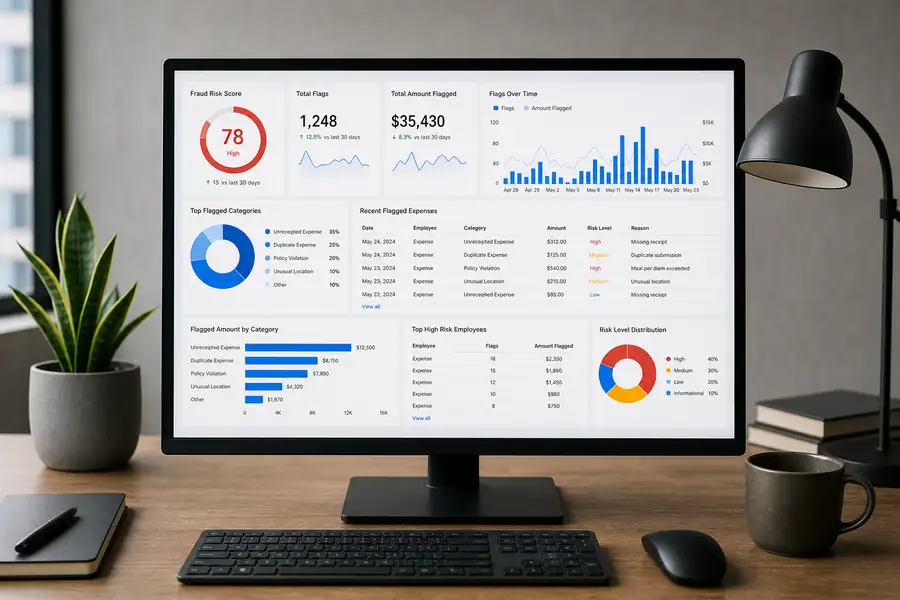
Clyr's expense management software closes the real-time gap that most travel expense fraud exploits, by pairing card transactions with photo receipt capture the moment a traveler spends, not days later. Each charge matches automatically, gets coded to the right trip, client, or job, and gets flagged if it breaks policy before an approver even opens the report.
Field crews snap a photo from a job site, the charge syncs to QuickBooks without anyone re-keying a number, and finance ends up with a clean, time-stamped trail instead of a stack of receipts assembled from memory weeks later. If travel expense fraud is already eating hours of your team's time every month, you can book a demo to see how the capture and matching works on your own card data.
FAQs
What is travel expense fraud?
Travel expense fraud is any travel cost an employee reports that is inflated, duplicated, or invented, including padded mileage, meals that never happened, or a hotel charge split across two separate reports. It is distinct from an honest mistake because the submission misrepresents what was actually spent or when it happened.
What are the most common types of travel expense fraud?
The four most common types are mileage padding, duplicate or split receipt submissions, personal charges coded as business travel, and fabricated vendors or per diem claims with no matching trip. Mileage padding and duplicate submissions are the two that show up most often because they are the easiest to commit without detection under a manual review.
What are the warning signs of fraudulent travel expenses?
The clearest warning signs are round mileage or tip amounts, receipts dated well after the trip ended, repeat vendors with no itinerary to match, and several claims that fall just under the manager approval limit. Any one of these alone can be innocent, but a traveler who shows several of them repeatedly is worth a closer look.
How can a company prevent travel expense fraud?
Travel expense fraud prevention works best as a real-time system: capture receipts and mileage as they happen, match each charge to a card transaction automatically, and route anything that breaks policy for review before the money is paid. Waiting for a month-end audit catches fraud after the reimbursement has already gone out, which is too late to recover the cost efficiently.
Does expense management software actually stop travel expense fraud?
Expense management software reduces travel expense fraud significantly by removing the days of distance between a purchase and its paperwork, which is the gap most fraud depends on. It cannot catch every case on its own, but matching, coding, and policy checks at the point of spend catch far more than a manual review of receipts weeks later.