Per Diem Rates 2026: A US Business Guide
 Expenses
Quick answer: The General Services Administration (GSA) sets per diem rates 2026 each fiscal year, running October 1, 2025 through September 30, 2026. The standard CONUS rate typically falls in the $110 to $120 range for lodging and $59 to $79 for meals and incidentals, with hundreds of higher-cost cities set above that baseline.
Private businesses do not have to use the GSA figures, but most do, because paying at or below the federal rate keeps the payment nontaxable to the employee.
Here is what changes for 2026, how the rate structure works, and how to build a per diem policy that will not need a rewrite the next time GSA updates the numbers.
What Are Per Diem Rates?
Per diem is a fixed daily allowance an employer pays an employee to cover lodging, meals, and incidental expenses while traveling for work, instead of reimbursing every individual receipt.
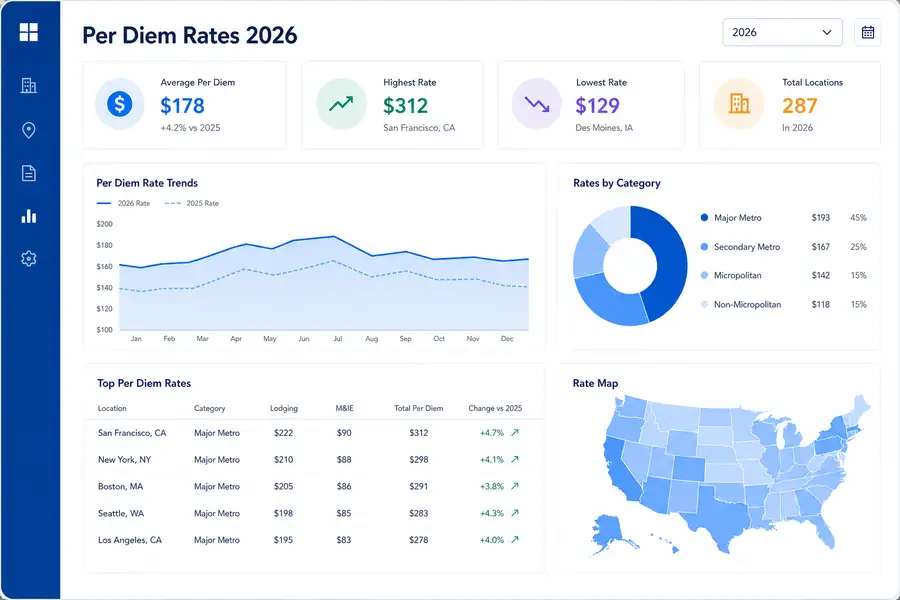
GSA publishes two figures for the continental US: a lodging rate and a meals and incidental expenses (M&IE) rate. Add them together for the full daily per diem rate at a given location.
Private employers are not required to adopt the federal numbers, but most do, since it saves negotiating a custom rate for every city an employee visits.
How GSA Per Diem Rates for 2026 Work
GSA per diem 2026 rates take effect October 1, 2025 and run through September 30, 2026, following the federal fiscal year rather than the calendar year. A "2026" rate is already live for three months of 2025, which trips up a lot of finance teams every fall.
Most counties fall under a standard rate, while a published list of several hundred high-cost destinations, from New York City to seasonal ski towns, get a higher figure. That list and its dollar amounts change every cycle, so a city can move on or off it year to year.
Two rules matter for accuracy. Travel days that are not a full 24 hours get paid at 75% of the M&IE rate, and multi-city trips use the rate for wherever the employee actually is that day. Calculating per diem for business travel comes down to applying those two rules consistently, which is exactly where spreadsheets fall apart. Always confirm the exact current figures by location against GSA's official published rate tables before finalizing a travel budget.
Per Diem Rates 2026 by Location

| Location type | Lodging (nightly) | Meals & incidentals (daily) | Typical full-day total |
|---|---|---|---|
| Standard CONUS rate | $110-$120 | $59-$79 | $170-$200 |
| High-cost cities (NYC, SF, DC, Boston) | $200-$300+ | $79-$92 | $300-$400+ |
| First/last travel day | Same tier as trip | 75% of M&IE | Reduced accordingly |
These ranges reflect the typical spread GSA has used across recent fiscal years, not a guarantee of the exact 2026 figure for every county. A mid-size market can jump tiers if local hotel costs moved. Confirm the specific rate for each destination before locking a travel budget.
How to Set Per Diem Rates 2026 for Your Field Team
Start with whether a flat per diem or a hybrid model fits better. A construction company sending crews across state lines usually does better with a flat meal per diem plus actual-cost lodging, since hotel prices near a job site swing with the season. A property management company sending an inspector across town may not need a travel per diem at all, just mileage and a receipt-based meal cap.
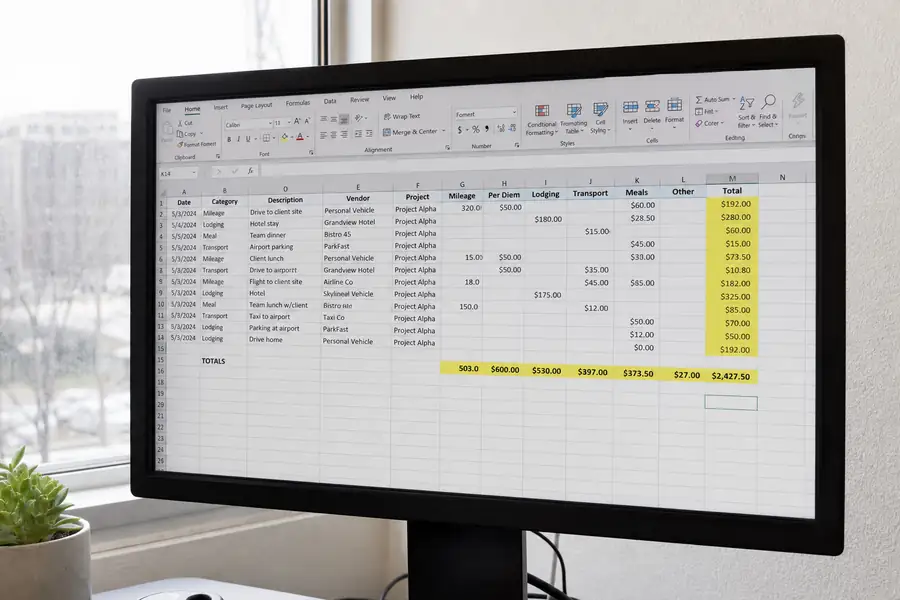
Field service and construction teams are where per diem policy gets messy fastest, since spend happens off-site and receipts surface days later, if at all. A dedicated expense management software platform fixes that by capturing spend as it happens instead of reconstructing it at month-end.
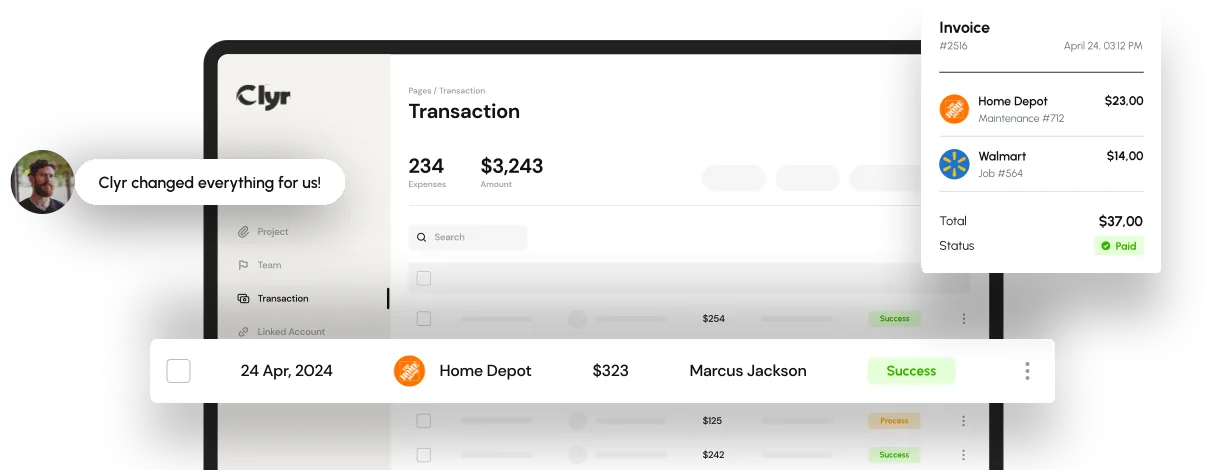
This is the specific problem Clyr is built for. Field employees pay with a Clyr card, snap the receipt from their phone, and the transaction gets coded to the job and the per diem category in real time. Spend over the daily limit gets flagged automatically instead of surfacing weeks later, and coded transactions sync to QuickBooks so nobody re-keys totals to close the books. Teams that need real-time receipt capture and coding for crews in the field usually save more time than any spreadsheet template offers.
Are Per Diem Payments Taxable in 2026?
Per diem paid at or below the applicable federal rate is generally not taxable income, as long as the company runs an accountable plan: the employee submits a report tying the payment to business travel dates and location. Pay above the federal rate, and the excess becomes taxable wages subject to withholding.
Without an expense report tying the payment to actual travel, the IRS can treat the entire payment as wages, not just the overage. Employers should check the current accountable plan documentation rules directly with the IRS before finalizing a policy, since the specifics of what counts as adequate documentation matter for the audit trail.
Common Mistakes When Setting Per Diem Rates 2026
- Reusing last year's rate table: GSA updates the standard and high-cost figures every October, so a copied policy is often already wrong.
- Skipping the first/last day proration: paying a full day's M&IE for a half-day of travel overpays every trip.
- Treating per diem as unlimited cash: without a cap or approval step, per diem becomes the easiest line item to abuse.
- Ignoring high-cost locations: paying the standard rate for a high-cost city trip underfunds employees and invites overspending on cards instead.
- No system to catch overages in real time: most teams find out a limit was blown weeks later, at reconciliation.
Fixing that last one is mostly a tooling problem. If you want to see automated card and receipt capture run against your own per diem rules, you can book a demo with Clyr's team.
FAQs
What are the 2026 GSA per diem rates?
GSA's 2026 rates run from October 1, 2025 through September 30, 2026, with a standard CONUS rate for most locations and higher published rates for several hundred high-cost cities. Exact dollar figures vary by location and are published on GSA's official per diem rate schedule each fiscal year.
How do I calculate per diem for a partial travel day?
The first and last day of a trip get paid at 75% of the meals and incidentals rate for that location, since the employee is not away a full 24 hours. Lodging is typically paid at the full nightly rate for any night actually spent away.
Is per diem taxable income in 2026?
Per diem paid at or below the federal rate is generally nontaxable if the employer runs an accountable plan and the employee files a timely report tying the payment to business travel. Amounts above the federal rate count as taxable wages.
Do private businesses have to use GSA per diem rates?
No. Private employers can set any per diem amount, but paying above the GSA rate without documentation risks the excess being taxed as wages. Most use the GSA figures as a baseline since it keeps payments nontaxable and gives a defensible, published number.
What is the difference between per diem and expense reimbursement?
Per diem pays a fixed daily amount regardless of actual spend, while reimbursement pays back the exact amount on a submitted receipt. Per diem is faster to budget and administer; reimbursement matches actual cost more closely but takes more paperwork per trip.