
Field crew travel management is the process of planning, tracking, and reconciling travel spend for employees who work away from a fixed office: construction crews, field service technicians, property maintenance staff, and traveling consultants. It covers mileage, lodging, meals, fuel, tolls, and per diem, plus the approval and coding work that turns those receipts into accurate job costs.
Done well, it gives finance real-time visibility into where crew travel money goes instead of a shoebox of gas station receipts that shows up three weeks after the job wrapped.
Most companies still run this by hand: paper receipts, spreadsheets, and an expense report that lands on a manager's desk long after the trip ended. That lag is the whole problem, and it is fixable.
Key Takeaways
- Crew travel expenses span mileage, lodging, meals, fuel, tolls, and per diem: each needs a different coding rule.
- Distance from the office is the risk factor: the farther spend happens from finance's view, the more it slips through.
- Job or property coding matters as much as approval: travel spend not tied to a job number distorts profitability reporting.
- Mobile receipt capture closes the reporting lag: crews submit from the truck instead of a week later.
- The right process changes by industry: construction, field service, and property management each have a different pressure point.
What Is Field Crew Travel Management?
Field crew travel management is the set of policies and tools a company uses to book, capture, code, and reconcile travel costs for employees who work on-site rather than in an office. It differs from standard corporate travel because the spend happens in the field: a technician's fuel stop, a crew's overnight motel near a remote job, a foreman's toll receipt from driving between sites.
Crew travel is one piece of a company's broader expense management software strategy, but it carries its own rules. A desk-based employee can file an expense report at the end of the week. A crew working ten-hour shifts on a job site usually will not, unless capturing a receipt takes seconds, not minutes.
Why Crew Travel Expenses Get Messy
Crew travel expenses get messy because the spend happens far from finance, across dozens of small vendors, with a lag between the purchase and the report. A crew member pays for fuel at one station, a meal at another, and a motel room on a personal card, and none of it reaches accounting until the paperwork catches up.
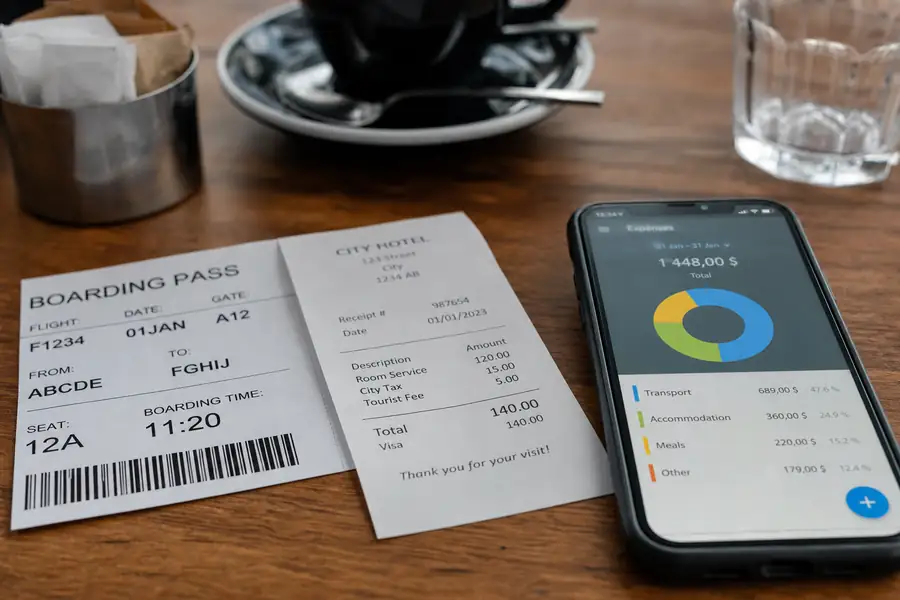
Many of the same principles behind general corporate travel management dos and don'ts still apply to field crews, but the environment adds friction: spotty cell signal, faded thermal receipts, and job sites that change weekly. Per diem adds another layer, since some companies pay a flat daily rate while others require itemized receipts, and mixing the two across a crew creates inconsistent reimbursements HR has to untangle by hand.
Building a Field Crew Travel Management Process
A field crew travel management process works when spend is captured the moment it happens, not reconstructed later. That single shift, moving capture to the point of purchase, fixes most of the downstream mess.
Start with a written policy that sets clear limits: mileage rate, per diem amount, lodging caps, and what counts as reimbursable. From there, the process needs four working parts:
- Capture at the source: a mobile app or company card lets a crew member log a receipt in the field, not later.
- Coding to a job or property: every cost gets tagged to the job number, client, or property it belongs to.
- Approval routing: a supervisor reviews spend against policy before it posts, not after.
- Accounting sync: approved spend flows into the general ledger automatically instead of getting keyed in by hand.
Field Crew Travel Management by Industry
The pressure point shifts depending on where the crew works and how the business bills the client. Construction crews need travel spend coded to the job number in real time to keep bids and margins accurate; without it, job costing runs on guesswork until the invoice arrives weeks later. Field service technicians run tight multi-stop routes, so travel and materials spend blend together fast unless capture happens between stops rather than at shift's end.
Property management teams face a similar challenge across a portfolio instead of a single site: maintenance staff moving between properties need travel and supply costs split cleanly by location, the same issue covered in this guide on how property managers track expenses. Mileage between properties, in particular, is easy to lose without a mobile log.
Common Mistakes That Derail Crew Travel Expenses
- Reimbursing on personal cards by default: it forces a crew member to front costs and file a claim weeks later.
- No job or property coding at the point of spend: costs land in a general travel line instead of the job they belong to.
- Mixing per diem and itemized reimbursement without a rule: HR ends up deciding case by case.
- Paper receipts as the only record: thermal paper fades within weeks, creating an audit problem.
- Approval happening after the money is spent: a policy violation only gets caught once it is already on the books.
Where Clyr Fits In Field Crew Travel Management
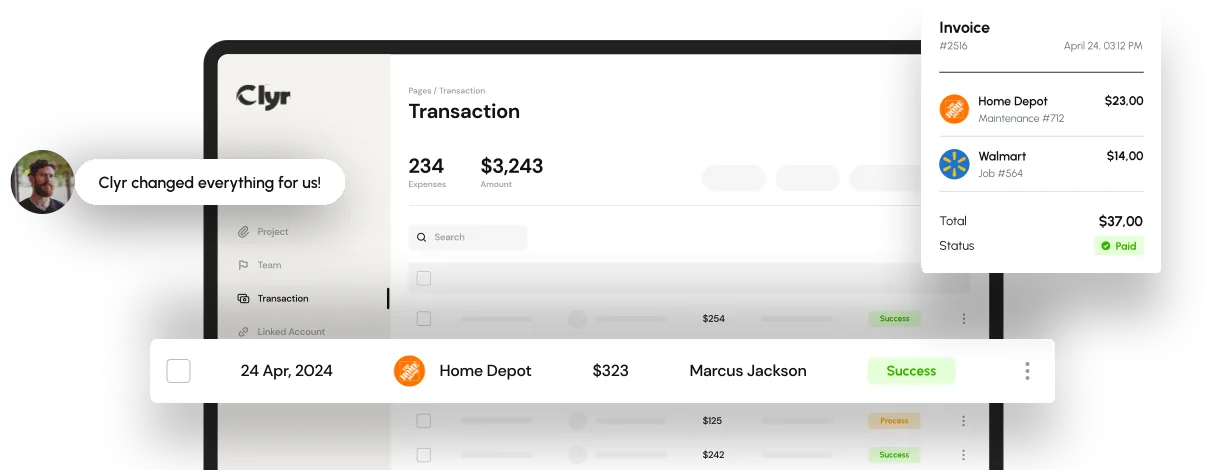
Clyr handles crew travel expenses by pairing a company card with real-time receipt capture, so a crew member snaps a photo of a receipt in the field and it is coded to the right job as the charge happens, not weeks later. Approved spend syncs to QuickBooks and other accounting platforms automatically, removing the manual re-entry that usually eats up a bookkeeper's week.
If your crews are still turning in gas station receipts a week after the job, book a demo to see how it works for a distributed team.
FAQs
What is field crew travel management?
Field crew travel management is the process of booking, capturing, coding, and reconciling travel costs for employees who work away from a fixed office, such as construction crews, field service technicians, and property maintenance staff. It covers mileage, lodging, meals, fuel, tolls, and per diem, along with the approval and accounting steps that turn those receipts into accurate records.
How do you track travel expenses for a mobile workforce?
The most reliable method is capturing each expense at the point of purchase using a mobile app or a company card, then coding it to a job or property immediately. Waiting until the end of a shift or week to log expenses is the main reason crew travel spend becomes hard to reconcile.
What is the difference between per diem and mileage reimbursement for field crews?
Per diem is a fixed daily allowance meant to cover meals and incidental costs regardless of what a crew member actually spends, while mileage reimbursement pays a set rate per mile driven for business travel. Companies often use both together: per diem for meals and lodging, mileage for personal vehicle use on the job.
How do field service and construction companies control crew travel spend?
Most rely on a written travel policy with clear limits, company cards instead of personal reimbursement, and a coding step that ties every cost to a specific job or property. Real-time approval routing catches policy violations before they post, rather than during a monthly review after the fact.
Does field crew travel management integrate with QuickBooks?
Yes, most modern expense platforms built for field teams, including Clyr, sync approved crew travel expenses directly to QuickBooks and similar accounting software. This removes the manual data entry that otherwise falls on a bookkeeper at month-end close.