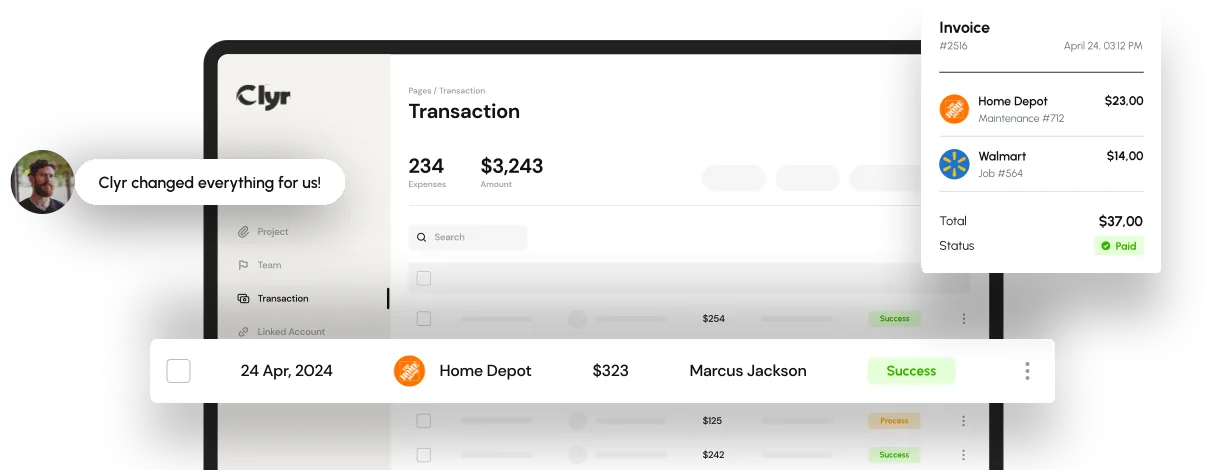
Business Debit vs Credit Card for Expenses
 Expenses
Quick answer: A business debit card pulls funds straight from your checking account, so spend is capped at whatever cash you have on hand right now. A business credit card extends short-term credit, giving you a grace period before payment is due and usually adding rewards and stronger fraud protection. The debit or credit business card decision comes down to whether you need to control cash outflow tightly or need float, rewards, and purchase protection more.
Most finance teams end up running both. Debit covers predictable, low-risk spend. Credit covers everything that benefits from a payment cycle, rewards, or stronger dispute rights. Getting this split wrong is what causes overdrafts on one end and unmanaged balances on the other.
Key takeaways:
- Debit limits spend to cash on hand: no interest, no credit risk, but no float either.
- Credit extends a grace period: typically 21 to 25 days, which smooths cash flow but requires discipline to avoid carrying a balance.
- Fraud liability differs sharply: credit cards generally cap your liability near $0 under federal protections, debit fraud can tie up your actual cash while a bank investigates.
- Rewards and purchase protection favor credit: most debit cards for business carry none of either.
- Reconciliation gets harder with more cardholders, regardless of card type, unless receipts are captured and coded automatically.
Business Debit vs Credit Card: Quick Comparison
The table below lines up the factors that actually change your decision: funding, float, protection, and what each card type does to your month-end close.
| Factor | Business debit card | Business credit card |
|---|---|---|
| Funding source | Checking account balance | Issuer's credit line |
| Spending limit | Capped at available cash | Set credit limit, often higher |
| Cash flow effect | Immediate deduction | Grace period before payment is due |
| Rewards | Rare, usually none | Common: cash back, points, travel |
| Fraud liability | Your cash at risk during dispute | Liability capped, cash unaffected |
| Builds business credit | No | Yes, when reported |
| Best for | Fixed budgets, newer businesses, per-job caps | Recurring vendors, travel, larger purchases |
Business Debit Cards for Everyday Expenses
A business debit card works best when you want spend to stop exactly where your cash does. Because the card draws directly from your checking account, there is no balance to carry and no interest to pay.
Strengths of a business debit card
Debit cards remove the temptation to overspend because the money simply is not there once the account is empty. For a construction crew issued per-job cards, that hard cap functions as a built-in budget control without anyone having to enforce a policy manually.
Limitations of a business debit card
Debit cards carry almost no purchase protection and limited fraud coverage. If a card number is compromised, your actual operating cash can be tied up for days while the bank investigates, which is a real problem if payroll or rent is due that week.
Best for
Debit fits tightly scoped, predictable spend: job site materials, small recurring purchases, or teams where the business wants zero chance of a balance building up.

Business Credit Cards for Company Spend
A business credit card is the better tool whenever float, rewards, or stronger fraud protection matter more than hard spend caps. Most issuers report business liability separately from your personal credit, and many offer rewards on categories like travel, software, or fuel.
Strengths of a business credit card
The grace period, typically three to four weeks depending on the statement cycle, means a purchase made today doesn't hit cash flow until the bill comes due. That matters for a professional services firm covering client travel and billing it back later, since the float covers the gap between spending and reimbursement.
Limitations of a business credit card
Credit only helps if someone is reconciling it. Hand out five or ten corporate cards without a system, and you end up with mismatched receipts, duplicate entries, and a controller chasing cardholders every month. Our corporate credit card reconciliation guidelines cover what that process should actually look like as a team grows past a handful of cards.
Best for
Credit fits recurring vendor payments, travel, and larger purchases where rewards or a payment cycle add real value. Before picking an issuer, it helps to compare fee structures and limits using a resource like our credit card guidelines for small business.
Debit or Credit Business Card: How to Match the Card to the Spend
The right call depends on who is spending and what they're spending on, not a blanket company policy. A property management company allocating costs across dozens of units often issues debit cards per property to keep spend from bleeding across buildings, while reserving a credit card at the corporate level for larger vendor contracts. A non-profit tracking spend against specific grants frequently prefers debit for field purchases, since it is easier to prove funds were drawn from the exact account tied to that grant.
Company size changes the calculus too. A ten-person team can usually run on debit alone with tight oversight. Past thirty or forty employees, the reconciliation burden of either card type grows fast enough that manual tracking stops scaling, and the card choice matters less than whether receipts and coding happen automatically behind it.
Where Clyr Fits in the Debit vs Credit Decision
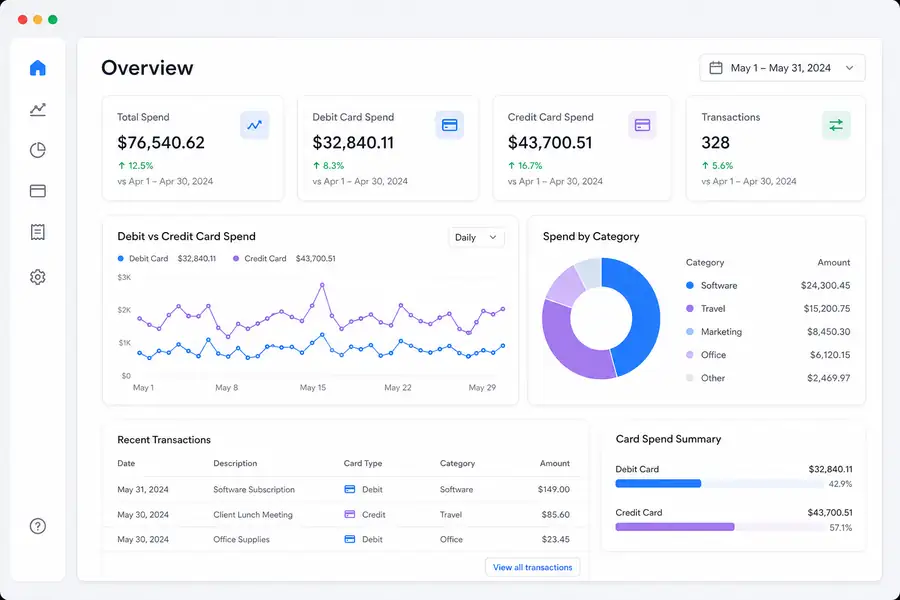
Clyr doesn't change which card type you should use, it removes the reconciliation problem that makes either one painful at scale. Field teams capture receipts on their phones the moment a purchase happens, and Clyr codes the transaction and syncs it to your books in real time rather than waiting for a statement to land. That matters most for crews spending on debit or credit cards out in the field, where a lost paper receipt usually means an uncoded transaction at month-end. Teams comparing expense management software for exactly this problem typically start by looking at how cleanly card transactions, whether debit or credit, feed into QuickBooks or their existing accounting stack.
FAQs
Is a business debit or credit card better for a new business?
A business debit card is usually safer for a brand-new business because it caps spend at whatever cash is in the account and carries no interest risk. Many newer businesses also have a thin credit history, which can mean a lower starting limit or higher rates on a business credit card.
Does using a business credit card build business credit?
Yes, as long as the issuer reports your account activity to a business credit bureau, consistent on-time payments help build a credit profile separate from your personal credit. Check with the issuer directly, since not every card reports the same way.
Can employees misuse a business debit card more easily than a credit card?
Debit and credit cards carry similar misuse risk day to day, but a compromised or misused debit card hits your actual operating cash immediately, while a credit card dispute generally protects your cash while it's investigated. Spending limits, approval workflows, and real-time visibility matter more to preventing misuse than the card type itself.
Should a business use both debit and credit cards for expenses?
Most finance teams do run both: debit for fixed, predictable spend and credit for recurring vendor payments, travel, and anything that benefits from rewards or a payment cycle. The split should follow the type of spend, not a single company-wide rule.
If manual reconciliation is the real bottleneck behind your card decision, you can book a demo to see how Clyr handles receipt capture and coding for both card types.