Choosing between ACH, wire transfer, and paper check to pay a vendor comes down to speed, cost, and how much risk you can absorb if something goes wrong. ACH costs the least, often under $2 per payment, and settles in one to three business days. Wire transfer costs more but moves same day, which makes it the right call for large or international payments. Paper check remains the slowest and most fraud-prone of the three, even though plenty of vendors still ask for it.
Pick the wrong rail and you either overpay in fees or leave a vendor waiting on money they needed today. For most recurring vendor bills, ACH wins on cost. For urgent, high-value, or cross-border payments, the wire transfer fee is usually worth paying.
Key Takeaways
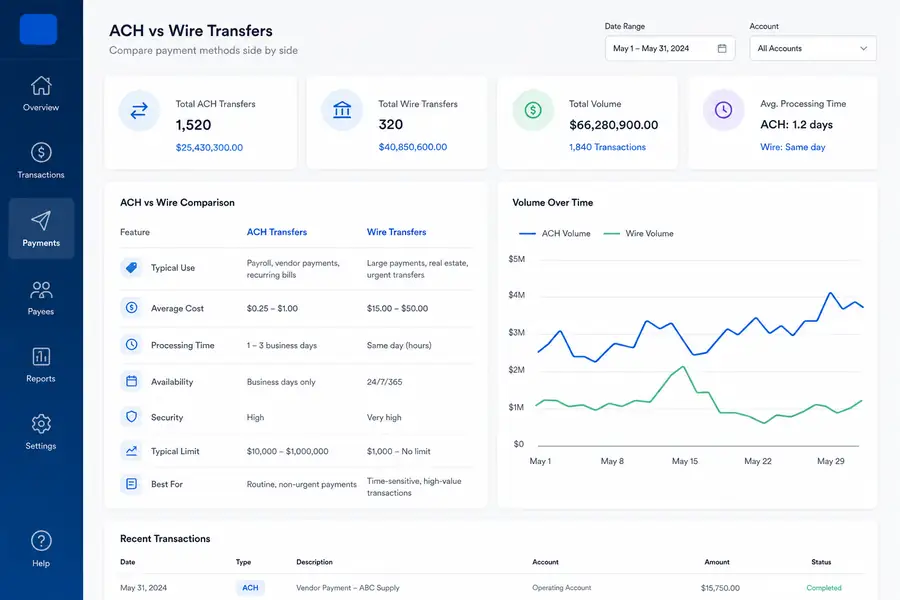
- ACH transfer: typically $0.20 to $1.50 per transaction, settling in one to three business days, with same-day ACH available for a fee.
- Wire transfer: usually $15 to $50 domestically and $40 to $75 or more internationally, settling the same business day.
- Paper check: low bank fee but $1 to $4 in hidden labor and postage cost per check, plus the slowest settlement of the three.
- Recurring vendor bills belong on ACH: urgent, large, or cross-border payments belong on wire.
- Automating vendor payment methods cuts manual entry errors and speeds up reconciliation no matter which rail you pick.
ACH vs Wire Transfer vs Check: A Quick Comparison
Here is how the three vendor payment methods stack up on the factors that actually decide the choice: cost, speed, reversibility, and fit.
| Payment Method | Typical Cost | Speed | Reversible? | Best For |
|---|---|---|---|---|
| ACH transfer | $0.20 to $1.50/transaction | 1 to 3 business days (same-day option) | Limited dispute window | Recurring vendor bills |
| Wire transfer | $15 to $50 domestic, $40 to $75+ international | Same business day | Irreversible once sent | Urgent, large, or international payments |
| Paper check | $1 to $4 in labor and postage per check | 3 to 10 business days including mail time | Can stop payment before it's cashed | Vendors without bank details on file |
ACH Transfers: The Low-Cost Default for Vendor Payments

ACH transfer is the electronic rail most vendors and banks use for routine bills, moving funds through the automated clearing house network that handles the vast majority of US business-to-business payments. A typical ACH payment costs $0.20 to $1.50 per transaction and settles in one to three business days, though same-day ACH is available from most banks for an added fee.
The tradeoff is timing. ACH is not instant, so a vendor who needs funds today will not get them through a standard transfer. It also depends on accurate bank account and routing numbers, and a single wrong digit can send a payment to the wrong account for weeks before it gets sorted out.
Keeping vendor banking details current and verified is the single biggest lever for avoiding ACH errors. A vendor management system that stores verified account information and ties it to each bill removes the manual re-entry that causes most of these mistakes.
Best for: recurring vendor bills, subcontractor payments, utilities, and any payment where a one to three day settlement window is acceptable.
Wire Transfers: Fast but Costly for Vendor Payments
Wire transfer moves money bank-to-bank, usually within hours, which makes it the right call when a vendor payment cannot wait. Domestic wires typically cost $15 to $50 per transfer, and international wires often run $40 to $75 or more once correspondent bank fees are added.
Wires settle the same day and are irreversible once sent, which cuts both ways. The vendor gets paid fast, but a mistake, a wrong account number or a wrong amount, is far harder to unwind than an ACH error. Most banks also enforce a same-day cutoff time, so a wire sent late in the day posts the next business day instead.
Best for: large one-off payments, international vendors, and any payment where the cost of a delay outweighs the transfer fee.
Paper Checks: Cost, Speed, and Best Use Cases for Vendor Payments
Paper check remains the slowest and most fraud-prone way to pay a vendor, but it still has a place for one-off payments to vendors who cannot or will not accept an electronic transfer. The bank fee for issuing a check is often small or free, but the real cost is labor: printing, signing, stuffing envelopes, and postage typically adds $1 to $4 in staff time per check, before counting the days it sits in the mail.
Checks also carry the highest fraud risk of the three rails. Check washing and forged signatures happen often enough that many banks recommend positive pay protection for any company still issuing checks at volume.
Best for: small vendors without electronic payment setup, security deposits, or situations that require a physical, signed record.
Common Mistakes When Choosing a Vendor Payment Method
The most expensive mistake is defaulting to one rail for every payment instead of matching the method to the situation. A $200 recurring subcontractor bill sent by wire wastes $15 to $50 in fees that ACH would have covered for under $2.
- Paying every vendor by wire to be safe: the fees add up fast, and most vendors do not actually need same-day funds.
- Never verifying vendor bank details before the first ACH payment: this is how business email compromise scams redirect payments to fraudulent accounts.
- Manually re-entering vendor and invoice data across systems: every re-key is a chance to send the wrong amount to the wrong account.
- Ignoring the true cost of paper checks: the labor and mail float often cost more than the electronic alternative once staff time is counted.
Property managers juggling payments across dozens of vendors and units feel this the most, since one missed rail decision on a handful of monthly invoices compounds fast. Teams handling that volume often rely on structured accounts payable processes for property managers to keep payment method, timing, and approvals consistent across every property.
Where Clyr Fits in Vendor Payment Decisions
Clyr handles the accounts payable side of this decision by automating bill approval and payment execution instead of leaving AP staff to manually pick and key in a rail for every invoice. Its automated bill pay and accounts payable workflow routes bills for approval, syncs coded transactions to QuickBooks, and pays vendors without someone re-typing account numbers each time.
Field-heavy teams, construction crews, property maintenance staff, and service technicians, generate a steady stream of vendor invoices and card receipts that need to be coded correctly before the payment step even starts. Clyr's card and receipt capture handles that upstream, so the AP team is choosing a payment rail for a clean, coded bill instead of chasing down what an invoice was even for.
If you are still weighing which platform should own this process, the guide to selecting accounts payable software covers the criteria worth checking before you commit. You can also see the bill pay workflow directly in a live demo.
FAQs
Is ACH cheaper than wire transfer?
Yes. ACH transfer typically costs $0.20 to $1.50 per transaction, while a domestic wire transfer usually runs $15 to $50 and international wires often cost more. The tradeoff is speed: wires settle the same day, while standard ACH takes one to three business days.
How long does an ACH payment take to reach a vendor?
A standard ACH transfer usually settles in one to three business days. Same-day ACH is available through most banks for an added fee if a vendor needs funds faster without paying wire transfer rates.
Can you reverse a wire transfer if you send it to the wrong account?
Generally no. Wire transfers settle the same day and are treated as final once the receiving bank accepts them, so recovering a misdirected wire depends on the receiving bank's cooperation rather than any built-in reversal right. ACH payments have more recourse through the dispute process, which is why many AP teams reserve wires for verified, trusted vendors.
Are paper checks still safe to use for vendor payments?
Paper checks carry more fraud risk than ACH or wire transfer because a physical check can be intercepted, altered, or forged in transit. They still work for vendors without electronic payment setup, but most AP teams limit check use and pair it with positive pay protection through their bank.
What is the best vendor payment method for a small business?
For most small businesses, ACH is the best default because it is the cheapest option and handles recurring vendor bills reliably. Wire transfer still makes sense for occasional large or international payments where speed matters more than the fee.