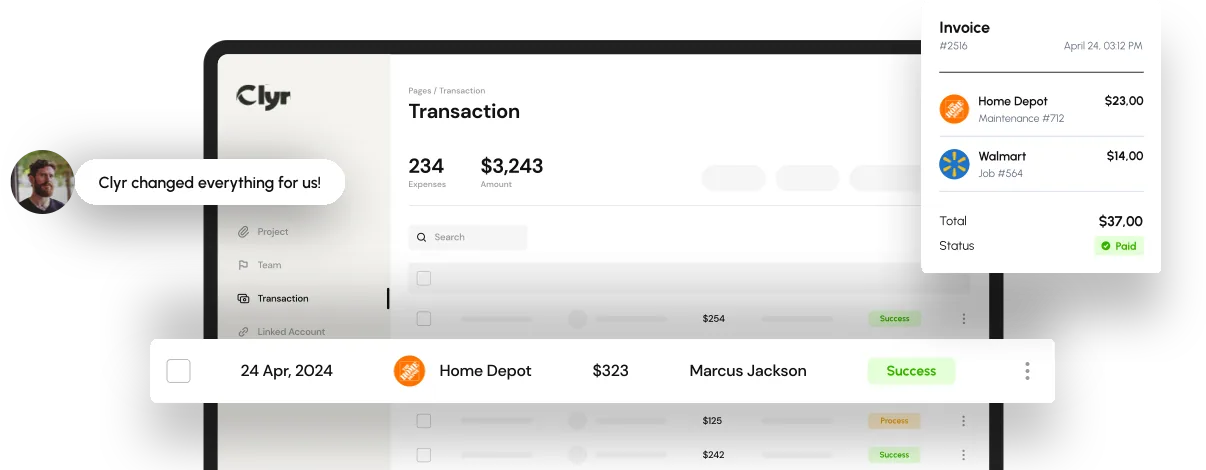

Property management companies face a $15.96 average cost per invoice in manual processing environments, while best-in-class automated operations achieve $2.81 per invoice, representing an 82% cost reduction opportunity. With the average property management firm processing over 1,000 invoices monthly across 21 or more vendors, the financial impact extends far beyond basic payment automation.
The property management industry’s $81.52 billion market size masks significant operational inefficiencies, where 68% of invoices still require manual data entry and average processing times stretch to 14.6 days. Leading firms that achieve breakthrough results focus on end-to-end workflow changes, unlocking 283% productivity increases while avoiding proportional staff expansion during portfolio growth.

Current State: Massive Optimization Potential
The property management sector lags significantly behind other industries in the adoption of accounts payable automation. While 71% of AP professionals across industries cite automation as integral to their future operations, property management companies remain heavily dependent on manual processes.
Hidden Costs of Manual Processing
Processing inefficiencies create substantial hidden costs. The average manual processing cost includes not just direct labor but also error correction, duplicate payment resolution, and missed early payment discounts. Key financial impacts include:
- $191,520 annual processing costs for typical firms handling 12,000 invoices yearly
- $15.96 per invoice in manual environments vs $2.81 per invoice for automated systems
- 2-5x additional costs for error correction beyond the original processing expense
- Lost early payment discounts due to delayed approval cycles
- Vendor relationship strain from inconsistent payment timing
Error Rates Drive Up Operational Burden
Error rates compound operational burden. With 39% of invoices containing errors in manual systems, property management companies face significant correction costs. Error correction typically costs 2-5 times the original processing cost and creates vendor payment delays that impact service delivery.
Size-Based Technology Divide
Technology adoption varies dramatically by size. Organizations with more than 5,000 units demonstrate significantly higher technology adoption rates, while smaller firms struggle with resource constraints.
This creates a competitive divide where larger firms achieve operational advantages through specialized property management expense solutions that smaller firms often cannot access.
Technology Adoption Accelerates Despite Implementation Challenges
The $3.08 billion global AP automation market is growing at 12.8% CAGR, demonstrating strong demand, with 41% of companies planning to automate invoice payment processes within 12 months. However, only 20% of teams have achieved full automation, indicating significant implementation challenges.
Industry-Specific Solutions Drive Results
Property management-specific solutions emerge as differentiators. Leading platforms like Yardi PayScan, RealPage Spend Management, and AppFolio Smart Bill Entry address industry-specific requirements, including multi-location approval workflows and property-specific GL coding.
These solutions demonstrate 25-80% processing time reductions compared to manual systems, with automated bill pay capabilities becoming essential for competitive operations.
Mobile Capabilities Transform Field Operations
Mobile accessibility becomes critical. With property management teams operating across multiple locations, mobile-enabled workflows reduce approval cycle times by 50%+ compared to desktop-only systems, with real-time receipt capture and coding enabling field staff to process expenses immediately.

Strategic Pain Points Require Comprehensive Solutions
Multi-Property Vendor Management Complexity
Vendor management complexity multiplies across portfolios. Property management companies typically manage 21+ external vendors per property, creating relationship management challenges that scale exponentially with portfolio growth.
Understanding specific expense-related pain points of property managers with multiple properties becomes critical for developing effective solutions.
Distributed Approval Hierarchies
Approval workflow complexity reflects distributed operations. Unlike traditional businesses with centralized operations, property management companies must accommodate distributed approval hierarchies, including corporate management, regional supervisors, and on-site property managers. 29% of enterprises require six or more approvals, with geographic distribution adding coordination challenges.
Advanced Document Management Requirements
Document management exceeds standard business needs. Property management invoices require property-specific coding, budget verification, and regulatory compliance documentation that standard AP solutions cannot handle effectively.
48% of small businesses and 22% of large enterprises still receive paper invoices, requiring sophisticated document capture. Effective solutions must accommodate efficient property management expense tracking across diverse property types.
Multi-Stakeholder Reporting Needs
Reporting needs span multiple stakeholder groups. Organizations must provide real-time spend visibility to property owners, regional managers, and corporate executives with different information requirements.
Only 9% of respondents consider their AP metrics extremely effective. Advanced implementations integrate job costing and profitability analysis that enable property-level financial performance tracking.
Financial Impact Analysis: Substantial ROI Opportunity
Productivity Gains Through Automation
Direct cost savings consistently exceed 60%. Fully automated systems enable dramatic productivity improvements that transform operational capacity:
- 283% productivity increase - staff handle 23,333 vs 6,082 invoices annually
- 3x+ portfolio growth capacity without proportional staff increases
- 70-83% cost reduction per invoice through automation implementation
- 60%+ direct cost savings compared to manual processing environments
- 8-10 hours per week in staff time freed for strategic activities
- 99.97% accuracy rates, eliminating costly error correction cycles
Cash Flow and Payment Term Optimization
Cash flow optimization through early payment discount capture. Automated systems enable early payment discount capture rates exceeding 85% compared to inconsistent capture in manual environments.
For organizations with substantial vendor spend, this represents additional cost savings of 1-3% of total payables volume.
Error Reduction Creates Strategic Value
Error reduction delivers multiple financial benefits. Automation systems achieving 99.97% accuracy eliminate error correction costs while improving vendor relationships, creating strategic value beyond direct cost savings.
Integration Considerations Span Multiple Platforms
Platform-Specific Integration Strategies
Platform-specific integration strategies address unique requirements. Yardi Systems integration uses 450+ interfaces to move data while keeping Yardi as the system of record. AppFolio integration uses Stack Marketplace capabilities with role-based security and mobile accessibility.
QuickBooks integration capabilities also enable smaller firms to maintain their preferred accounting platform while adding advanced AP automation, and Buildium integration supports specialized residential property management workflows.
Real-Time Data Synchronization
API-based integration enables real-time synchronization. Leading implementations establish automated data flows including budgets, actuals, vendor data, and approval status updates, eliminating manual data entry while ensuring consistency across systems.

Compliance Requirements Shape Implementation Decisions
Federal and State Regulatory Constraints
Federal compliance creates operational constraints. HUD-assisted properties must maintain strict compliance, including cash management prohibitions and cost certification requirements. AP systems must accommodate these requirements while maintaining efficiency.
Property managers deal with complex utility bill management processes involving multiple accounts and regulatory reporting.
State licensing requirements affect procedures. With most states requiring property managers to hold real estate broker licenses, AP processes must maintain compliance with state-specific requirements while supporting operational efficiency.
Trust Account and Financial Controls
Trust account management requires sophisticated controls. Strict segregation of tenant funds, detailed record-keeping requirements, and monthly reconciliation obligations require AP systems that maintain audit trails while ensuring financial transparency.
Future Trends Promise Continued Transformation
AI and Machine Learning Integration
AI-powered automation platforms, including Scrypt AI and Yardi AI, demonstrate machine learning capabilities for invoice processing, coding, and approval workflows. Pattern recognition enables automated data extraction while predictive analytics support cash flow forecasting.
Blockchain and Smart Contract Applications
Blockchain technology enables smart contract applications. Smart contracts provide automated vendor payments upon completion of predefined conditions with transparent, immutable transaction records. Real estate asset tokenization, projected to reach $600 billion by 2030, creates opportunities for automated payment distributions.
Embedded Finance Evolution
Embedded finance transforms ecosystems. The embedded finance market, projected to reach $7.2 trillion by 2030, enables payment processing inside property management platforms and integrated lending products.
Strategic Recommendations for Maximum Impact
Foundation: Metrics and Technology Selection
Establish baseline metrics before technology selection. Organizations should benchmark current performance using cost per invoice, processing time, error rates, and staff productivity. This establishes objective criteria for technology evaluation and ROI measurement.
Prioritize integration capabilities over feature richness. Clean integration with existing property management platforms determines implementation success more than feature sophistication. Consider expense management software that provides industry-specific capabilities while maintaining integration flexibility.
Implementation Excellence
Implement change management as a strategic capability. Organizations achieving breakthrough results invest in full change management, including executive sponsorship, staff training, and continuous improvement processes.
Develop vendor management as a competitive advantage. Leading companies implement strategic vendor management programs that extend beyond payment processing to encompass performance monitoring, relationship development, and strategic partnership creation.
Future-Proofing Operations
Plan for regulatory compliance evolution. With regulatory requirements continuing to evolve, organizations should implement flexible compliance frameworks that accommodate changing requirements while maintaining operational efficiency.
Property management companies implementing these strategic recommendations position themselves for significant competitive advantage through reduced operational costs, enhanced vendor relationships, improved cash flow management, and the operational scalability required for successful portfolio growth in an increasingly complex market environment.
FAQs
An average of $15.96 per invoice, against $2.81 for best-in-class automated operations. For a firm processing 12,000 invoices a year that works out to roughly $191,520 annually, before counting error correction, which typically costs 2 to 5 times the original processing expense.
Portfolios multiply every variable. Firms typically manage 21 or more vendors per property, approvals run through corporate management, regional supervisors, and on-site managers rather than one central desk, and every invoice needs property-specific coding, budget verification, and compliance documentation that standard AP tools do not handle.
Fully automated teams handle around 23,333 invoices per person annually versus 6,082 manually, a 283% increase. That supports 3x or more portfolio growth without adding headcount, frees 8 to 10 hours of staff time per week, and reaches accuracy rates near 99.97%.
HUD-assisted properties carry cash management prohibitions and cost certification requirements, most states require property managers to hold real estate broker licenses, and trust accounting demands strict segregation of tenant funds with detailed records and monthly reconciliation backed by audit trails.
Integration capability over feature count. Benchmark your current cost per invoice, processing time, error rate, and staff productivity first, then evaluate how cleanly a platform connects to the property management system you already run, since that determines implementation success more than feature sophistication.