
Quick answer: SG&A stands for selling, general, and administrative expenses: the costs of running a business that aren't tied directly to producing a product or delivering a service. It covers sales salaries, marketing, rent, office supplies, and admin staff pay. SG&A shows up as its own line on the income statement, separate from cost of goods sold.
Bookkeepers run into SG&A constantly because it's rarely one clean bucket. It sits between gross profit and operating income, and how tightly you categorize it changes how accurate your margins actually look.
Get the definition right first, then the calculation gets simple.
What Counts as SG&A Expenses?
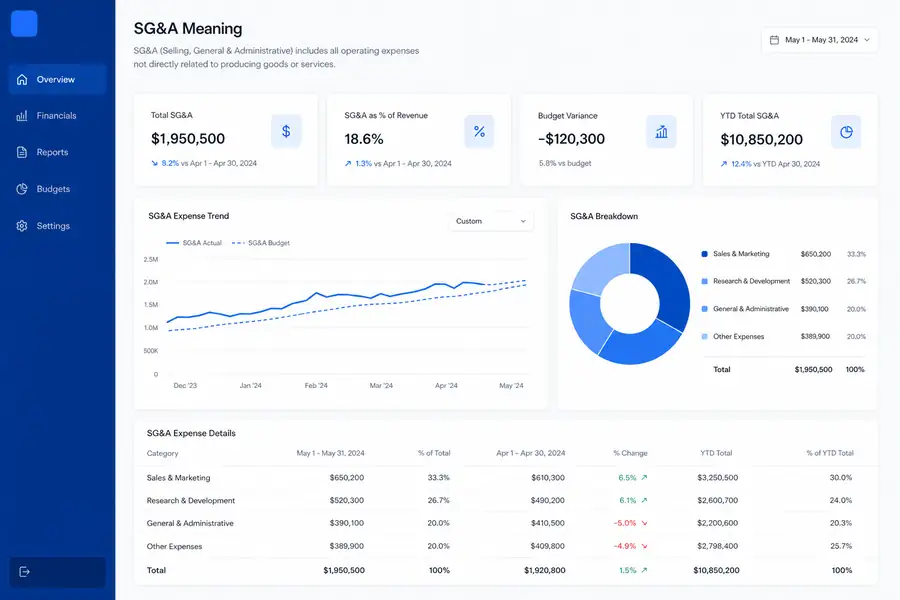
SG&A expenses include everything a company spends to run the business outside of actually making its product or delivering its service. That means sales costs, marketing, and administrative overhead, but not the materials or labor that go directly into a product.
| Category | Typical costs |
|---|---|
| Selling | Sales salaries and commissions, advertising, travel for sales reps |
| General | Rent, utilities, insurance, office supplies |
| Administrative | Executive salaries, HR, legal fees, accounting software |
Note what's missing: raw materials, production labor, and shipping tied to a product all belong to cost of goods sold, not SG&A. For a broader look at what counts as a deductible business expense, this business expenses list breaks the categories down by type.
SG&A vs COGS: What's the Difference?
SG&A expenses cover the cost of running the business, while cost of goods sold (COGS) covers the direct cost of making what you sell. A construction company's lumber and framing crew wages are COGS. The office manager's salary and the marketing budget are SG&A.
The split matters because it changes what each number tells you. Revenue minus COGS gives you gross profit, which shows how efficiently you produce. Gross profit minus SG&A gives you operating income, which shows whether the business as a whole is actually profitable once overhead is paid.
Mixing the two hides both answers. A company that buries admin salaries inside COGS looks like it has a stronger gross margin than it really does, and that gap only shows up when someone reconciles the books line by line.
How to Calculate SG&A
The SG&A formula is straightforward: SG&A = selling expenses + general expenses + administrative expenses, added up for the period you're reporting.
Say a small business posts these figures for the month:
| Line item | Amount |
|---|---|
| Sales salaries and commissions | $18,000 |
| Marketing and advertising | $6,000 |
| Office rent and utilities | $4,000 |
| Admin salaries and software | $10,000 |
| Total SG&A | $38,000 |
With $400,000 in revenue that same month, the SG&A ratio (SG&A divided by revenue) works out to 9.5%. Tracking that ratio month over month tells you more than the raw dollar figure, because it shows whether overhead is growing in line with sales or creeping ahead of it.
Why SG&A Matters for Bookkeepers and Finance Teams
Clean SG&A tracking is what lets a bookkeeper trust the operating income line without re-checking every entry. When SG&A is miscoded or lumped together, margin analysis becomes guesswork, and month-end close takes longer than it should.
For companies with field teams, like construction, property management, or field service crews, SG&A gets messy fast. Dispatcher pay, job-site supplies, and marketing spend all end up in one spreadsheet without categories unless someone tags each purchase by hand. Software built specifically as expense management software, rather than a generic card program, keeps that categorization consistent instead of relying on someone remembering to sort it later.
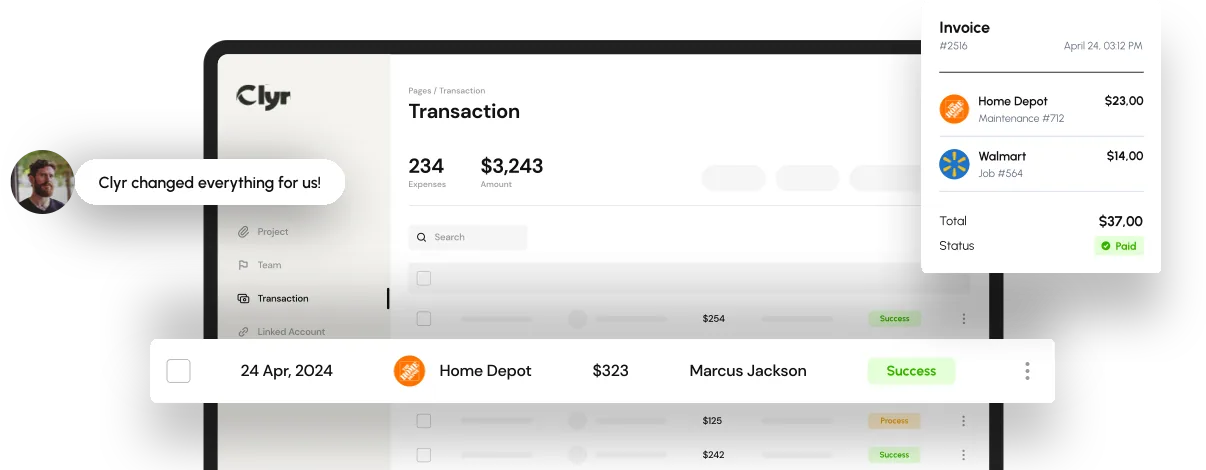
Clyr's real-time receipt capture and coding tags each purchase to the right SG&A category the moment a card is swiped, then syncs to QuickBooks so nothing needs re-entry when you close the books.
Common SG&A Mistakes to Avoid
- Lumping COGS into SG&A: this inflates gross margin and hides the true cost of the product or service.
- Ignoring the SG&A ratio trend: a ratio that climbs quarter over quarter usually means overhead is outpacing growth, even if raw dollars look stable.
- Letting field expenses go uncoded: receipts submitted weeks late get dumped into a generic miscellaneous bucket instead of the right SG&A line.
- Relying on spreadsheets across multiple locations or entities: manual entry multiplies errors as headcount and site count grow.
If you're ready to see how automated coding keeps SG&A categories clean without manual cleanup, you can book a demo of Clyr and walk through it against your own income statement.
FAQs
What does SG&A stand for?
SG&A stands for selling, general, and administrative expenses. It's the line on an income statement that groups sales costs, office overhead, and administrative salaries together, separate from the cost of producing what the company sells.
Is SG&A the same as operating expenses?
SG&A is usually the largest piece of operating expenses, but not the only one. Some companies also report research and development or depreciation as separate operating expense lines rather than folding them into SG&A.
What is a good SG&A percentage of revenue?
Most small and mid-sized businesses run somewhere between 10% and 25% of revenue on SG&A, though the right number depends heavily on industry. A software company with a large sales team typically runs higher than a construction contractor whose costs skew toward job-site labor and materials.
Does SG&A include payroll?
SG&A includes payroll for sales staff, office administrators, and executives, since their work supports the business rather than producing the product directly. Payroll for production workers or field crews building or delivering the actual work is usually classified under cost of goods sold instead.
Where does SG&A appear on the income statement?
SG&A sits below gross profit and above operating income on the income statement. Subtracting SG&A and any other operating expenses from gross profit is what produces the operating income figure.