
G&A meaning, short for general and administrative expenses, covers the day-to-day costs of running a business that are not tied to producing a specific product or service. That includes accounting, HR, legal, IT, and executive management. These costs form a distinct line on the income statement, separate from cost of goods sold and sales expenses.
Every business carries G&A costs, whether it sells products, services, or both. A landscaping company still pays for bookkeeping software and a payroll processor. A software firm still pays rent on its office. The hard part for bookkeepers is drawing a clean line between what counts as G&A and what belongs somewhere else on the chart of accounts.
What Counts as a G&A Expense?
A G&A expense is any cost that keeps the business functioning as a whole, regardless of how much it sells that month. These are overhead costs: the kind that would keep showing up on the books even if the sales team went quiet for a few weeks. Rent for the corporate office, the accounting team's salaries, legal fees, and business insurance all fall under general and administrative expenses because none of them move with how many units the company ships or how many clients it bills.
The rule bookkeepers use to sort it out: if a cost supports the entire company rather than a single department, project, or sale, it belongs in G&A.
G&A Expenses vs. SG&A and COGS
G&A expenses differ from cost of goods sold and selling expenses mainly by what they are tied to. COGS moves with production, selling expenses move with sales activity, and general and administrative expenses stay fairly flat no matter how much the business sells or produces in a given month.
| Category | Tied to | Typical examples | Where it appears |
|---|---|---|---|
| G&A | Running the whole company | Accounting, HR, legal, office rent | Operating expenses, below COGS |
| COGS | Producing the product or service | Raw materials, direct labor, job materials | Above the gross profit line |
| Selling expenses | Generating sales | Commissions, marketing, sales travel | Operating expenses, often grouped with G&A |
Many income statements combine selling expenses and G&A into a single SG&A (selling, general, and administrative) line. That combined figure gives a quick read on overhead, but it blurs the difference between a cost that moves with sales volume and one that stays fixed no matter what the business sells.
Common G&A Expense Examples
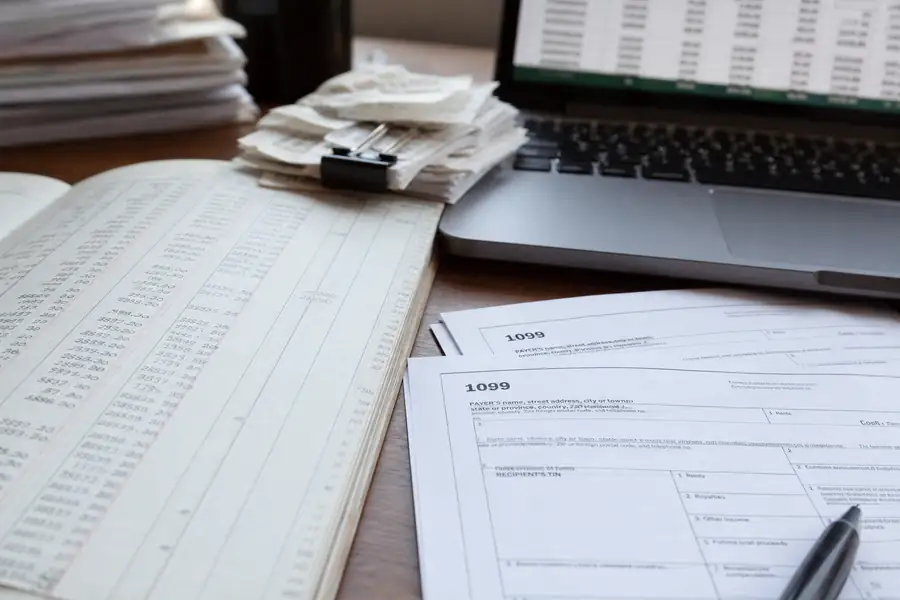
Most G&A expense examples fall into a handful of categories every SMB bookkeeper will recognize. For a broader rundown of what counts as a deductible cost, see this business expenses list for tax purposes.
- Executive salaries and benefits: pay for the CEO, controller, and other leadership roles that oversee the whole company rather than one department.
- Accounting and bookkeeping fees: software subscriptions, outside CPA fees, and payroll processing costs.
- Legal and professional fees: contract review, compliance work, and business insurance premiums.
- Office rent and utilities: the lease, electricity, and internet for the administrative office, not a job site or warehouse tied to production.
- IT and software costs: the tools that run the back office, from email hosting to the accounting platform itself.
- HR costs: recruiting, benefits administration, and training that is not tied to a specific project or client.
Why G&A Expenses Matter for Bookkeeping and Budgeting
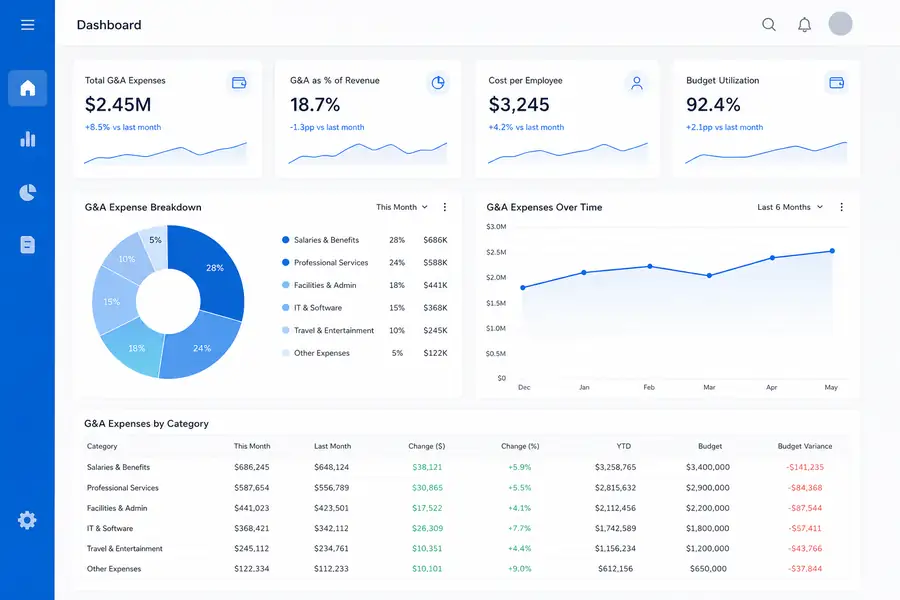
Tracking G&A expenses separately matters because it is the clearest signal of what it costs to simply keep the business running, independent of sales performance. A company that grows revenue while letting G&A creep up unchecked is quietly eroding its margin, even if the top line looks healthy.
Comparing G&A to revenue over time, a simple G&A-to-revenue ratio, shows whether overhead is scaling with the business or outpacing it. If G&A grows faster than revenue for two or three quarters in a row, that is a budgeting problem worth flagging before it shows up in cash flow.
A common misclassification mistake, especially in field-based businesses, is coding job-site travel or crew expenses as G&A when they should sit in COGS. That mistake quietly inflates overhead on paper and understates the true cost of the work itself, which throws off job costing and pricing decisions.
How to Track G&A Expenses Accurately
Accurate G&A tracking starts with a chart of accounts that separates overhead from cost of goods sold and selling expenses, then a habit of coding every transaction to the right bucket the moment it happens, not weeks later during reconciliation.
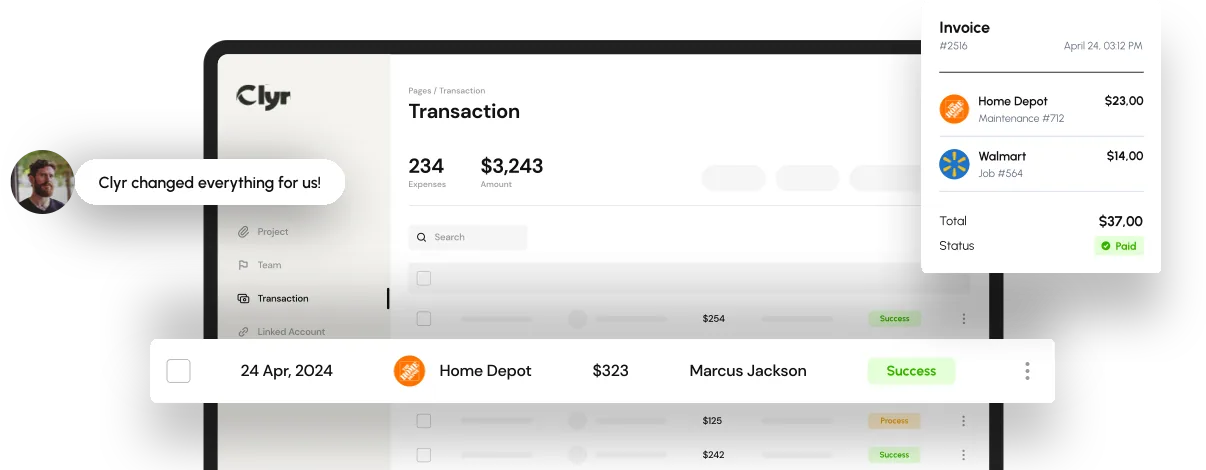
The fastest way to get there is with expense management software that tags each transaction automatically instead of leaving a bookkeeper to sort a stack of receipts after the fact.
For businesses with crews on the road or on a job site, the harder problem is usually classification, not tracking. Real-time receipt capture and coding lets a field employee snap a photo of a receipt and have it coded to the correct account, whether that is job cost or a G&A line item, before it ever reaches the office. Construction teams that adopt this workflow tend to close their books faster because nothing sits waiting to be classified.
Syncing that data to accounting software, through Clyr's QuickBooks integration, keeps the general ledger current without anyone re-keying G&A expenses by hand. If you want to see how Clyr codes G&A, job costs, and everything else automatically, you can book a demo.
FAQs
What is the difference between G&A and SG&A?
G&A stands for general and administrative expenses, the overhead costs of running the whole company. SG&A adds selling expenses like commissions and marketing to that same line, so it captures both fixed overhead and costs that move with sales volume.
Is rent a G&A expense?
Rent for a corporate or administrative office is a G&A expense because it supports the entire company rather than production or sales specifically. Rent for a warehouse or job site tied directly to producing goods or services is usually classified under cost of goods sold instead.
Are salaries part of G&A expenses?
Salaries for executives, accounting staff, HR, and other back-office roles count as G&A expenses because those roles support the whole company. Salaries for production workers or salespeople are typically classified as COGS or selling expenses instead.
How much should G&A expenses be as a percentage of revenue?
There is no single healthy number, since it depends heavily on industry and company size, but many small and mid-sized businesses aim to keep G&A in a range that holds steady or shrinks as revenue grows. A rising G&A-to-revenue ratio over several quarters usually signals overhead is outpacing the business rather than scaling with it.
Is marketing a G&A expense or a selling expense?
Marketing is generally treated as a selling expense because it is tied to generating sales, not to running the company as a whole. Some smaller businesses group it with G&A under a combined SG&A line, but the underlying activity is a selling cost.