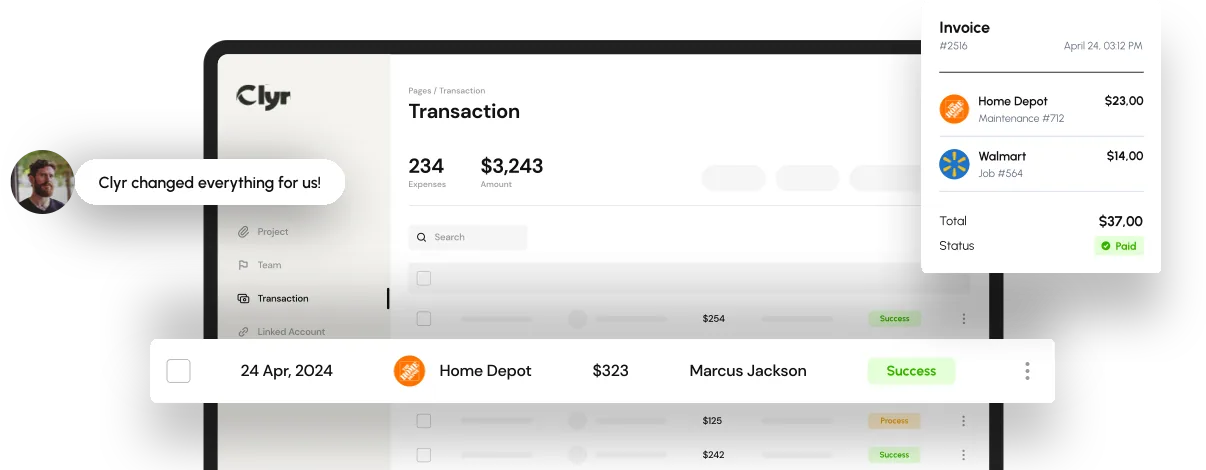

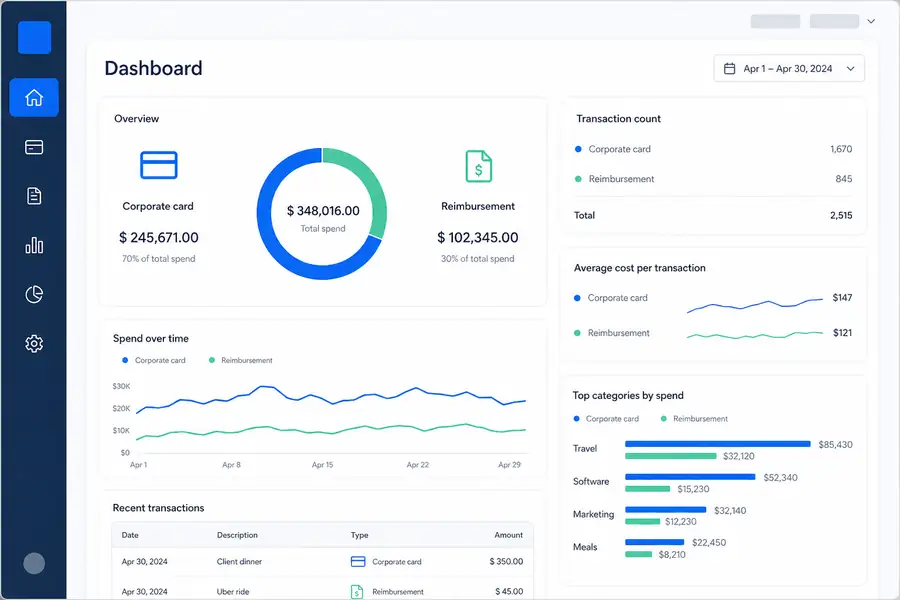
Quick answer: The corporate card vs reimbursement decision comes down to control versus flexibility. A company card gives employees real-time purchasing power and gives finance a live feed of spend, but it means issuing and managing cards. Reimbursement keeps spending on personal cards or cash, so setup is simple, but employees front the cost and wait for repayment, and finance loses visibility until the report lands.
Most growing teams end up running both: cards for recurring or field spend, reimbursement for the occasional one-off purchase.
Key Takeaways
- Corporate cards: real-time spend visibility and no employee float, but you manage card issuance, limits, and reconciliation.
- Reimbursement: no card program to run, but employee cash gets tied up and finance sees spend late.
- Field and recurring spend fits cards; occasional or personal-card purchases fit reimbursement.
- The right model depends on company size, spend frequency, and how fast you need to close the books.
- Many finance teams run a hybrid model rather than picking one system for everything.
Corporate Card vs Reimbursement: How Each Model Works
A corporate card lets an employee spend directly from company funds within limits set in advance. Reimbursement has the employee pay first, out of pocket or on a personal card, and the company repays after a report and approval.
| Attribute | Corporate Card | Reimbursement |
|---|---|---|
| Who pays first | Company, via the card | Employee, out of pocket |
| Spend visibility | Real-time, as transactions post | Delayed, until a report is filed |
| Setup effort | Card issuance, limits, controls | Minimal: policy and a submission form |
| Employee cash impact | None, no float required | Employee fronts the cost until repaid |
| Reconciliation work | Match transactions to receipts and GL codes | Match reimbursement requests to receipts |
| Best for | Recurring or field spend | Occasional or personal-card purchases |
Card reconciliation is the tradeoff that catches most finance teams off guard. Someone still has to match every card transaction to a receipt and the right GL code before close, even though the money already moved. Our guide to corporate credit card reconciliation covers how to build that process without adding headcount.
Corporate Cards: Pros and Cons
Corporate cards give employees direct purchasing power and give finance real-time visibility into spend, at the cost of card management and stricter controls.
Pros
- Real-time visibility: transactions post immediately, so finance sees spend as it happens instead of waiting on a report.
- No employee float: staff never front company money, which matters for field crews and hourly workers.
- Built-in controls: card limits and merchant category blocks stop overspend before it happens rather than catching it after the fact.
- Faster close: coded transactions cut down the scramble to match receipts at month-end.
Cons
- Program overhead: someone has to issue cards, set limits, and handle lost or stolen card requests.
- Reconciliation still required: every transaction needs a receipt and a GL code, and that job doesn't disappear just because spend sits on a card.
- Misuse risk: personal charges on a company card happen, and catching them takes ongoing oversight.
Best for
Corporate cards work best for teams with recurring or field-based spend: crews buying materials on job sites, reps entertaining clients, or any team where waiting on reimbursement would create real cash-flow strain. Smart corporate cards with built-in limits and category controls make this manageable even for distributed field teams.

Employee Reimbursement: Pros and Cons
Reimbursement lets employees pay for business expenses personally and get repaid after submitting a report, which keeps setup simple but slows visibility and ties up employee cash.
Pros
- Simple to start: no card program, just a policy and a submission process.
- No card liability: the company never issues plastic, so there's no lost-card or fraud exposure on that side.
- Works for irregular spend: occasional purchases, mileage, or a one-off client dinner don't justify a dedicated card.
Cons
- Employee cash strain: staff front the cost and wait days or weeks for repayment, which adds up for frequent travelers.
- Delayed visibility: finance only sees the spend once a report is filed, often well after the money is already gone.
- Manual matching: someone still has to check each receipt against policy and code the line before approval.
Best for
Reimbursement fits low-frequency spend and mileage, where issuing a dedicated card would be overkill. Clean policies around employee reimbursements and mileage matter here, since mileage math and repayment timing are the most common source of disputes.
Corporate Card vs Reimbursement: Which Fits Your Business
The right choice depends on how often employees spend, how fast you need visibility, and whether cash-flow strain on employees is acceptable.
Construction and field service crews usually lean on cards because they buy materials on the fly and need spend coded to the right job the same day, a practice known as job costing. Property managers often split card spend by property so costs land on the correct P&L. Professional services firms doing client work frequently keep a light reimbursement process for occasional travel while relying on cards for recurring subscriptions and software.
A ten-person company running either process by spreadsheet usually feels the pain first. Matching receipts by hand doesn't scale once transaction volume climbs, which is exactly why most teams outgrow manual matching long before they outgrow their expense management software.
Clyr, for example, issues corporate cards with real-time receipt capture and syncs coded transactions straight to QuickBooks, so finance doesn't rebuild a spreadsheet at close, whether the spend came from a card or a reimbursement request.
Common Mistakes When Choosing Between Card and Reimbursement
The most common mistake is picking one model for the whole company instead of matching the model to the spend type.
- Running everything through reimbursement: ties up employee cash and delays visibility until month-end, when a card would clear it in real time.
- Issuing cards with no spend controls: category and limit controls prevent misuse; skipping them turns a card program into a bigger reconciliation headache.
- Skipping reconciliation until close: waiting until month-end to match receipts to card transactions guarantees a scramble; matching daily keeps the books current.
- Ignoring field team cash flow: reimbursing hourly workers for job site purchases can create real financial strain that a card removes.
If you're weighing corporate card vs reimbursement for a growing team, the fastest way to see how automated card and receipt matching would work for your process is to book a demo with Clyr.
FAQs
Can a business use both corporate cards and reimbursement?
Yes, and most growing companies do. Cards handle recurring or field spend where speed and control matter, while reimbursement covers occasional purchases or mileage that don't justify issuing a dedicated card.
Is a corporate card safer than reimbursing employees?
A corporate card with spend limits and category controls generally reduces risk compared to reimbursement, since finance can cap what's spent before it happens rather than catching a problem after the fact. Reimbursement carries less card fraud risk but more exposure to inflated or duplicate claims.
Do employees still need to submit receipts with a corporate card?
Yes. A card removes the cash-flow burden from the employee, but finance still needs a receipt for every transaction to support GL coding and the audit trail at tax time.
How does mileage reimbursement work if the company also issues cards?
Mileage is almost always handled through reimbursement even in a card-heavy program, since employees drive personal vehicles rather than paying a merchant directly. Most companies calculate it using the current IRS standard mileage rate applied to logged business miles.
Which is cheaper, corporate cards or reimbursement?
Reimbursement has no card fees but costs more in staff hours spent chasing receipts and processing repayments. Corporate cards often earn rewards or cash back and cut manual work, though they require someone to manage limits and reconcile transactions.