Cell phone reimbursement pays employees back for using a personal phone for work, either as a flat monthly stipend or as a share of their actual bill. Most companies land somewhere between $20 and $80 a month per employee, with field roles running higher because the phone doubles as a work tool. Without a written cell phone reimbursement policy, payouts turn into guesswork: one manager approves a request, another denies the same one, and nobody can point to a rule that explains why.
- Cell phone reimbursement for most office roles runs $20 to $40 a month; field and client-facing roles often run $50 to $80.
- A written phone stipend policy stops inconsistent payouts and reduces legal exposure.
- Several states, including California and Illinois, require reimbursement for business use of a personal phone.
- Flat stipends are easiest to administer; percentage-based reimbursement is more precise but requires reviewing bills.
- Field teams need higher reimbursement because a phone often replaces a laptop, camera, and GPS unit on the job.
- Pairing a stipend with automated receipt and expense tracking keeps reimbursement consistent and audit-ready.
What Cell Phone Reimbursement Covers
Cell phone reimbursement is a category of employee reimbursement that compensates staff for business use of a phone they personally own and pay for. It sits in the same family as mileage, covered in Clyr's guide to employee reimbursements and mileage: money the company owes an employee for a cost the employee fronted on the company's behalf.
Most policies reimburse a portion of the recurring monthly service bill, not the cost of the device itself. Some employers extend coverage to a data overage caused by work use, but the core benefit is the plan payment.
A cell phone reimbursement can take one of two forms: a flat stipend added to payroll each month, or a reimbursement tied to submitted phone bills. Which one fits depends on how much the role actually depends on the phone.
Why a Formal Phone Stipend Policy Matters
A formal phone stipend policy matters because it replaces manager discretion with a rule everyone can point to. Without one, two employees doing the same job can receive different amounts, and HR ends up settling disputes case by case instead of applying a standard.
There's also legal exposure. Several states, including California and Illinois, require employers to reimburse employees for business use of a personal cell phone, even if the employee's plan is unlimited and the marginal cost is technically zero. A written policy is the easiest way to show reimbursement is happening consistently, not just when someone complains.
The same logic behind a clear travel reimbursement policy applies here: put the amount, the eligibility, and the proof required in writing, and reimbursement stops being a negotiation.
How Much Should Cell Phone Reimbursement Be?
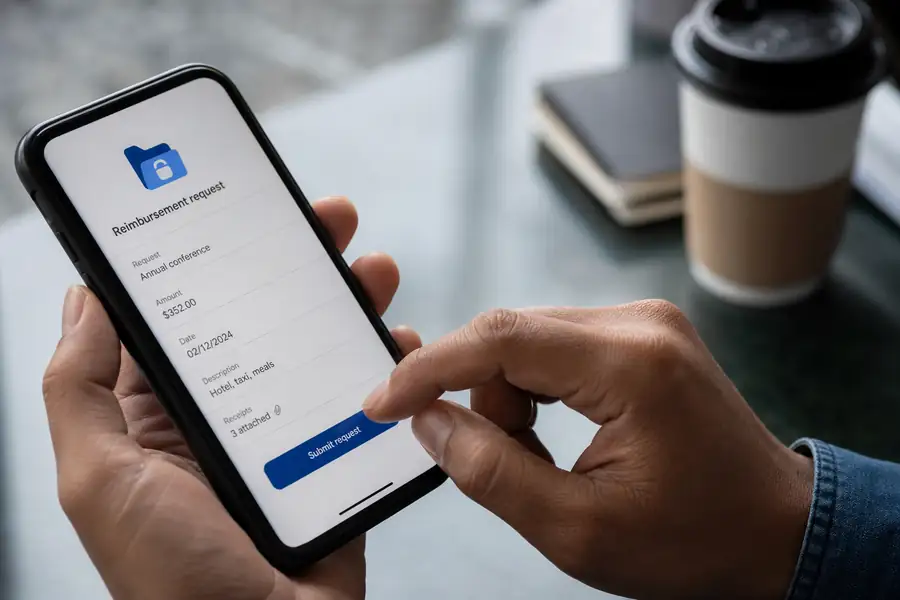
Most cell phone reimbursement lands between $20 and $80 a month per employee, and the right number depends on how much the role relies on the phone during the workday.
Office staff who take an occasional work call need less than a property manager juggling vendors and tenants across several buildings. Use role, not job title, to set the amount.
| Role type | Typical monthly reimbursement | Why |
|---|---|---|
| Office staff, occasional use | $20-$40 | Light email and call volume on a personal plan |
| Sales and client-facing roles | $40-$60 | Regular calls, texts, and scheduling on the go |
| Field service and construction crews | $50-$75 | GPS, job-site photos, and check-ins throughout the day |
| Property managers with multiple sites | $50-$80 | Coordinating vendors, tenants, and emergencies across locations |
Stipend vs. Full Reimbursement: Choosing the Right Phone Stipend Policy
A flat stipend is the simplest phone stipend policy: everyone in a role gets the same fixed amount each pay period, no receipts required. It's easy to run through payroll and easy for employees to understand, though it can overpay light users and underpay heavy ones.
Flat monthly stipend
Best for teams where phone use is fairly uniform, like most office and administrative roles. Set one amount per role tier and stop reviewing bills every month.
Percentage-based reimbursement
The employee submits a monthly bill and the company reimburses a set percentage, often 50-75%, of the plan cost. This is more precise but adds administrative work, since someone has to collect and check bills.
Full reimbursement
Rare outside of roles that require a dedicated business line. Usually reserved for on-call managers or executives whose phone use is almost entirely work-driven.
Cell Phone Reimbursement for Field Teams
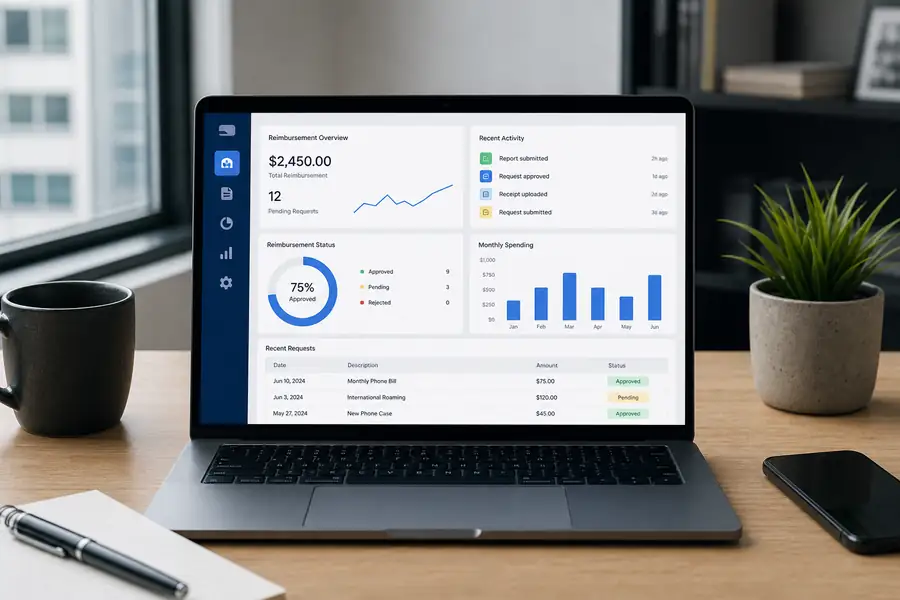
Field teams put more demand on a phone stipend policy than office staff, because the phone is often the only device on site. A construction supervisor uses it for job-site photos, timesheets, and calls to subcontractors; a property manager uses it to field emergency maintenance calls after hours. Both use cases justify reimbursement at the higher end of the range, not the office default.
This is also where reimbursement tends to get messy. A crew member fronts a phone bill and waits weeks for a reimbursement check, or a manager approves stipends inconsistently because no system tracks who's owed what. Vertical guidance like Clyr's page on expense management for construction covers the broader version of this problem: field spend that never gets coded or reimbursed on time.
A phone stipend added directly to payroll, on a fixed schedule, removes most of that friction. The employee knows exactly when and how much they'll be paid, and finance isn't chasing down bills every month.
Common Mistakes in Cell Phone Reimbursement Policies
Applying one flat number to every role: a single company-wide stipend overpays office staff and underpays field crews, so the amount should scale with actual phone dependency.
Skipping a written policy: verbal agreements between a manager and an employee don't hold up when that manager leaves, and they create legal exposure in states that require reimbursement.
Requiring bills nobody reviews: asking for phone bills but never checking them adds paperwork without adding accuracy. Either commit to reviewing them or switch to a flat stipend.

How to Build a Fair Cell Phone Reimbursement Policy
Start with a written cell phone reimbursement policy, not a verbal understanding. Clyr's free expense reimbursement policy templates are a reasonable starting point if you don't have one drafted yet.
- Group roles by how much they depend on a phone for work, then set a stipend range for each group.
- Decide between a flat stipend and percentage-based reimbursement based on how uniform phone use is across the group.
- Put the amount, eligibility, and payment schedule in writing and share it with every employee, not just new hires.
- Review the amount annually against current plan costs, especially for field roles where data use grows.
Field teams add a wrinkle office roles don't have: the same employee often submits phone costs alongside fuel, materials, and job-site purchases. An expense management software platform that captures receipts in real time and syncs to QuickBooks keeps a phone stipend, mileage, and job costs in one system instead of three spreadsheets. Clyr does this by pairing corporate cards with receipt capture, so a crew's phone stipend and site purchases land in the books coded and ready to close, without someone re-keying numbers at month-end.
If you're evaluating whether your current process can handle that volume, booking a demo is a fast way to see how the coding and QuickBooks sync work for a field team's mix of expenses.
FAQs
Is cell phone reimbursement required by law?
There's no federal law requiring cell phone reimbursement, but several states, including California and Illinois, require employers to reimburse employees for the business use of a personal phone. Even where it isn't mandated, offering reimbursement is common practice and reduces disputes over unpaid business expenses.
How much should a cell phone reimbursement stipend be?
Most companies pay $20 to $80 a month, depending on the role. Office staff with light phone use typically fall at $20 to $40, while field service, construction, and property management roles that rely on the phone all day usually run $50 to $80.
Is a cell phone stipend taxable income?
A cell phone stipend is generally not taxable to the employee as long as it's a reasonable reimbursement for business use and not a disguised salary increase. Employers should keep the amount tied to actual business need and document it in a written policy to support that treatment.
Can employees choose between a stipend and submitting bills for reimbursement?
Some companies offer both options, letting employees pick a flat stipend or submit a phone bill for percentage-based reimbursement. This adds flexibility but also adds administrative work, so most small and mid-sized businesses pick one method per role instead of offering a choice.
What should a cell phone reimbursement policy include?
A cell phone reimbursement policy should state the reimbursement amount or percentage by role, who's eligible, how and when payment happens, and what proof, if any, is required. It should also note how often the amount gets reviewed, since plan costs and data needs change over time.