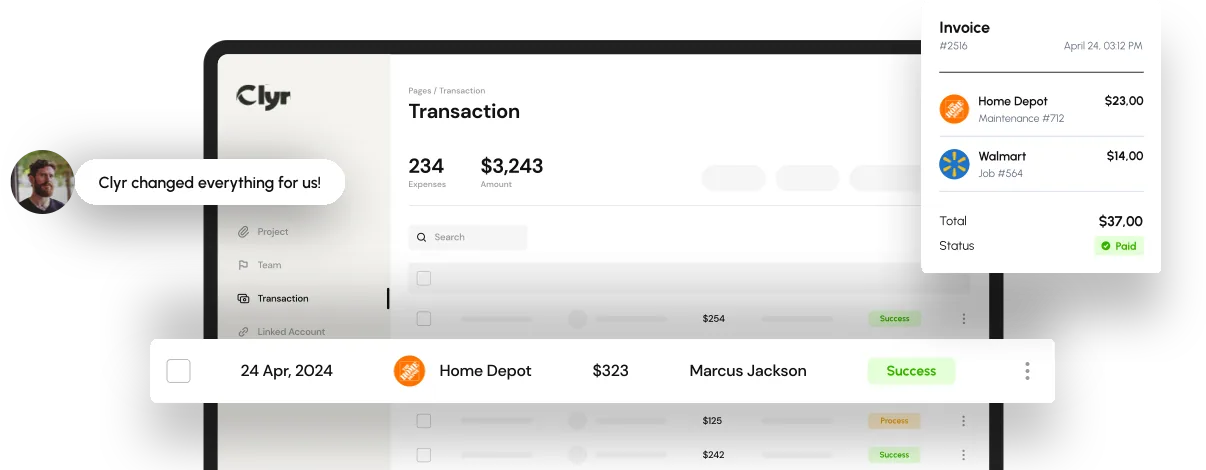

Lena Malik, the senior controller at a mid-sized Toronto manufacturer, glances at the clock, 11:42 p.m. on the last day of the month. Tomorrow, her GST/HST return is due, yet 400 paper invoices still sprawl across her desk in precarious stacks.
Each must be keyed into Sage before sunrise, matched to purchase orders, stamped for approval, and filed by the CRA’s mandatory seven-year retention rule.
One typo could trigger a costly reassessment; one misplaced invoice could delay a $78 K payment and sour a supplier who’s already threatening to freeze shipments.
Courier fees, late-payment penalties, and employee overtime are piling up faster than the paperwork she’s racing to tame.
Exhausted, Lena pauses and thinks:
There has to be a better way. How does AP automation work in Canada?

The Canadian AP Pain Stack, 2025
Paper & Cheques
Despite advances in fintech, nearly 30% of B2B payments in Canada still rely on paper cheques, which take up to three days to clear.
This legacy method disrupts cash flow forecasting and delays reconciliations. It frustrates vendors who expect faster settlement, especially as real-time payment options become mainstream.
Regulatory Load
Canadian businesses must operate under the privacy mandates of PIPEDA, with the more stringent Consumer Privacy Protection Act (CPPA) on the horizon.
In parallel, AP teams face increasing scrutiny from the CRA on GST/HST and QST coding accuracy. Errors in vendor tax registration or input tax credit calculations can result in reassessments and penalties.
Bilingual & Multi-Entity Complexities
Invoices commonly arrive in both English and French, and businesses operating nationally must accommodate bilingual document capture and approvals, particularly in Québec, where language laws are becoming increasingly stringent.
Managing multiple legal entities across provinces, each with its unique tax rates and regulations, adds substantial administrative overhead.
Visibility Blackouts
Manual systems make it challenging to track accruals and accurately forecast liabilities. As Real-Time Rail (RTR) begins to modernize Canada’s payment infrastructure, businesses still using spreadsheets and paper trails find themselves blind to real-time payables data, crippling their ability to plan and respond strategically.
What “AP Automation” Means in 2025
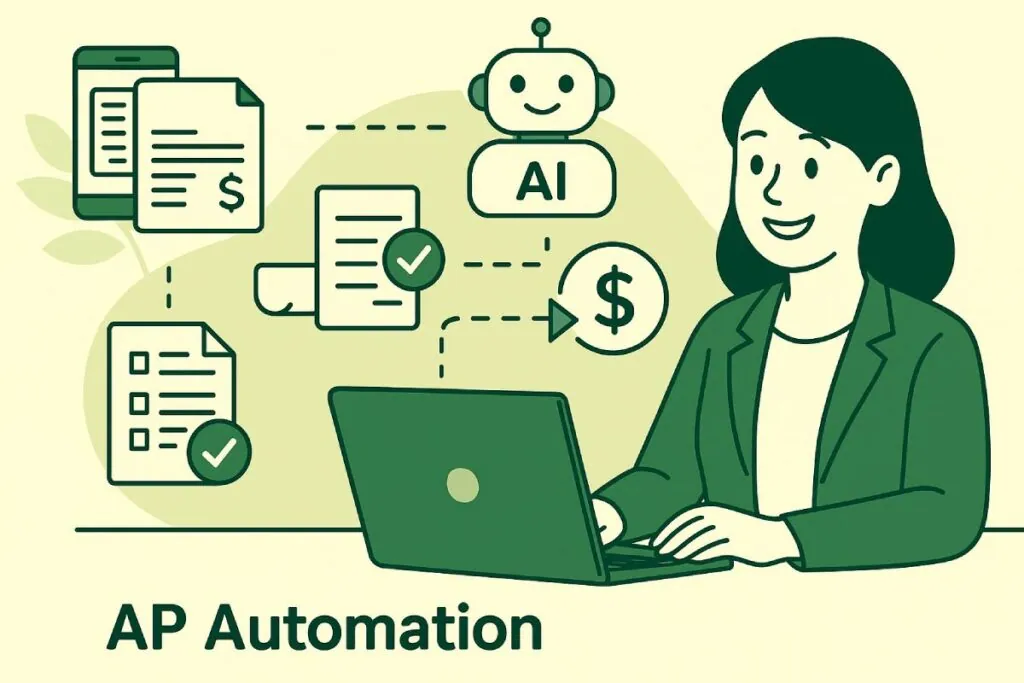
In 2025, AP automation in Canada is no longer just about digitizing invoices; it’s a comprehensive, intelligent ecosystem that transforms how finance teams manage payables from end to end.
Digital Intake
Invoices are entered into the system via multiple channels, including email scraping, supplier portals, and mobile scans. Advanced OCR (optical character recognition) captures both header and line-item data, regardless of layout, language, or file type, drastically reducing manual data entry.
Smart Coding
AI-driven algorithms automatically assign GL codes, project tags, and apply the correct GST/HST/QST rates based on past behavior, vendor profiles, and provincial rules, ensuring tax accuracy and audit readiness.
3-Way Match & AI Anomaly Detection
The system performs automated three-way matching between purchase orders, receipts, and invoices. At the same time, large language models (LLMs) flag irregularities, such as duplicate payments or out-of-policy spending, providing an extra layer of fraud protection.
Dynamic Approval Routing
Invoices are routed based on customized logic, by dollar amount, department, entity, or language, with approvers notified via Slack, Teams, or email, enabling one-tap approvals on the go.
Payment Orchestration
Once approved, the system executes payments through AFT (EFT), RTR for real-time settlement, ACH, or international wire, and dispatches automated remittance advice to vendors.
Ledger Sync & Analytics
Every transaction is pushed in real-time to integrated accounting platforms, including Sage 300, QuickBooks, Xero, and NetSuite. Meanwhile, live dashboards provide cash-flow projections, KPI tracking, and audit trails at a glance.
Under the Hood: Tech That Makes It Tick
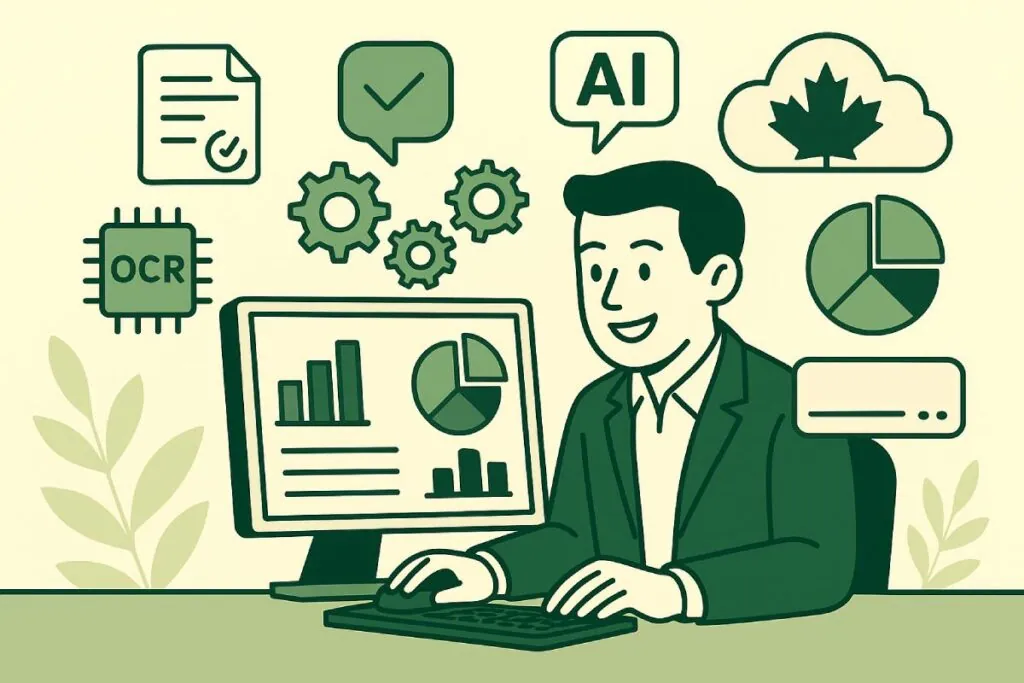
Modern AP automation is built on a foundation of powerful, Canada-specific technologies designed for accuracy, speed, and compliance.
OCR 2.0
Advanced computer vision models, trained on over 10 million Canadian invoices, can accurately extract both header and line-item data in English and French. These OCR engines recognize a wide range of formats, including handwritten notes and bilingual field labels, making data capture seamless and accurate.
Machine-Learning Coding
Over time, the system learns from past approvals and user corrections. Within just 90 days, machine-learning models reach over 95% accuracy in coding expenses, assigning tax rules, and matching GL accounts.
Generative AI Assistance
Finance teams now use chat-style AI queries to explore spend data, such as: “Show utilities spend by province last quarter” or “List invoices over $10K still awaiting approval.” It’s intuitive, fast, and incredibly insightful.
RTR & ISO 20022 Integration
Canada’s Payments Modernization has ushered in Real-Time Rail (RTR), enabling 24/7 settlement. Leading AP tools now offer native ISO 20022 API integration for instant payment processing.
Data-Residency Safeguards
To meet PIPEDA and client expectations, AP platforms host sensitive data in sovereign cloud regions within Canada, ensuring invoice archives remain on Canadian soil.

Business Wins That Move the Needle
The impact of AP automation in Canada extends far beyond convenience; it delivers measurable gains across finance, compliance, and sustainability.
80% Touch Reduction
By eliminating manual entry, printing, chasing approvals, and cheque handling, businesses reduce invoice “touches” by up to 80%. This frees finance staff to focus on spend analysis, budgeting, and strategic planning rather than clerical tasks.
Invoice-to-Pay Cycle Cut from 25 to 9 Days
Automated workflows significantly compress the invoice lifecycle, from an industry average of 25 days to just 9. Faster processing unlocks early-payment discounts, ensures on-time supplier payments, and strengthens vendor relationships, giving companies leverage in negotiations.
Fraud Shield
With AI and anomaly detection, the system flags duplicate invoices, inflated amounts, or out-of-policy charges before payments are made. Detailed audit trails and role-based permissions enable organizations to meet CRA standards and minimize the risk of fraud.
Carbon & Cost Savings
Less reliance on paper, postage, courier services, and physical storage translates to direct cost reductions. Some platforms even track CO₂ savings per invoice, helping organizations meet internal ESG goals and reporting requirements.
From Chaos to Control: A Canadian Implementation Roadmap
Transitioning from manual AP chaos to streamlined automation requires a structured, phased approach, especially when navigating Canadian compliance and multi-entity operations.
Diagnostic Sprint
Begin with a full workflow mapping session. Identify bottlenecks, recurring errors, approval delays, and PIPEDA compliance risks. This phase sets the baseline for automation goals and guides the configuration strategy.
Vendor Shortlist
Evaluate top AP automation platforms like Clyr, based on critical Canadian criteria:
- Data-residency options to ensure invoice data stays within Canada
- Bilingual UI and OCR capabilities for handling French and English documents
- RTR readiness and direct bank connections to support real-time payments
Pilot & Parallel-Run Phase
Select 2-3 business entities and 10 high-volume suppliers for a pilot. Run the automated system in parallel with manual processes to test GL coding accuracy, GST/HST logic, and approval routing.
Change-Management Playbook
Prepare stakeholders with clear documentation and approver training, update outdated cheque policies, and establish SLAs for invoice processing and payment timing.
Go-Live & KPI Tracking
Launch company-wide with real-time dashboards monitoring invoice cycle times, first-pass match rates, rebate utilization, and carbon savings. These metrics validate ROI and reinforce continuous improvement.
What’s Next? 2026-2028 Horizon
As AP automation matures, the next few years promise even greater transformation for Canadian finance teams.
CRA E-Invoicing Pilots
The Canada Revenue Agency is piloting structured e-invoicing for GST/HST reporting. Early adopters could benefit from automated tax validation and reduced audit burdens, streamlining compliance across entities.
AI Autopilot
Next-generation platforms will offer predictive cash planning, utilizing invoice trends, payment behavior, and vendor terms to forecast liabilities and optimize timing, thereby elevating AP from a cost center to a strategic working-capital driver.
RTR Limit Hike
With Real-Time Rail (RTR) rolling out nationally, future transaction limits are expected to exceed CAD 25,000. This shift could result in over 60% of supplier payments being processed instantly, reducing reliance on cheques or slow EFT batches.
Embedded Carbon Accounting
Emerging platforms will link AP data to automated ESG dashboards, assigning CO₂ equivalents to each invoice line item, providing companies with a powerful tool for sustainability tracking and impact reporting.
Common Pitfalls & How to Dodge Them
Even the best AP automation projects can stumble without attention to key details. One common mistake is ignoring cheque holdouts; some vendors still prefer paper, so it’s essential to maintain cheque-printing capability during the transition to digital payments.
Another pitfall is relying on one-size-fits-all tax logic, which often fails under the complexity of province-specific GST, HST, and QST rules. Customizing tax handling by entity and region is critical for audit compliance.
Data-residency is also frequently overlooked; many AP platforms default to U.S. or “North American” hosting. Businesses must ensure that contracts explicitly require Canadian data storage to comply with privacy legislation, such as PIPEDA.
Lastly, approvals conducted outside the platform, typically via email, undermine transparency. For a defensible audit trail and process consistency, all approvals should be centralized within the AP system itself.
Conclusion
Manual, paper-heavy AP processes can’t keep up with the demands of modern finance, especially as Canada moves toward real-time payments, tighter privacy regulations, and AI-driven financial operations.
Today’s leading AP automation platforms transform payables from inbox to ledger with minimal human intervention, slashing cycle times, reducing fraud risk, and unlocking valuable financial insights. With bilingual OCR, province-specific tax handling, and Canadian data residency, these tools are purpose-built for compliance and scale.
Whether you’re managing a multi-entity enterprise or a growing SME, understanding how AP automation in Canada works is the first step toward turning payables into a true strategic advantage.
FAQs
Six stages, end to end: digital intake through email, supplier portals, and mobile scans; AI coding of GL accounts and tax rates; automated three-way matching with anomaly detection; approval routing by amount, department, entity, or language; payment execution over AFT, RTR, ACH, or wire; and real-time sync to your ledger.
Nearly 30% of B2B payments still run on paper cheques that take up to three days to clear. On top of that sit PIPEDA privacy obligations, CRA scrutiny of GST/HST and QST coding, bilingual invoices across English and French, and multiple legal entities each carrying different provincial tax rules.
Coding engines apply the correct provincial rate automatically, drawing on vendor profiles, past behavior, and region-specific rules. One-size-fits-all tax logic is where projects fail, so tax handling has to be configured per entity and per province to stay audit-defensible.
Invoice touches drop by up to 80%, and the invoice-to-pay cycle compresses from an industry average of 25 days to about 9. That unlocks early-payment discounts, keeps suppliers paid on time, and gives finance staff their week back for analysis instead of data entry.
Three things most vendors gloss over: data residency, since many platforms default to U.S. or North American hosting and the contract must specify Canadian storage; bilingual UI and OCR for French and English documents; and RTR readiness with direct bank connections for real-time settlement.