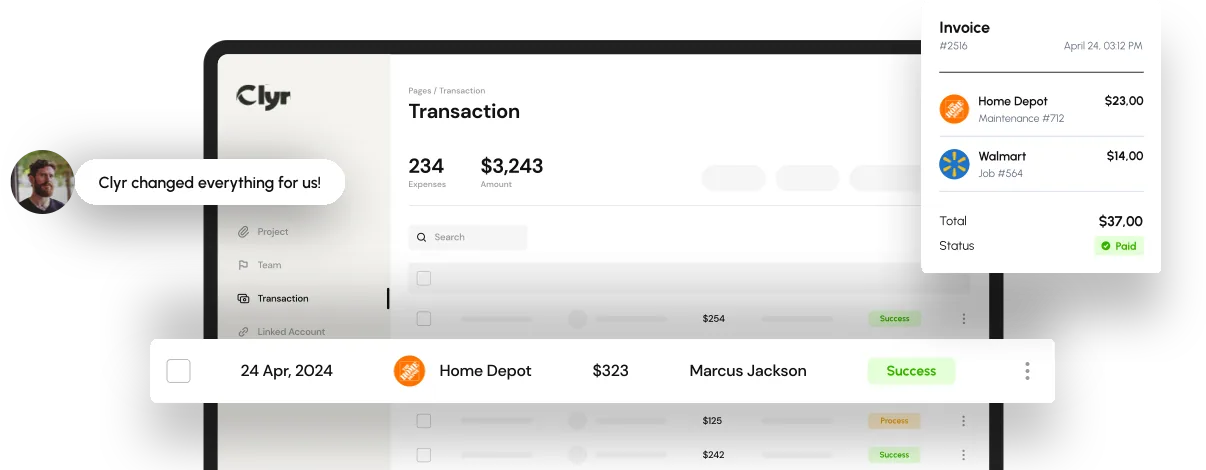

Automated bill pay has become a core part of how modern businesses manage recurring payments, vendor obligations, and operational expenses. As companies grow, the volume and complexity of bills increase utilities, subscriptions, suppliers, service providers, rent, insurance, and more. Handling these manually is not only time-consuming, it also introduces unnecessary risk. This is where automated bill pay changes the equation.
At its simplest, automated bill pay is a system that schedules, approves, and executes bill payments without requiring manual intervention for each transaction. Instead of finance teams logging into multiple portals, tracking due dates in spreadsheets, or approving payments one by one, automated bill pay centralizes and streamlines the entire process.
Today, automated bill pay is no longer a “nice to have.” For many organizations, it is a foundational financial control mechanism that supports accuracy, cash flow visibility, and scalability.
Key Takeaways
- Automated bill pay removes manual steps from bill processing and payments
- It reduces late payments, duplicate payments, and human error
- Automated bill pay improves cash flow planning and financial visibility
- Approval workflows and controls are built directly into the process
- Platforms like Clyr connect bill pay with expense management and accounting systems

Understanding Automated Bill Pay in Practical Terms
Automated bill pay works by connecting three critical elements: bills, approvals, and payments. Bills can arrive in different formats PDF invoices, online utility portals, emailed statements, or recurring subscription charges. An automated bill pay solution captures these bills, extracts key data such as vendor name, amount, due date, and category, and routes them through predefined approval workflows.
Once approved, payments are scheduled automatically according to the company’s rules. These payments can be executed via ACH, check, wire transfer, or credit card, depending on vendor preferences and internal policies.
The result is a consistent, predictable, and auditable payment process. Automated bill pay replaces fragmented manual workflows with a single, controlled system that operates in the background while finance teams focus on higher-value work.
Why Manual Bill Pay Breaks Down at Scale
Manual bill payment processes often start simply. A few vendors, a few bills, and a small finance team can manage payments without too much friction. But as transaction volume increases, the cracks appear quickly.
Common issues with manual bill pay include:
- Missed due dates due to human oversight
- Duplicate payments from poor tracking
- Incorrect coding that complicates reconciliation
- Limited visibility into upcoming liabilities
- Time wasted chasing approvals or confirmations
These issues are not just operational annoyances. They affect vendor relationships, cash flow stability, audit readiness, and financial decision-making. Automated bill pay addresses these problems by design, not as an afterthought.

How Automated Bill Pay Actually Works Step by Step
Although implementations vary, most automated bill pay systems follow a similar lifecycle:
- Bill intake
Bills are collected automatically from email inboxes, vendor portals, or uploads. Some systems also pull recurring bills directly from utility or service provider platforms. - Data extraction and validation
Key details are captured and validated. This includes invoice numbers, due dates, totals, and vendor information. - Coding and categorization
Bills are automatically categorized based on historical data or predefined rules. This step is critical for accurate reporting. - Approval workflows
Bills are routed to the correct approvers based on amount, department, vendor, or project. - Scheduled payment
Once approved, payments are scheduled automatically according to payment terms and cash flow preferences. - Sync to accounting systems
Payment data is synchronized with accounting software to ensure books stay accurate and up to date.
Automated bill pay eliminates the need for repetitive manual checks at every stage.
The Role of an Automated Bill Pay System
Automated Bill Pay System as a Control Layer
An automated bill pay system is not just a payment engine. It is a financial control layer that governs how money leaves the business. Approval thresholds, segregation of duties, audit logs, and role-based permissions are built into the workflow.
This reduces reliance on informal processes such as email approvals or verbal confirmations, which are difficult to audit and easy to bypass.
Automated Bill Pay System as a Visibility Tool
One of the biggest advantages of an automated bill pay system is visibility. Finance teams can see all upcoming payments in one place, along with their approval status and scheduled dates. This transforms cash flow management from reactive to proactive.
When bills are automated, finance leaders know exactly what is coming, when it is due, and how it affects available cash.
Automated Bill Pay System as a Time Multiplier
By removing manual work, an automated bill pay system frees up finance teams to focus on analysis, forecasting, and optimization. Instead of spending hours processing bills, teams spend minutes reviewing exceptions.
Automated Bill Pay for Different Business Types
Automated bill pay is not limited to large enterprises. Its value increases across different industries and company sizes.
Service businesses benefit from predictable vendor and contractor payments without administrative overload. Property managers rely on automated bill pay to handle utilities, maintenance vendors, and recurring property expenses across multiple locations. Construction and manufacturing companies use automated bill pay to manage high volumes of supplier invoices while maintaining cost controls. Professional services firms benefit from clean audit trails and simplified reconciliations.
Across all these use cases, automated bill pay provides consistency and reliability.
Common Misconceptions About Automated Bill Pay
One common misconception is that automated bill pay means losing control. In reality, the opposite is true. Automation introduces structure, approval rules, and visibility that manual processes lack.
Another misconception is that automated bill pay only works for recurring bills. While recurring payments are a natural fit, modern automated bill pay systems handle one-time invoices just as effectively.
Some businesses also assume automation is expensive or complex to implement. In practice, the cost of automation is often far lower than the hidden cost of manual processing errors, late fees, and staff time.
Security and Compliance in Automated Bill Pay
Security is a critical concern when money is moving automatically. Leading automated bill pay platforms are built with encryption, access controls, and audit logs to ensure payments are authorized and traceable.
Compliance is also strengthened through automation. Approval workflows enforce internal policies consistently, reducing the risk of unauthorized or non-compliant payments. Every action is logged, making audits faster and less disruptive.
Automated bill pay provides a clear trail from invoice to approval to payment, which is difficult to achieve with manual methods.
Automated Bill Pay vs Traditional Online Banking
Many businesses rely on online banking portals for bill payments, assuming this is sufficient automation. While online banking simplifies execution, it does not automate the entire bill lifecycle.
Traditional online banking still requires:
- Manual data entry
- Manual approvals outside the system
- Separate tracking of invoices and payments
- Manual reconciliation
Automated bill pay integrates bill capture, approvals, payments, and accounting sync into one workflow. This end-to-end automation is what delivers real efficiency and control.
The Impact of Automated Bill Pay on Cash Flow
Cash flow is not just about how much money is available today. It is about understanding future obligations and timing payments strategically. Automated bill pay supports this by providing clear visibility into upcoming liabilities.
Businesses can schedule payments closer to due dates, avoid early payments that strain cash reserves, and reduce late fees that erode margins. Over time, this discipline improves financial predictability and stability.
Automated Bill Pay and Vendor Relationships
Vendors value consistency. Automated bill pay ensures payments are made on time, in the correct amount, and with proper remittance details. This reduces disputes and strengthens trust.
For businesses managing many vendors, automation also simplifies onboarding. Vendor payment preferences are stored once and reused consistently, reducing friction on both sides.
How Automated Bill Pay Fits Into a Broader Financial Stack
Automated bill pay is most powerful when it is connected to expense management, accounting, and reporting systems. This is where platforms like Clyr play a role by linking bill pay with broader financial workflows.
Instead of treating bills, expenses, and payments as separate processes, they become part of a single financial system. This integration reduces data silos and ensures financial information stays accurate across the organization.
When Businesses Should Adopt Automated Bill Pay
There is no single threshold, but signs that a business is ready for automated bill pay include:
- Increasing volume of monthly bills
- Frequent approval bottlenecks
- Limited visibility into upcoming payments
- Time spent on manual reconciliation
- Errors or disputes with vendors
Automated bill pay is not just for companies in crisis. Many adopt it proactively to support growth without increasing administrative overhead.
Future Trends in Automated Bill Pay
Automated bill pay continues to evolve. AI-driven data extraction is improving accuracy. Predictive analytics are helping finance teams anticipate cash needs. Deeper integrations with accounting and ERP systems are reducing manual oversight even further.
As automation becomes more intelligent, automated bill pay will move from a back-office function to a strategic financial capability.
Final Thoughts on Automated Bill Pay
Automated bill pay is fundamentally about control, clarity, and efficiency. By removing manual steps and introducing structured workflows, businesses gain visibility into their obligations and confidence in their payments.
An effective automated bill pay system reduces risk, saves time, and supports smarter financial decisions. When combined with expense management and accounting automation, it becomes a cornerstone of modern financial operations.
Platforms like Clyr demonstrate how automated bill pay can be integrated into a broader financial ecosystem, helping businesses scale without losing control.
FAQs
Automated bill pay is widely used by small and mid-sized businesses, especially those managing recurring vendor bills, utilities, or service providers. Even with a small team, automation helps reduce manual work, prevent missed payments, and maintain better financial visibility without adding administrative overhead.
Yes. Automated bill pay systems are designed to process recurring bills such as rent or utilities as well as one-time invoices from vendors or suppliers. Each bill follows the same approval and payment workflow, regardless of how often it occurs.
Automated bill pay relies on predefined approval rules and user permissions. Payments cannot be executed unless the correct approvers have reviewed and approved them. Every action is logged, creating a clear audit trail that helps prevent unauthorized or accidental payments.
No. Automated bill pay complements accounting software rather than replacing it. Payment data, approvals, and bill details are synced into accounting systems, keeping books accurate while reducing manual entry and reconciliation work.
Implementation timelines vary, but most businesses can begin using automated bill pay within days or weeks. Setup usually involves connecting bank accounts, defining approval workflows, and integrating with accounting tools, after which payments can run automatically with minimal ongoing setup.