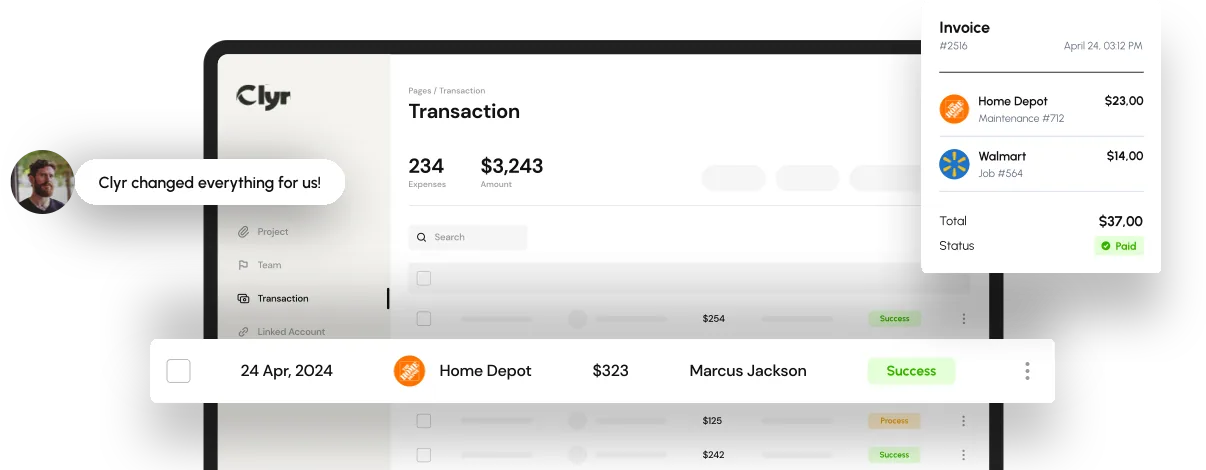

For years, companies have treated expense management as a necessary utility: something to install, configure, and tolerate. A place where receipts go to die, reports get approved, and finance teams clean up after everyone else. That mindset no longer fits how modern businesses operate. Today, expense management sits at the center of financial control. It touches cash flow, compliance, profitability, and decision-making in real time. When implemented correctly, an Expense Management tool is not just software. It becomes a control layer that shapes how money moves through the organization, who has authority over spend, and how fast leaders can act on accurate data.
Key takeaways
- Expense management impacts control, not just reporting
- Real-time expense data changes financial decision-making
- A modern Expense Management tool enforces policy through workflow, not policing
- Control layers reduce risk, errors, and financial blind spots
- Expense management becomes infrastructure as companies scale

The outdated view of expense management
Historically, expense systems were designed around one outcome: reimbursement. Employees paid out of pocket, submitted receipts at month-end, and finance teams processed reports after the fact. Control was retrospective. By the time leadership saw the data, the money was already gone.
In that model, an Expense Management tool functioned like a digital filing cabinet. It stored transactions but did not influence behavior. Policies lived in PDFs. Approvals happened too late. Errors were discovered during reconciliation, not prevented upfront.
This approach breaks down quickly as companies grow. More cards, more vendors, more projects, and more distributed teams create complexity that static tools cannot manage. What was once an administrative task becomes a financial risk.
Why “tool” thinking creates financial blind spots
When expense management is treated as a tool, it is isolated from the rest of the finance stack. Transactions occur in one system, receipts arrive in another, approvals happen in email, and reporting lives somewhere else entirely.
This fragmentation creates blind spots:
- Finance teams see spend after it happens
- Managers approve without context
- Policies are enforced inconsistently
- Errors propagate across systems
A standalone Expense Management tool cannot solve these problems because it reacts instead of controls. Control requires timing, context, and enforcement at the moment decisions are made.
Expense management as a control layer
A control layer sits between spending activity and financial systems. It governs how transactions enter the organization, how they are categorized, and whether they align with policy before they affect the books.
In this model, expense management is proactive. It influences behavior at the point of spend rather than correcting mistakes later. The Expense Management tool becomes infrastructure, similar to how identity management controls access or how payment orchestration controls transaction routing.
This shift changes the role of finance from cleanup to oversight.
How control layers work in practice
A true control layer operates continuously. It does not wait for reports. It enforces structure in real time.
Key characteristics include:
- Immediate transaction visibility
- Automated receipt capture at the time of purchase
- Policy enforcement through rules and workflows
- Context-aware approvals
- Continuous synchronization with accounting systems
When an Expense Management tool functions this way, finance teams gain leverage. Instead of chasing receipts or re-coding expenses, they design rules that guide spending automatically.
Real-time data as the foundation of control
Control without real-time data is an illusion. If expense data arrives weeks after a transaction, decisions are always reactive. Budgets drift, projects overspend, and leaders operate on outdated information.
Modern expense control depends on immediacy:
- Transactions are captured when they occur
- Receipts are submitted before details are forgotten
- Coding happens while context is still fresh
This is where the Expense Management tool becomes strategic. Real-time data allows finance teams to intervene early, not explain overruns later.
Policy enforcement without friction
Traditional expense policies rely on human enforcement. Employees are expected to remember rules. Managers are expected to catch violations. Finance is expected to fix what slips through.
A control-layer approach flips this dynamic. Policies are embedded into the system itself. The Expense Management tool enforces limits, categories, and approval paths automatically.
This reduces friction because:
- Employees receive guidance instead of rejection
- Managers approve within clear boundaries
- Finance spends less time policing
Control becomes systemic rather than personal.
Why approvals are about authority, not hierarchy
Approvals are often treated as a formality. In reality, they define authority over company spend. When approval flows are unclear or manual, authority becomes ambiguous.
A control-layer Expense Management tool ties approvals to context:
- Spend amount
- Vendor type
- Project or job
- Budget status
This ensures the right people approve the right expenses for the right reasons. Control is no longer based on who happens to be available, but on defined financial governance.
Expense management and cash flow control
Cash flow issues rarely stem from one large expense. They accumulate from many small decisions made without visibility. When expenses are delayed, miscategorized, or approved blindly, forecasting suffers.
By operating as a control layer, an Expense Management tool feeds accurate, timely data into cash flow models. Finance teams can see committed spend, not just settled transactions.
This improves:
- Short-term liquidity planning
- Vendor payment timing
- Budget forecasting accuracy
Control at the expense level compounds into control at the cash level.
Job costing and project-level control
For companies running multiple jobs or projects, expense timing is critical. When expenses are captured late, job costing becomes guesswork. Margins appear healthy until the project closes.
A control-layer Expense Management tool ties expenses to jobs in real time. This allows leaders to:
- Monitor profitability while work is ongoing
- Detect overruns early
- Adjust resourcing decisions
Control shifts from retrospective analysis to active management.

Why scale changes everything
At small scale, manual processes can survive. At larger scale, they fail quietly. Errors increase. Trust in data declines. Finance teams build spreadsheets to compensate.
Scaling exposes the limits of tool-based thinking. A control layer scales because it automates governance. The Expense Management tool becomes the system that absorbs complexity rather than creating it.
As headcount grows, control must increase faster than spend. Otherwise, risk compounds.
The role of automation in financial control
Automation is often framed as efficiency. In reality, its primary value is consistency. Automated systems apply rules the same way every time.
In expense management, automation ensures:
- Coding follows established logic
- Policies are enforced uniformly
- Data enters accounting systems cleanly
This consistency is what makes control possible. Without it, finance teams rely on judgment calls that vary by person and situation.
Audit readiness as a byproduct of control
Audits expose weak control layers. Missing receipts, unclear approvals, and inconsistent coding raise red flags.
When expense management operates as a control layer, audit readiness improves naturally. The Expense Management tool creates an audit trail by design:
- Every transaction is documented
- Approvals are logged
- Policies are traceable
Compliance becomes an outcome, not a scramble.
Why finance teams resist “just another tool”
Finance leaders have seen tools promise transformation and deliver complexity. Resistance often stems from experience, not reluctance.
Positioning expense management as a control layer reframes the conversation. It is no longer about adding software. It is about strengthening financial governance.
The Expense Management tool becomes a lever, not a burden.
Control layers reduce operational noise
Operational noise comes from rework, follow-ups, and corrections. It drains finance teams and frustrates employees.
By enforcing structure upfront, control-layer expense management reduces noise:
- Fewer clarification emails
- Fewer rejected reports
- Fewer manual adjustments
This creates capacity for higher-value work.
From reporting to decision support
Traditional expense systems focus on reports. Control-layer systems focus on decisions.
With accurate, timely data, leaders can:
- Adjust budgets mid-cycle
- Reallocate spend strategically
- Identify inefficiencies early
The Expense Management tool becomes a source of insight, not just documentation.
Why control is cultural, not just technical
Technology enables control, but culture sustains it. When expense management reinforces clear expectations, behavior follows.
Employees learn what good spending looks like because the system guides them. Managers gain confidence because approvals are informed. Finance earns trust because data is reliable.
The control layer shapes behavior without confrontation.
Common mistakes when implementing expense control
Many organizations fail by replicating old processes in new software. They install an Expense Management tool but keep manual habits.
Common pitfalls include:
- Delayed receipt submission
- Overly complex approval chains
- Inconsistent policy definitions
Control requires intentional design, not just deployment.
The future of expense management
As finance functions evolve, expense management will continue to move upstream. It will integrate more deeply with payments, accounting, and analytics.
The most effective Expense Management tool will not feel like a tool at all. It will feel like infrastructure, quietly enforcing control while enabling growth.
Expense Management as Financial Infrastructure
Expense management is no longer a back-office function. When implemented as a control layer, it becomes a foundation for financial governance, visibility, and scale. A modern Expense Management tool does more than process receipts. It defines how money moves, who controls it, and how confidently leaders can make decisions. For growing organizations, this shift is not optional. It is structural.
It refers to using expense management to govern spending behavior in real time, rather than simply recording expenses after they occur.
By enforcing policies, approvals, and coding rules upfront, it prevents errors and non-compliant spend before they impact financials.
Yes. ERPs record data, but a dedicated Expense Management tool provides real-time control and enforcement that ERPs typically lack.
It is especially effective for distributed teams, where real-time visibility and automated controls prevent delays and data loss.
As soon as expense volume, team size, or project complexity makes manual oversight unreliable.