Why the Expense Reporting Process Matters
For any organization, the expense reporting process is more than a routine administrative task-it’s a core financial function that affects compliance, productivity, and cost control. Whether you’re a startup or a global enterprise, how your company collects, reviews, and approves business expenses determines both financial accuracy and employee satisfaction.
Traditionally, this process involved piles of paper receipts, manual data entry, and back-and-forth emails between employees and finance teams. Today, digital transformation and expense management software have revolutionized it, turning an often-tedious workflow into a streamlined, transparent system that saves time and prevents costly errors.
Understanding the Expense Reporting Process
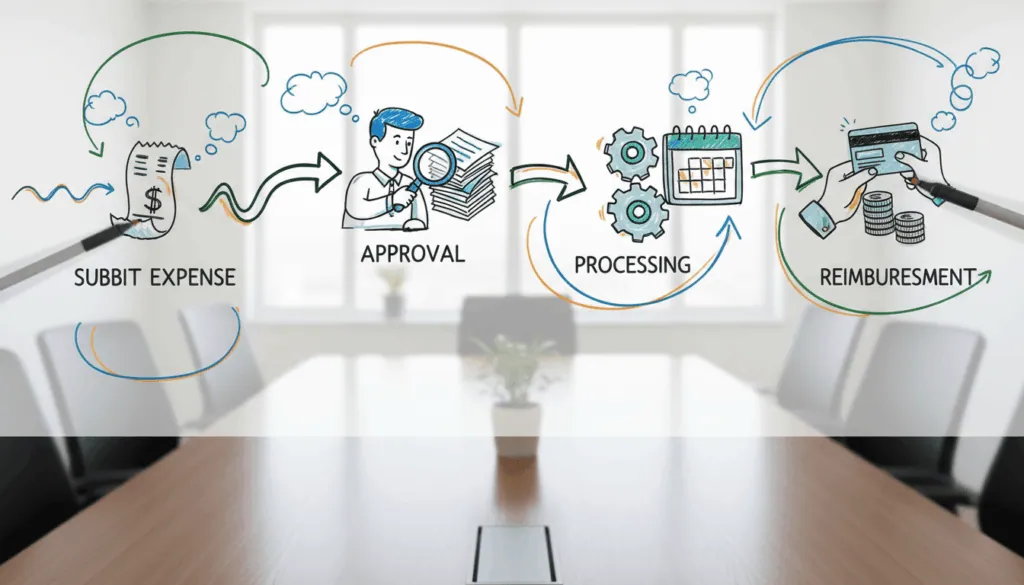
The expense reporting process is the series of steps through which employee spending is recorded, submitted, reviewed, approved, and reimbursed. At its core, it ensures that business expenses are legitimate, policy-compliant, and accurately reflected in company accounts.
The process typically includes:
- Expense Capture: Employees record expenses such as travel, meals, and office purchases.
- Receipt Submission: Physical or digital receipts are attached to validate each claim.
- Report Creation: Expenses are grouped into a report categorized by project, department, or date range.
- Managerial Review: Supervisors ensure spending aligns with budgets and policies.
- Finance Approval: Accounting verifies accuracy and allocates costs to proper accounts.
- Reimbursement and Recordkeeping: Approved expenses are reimbursed, and data is stored for future audits.
While the structure appears straightforward, inefficiencies and delays often arise when these steps are handled manually.
Common Challenges in Traditional Expense Reporting
Manual expense reporting introduces multiple friction points:
- Data entry errors: Transposing numbers or missing decimal points can distort reports.
- Lost or incomplete receipts: Paper receipts fade, get misplaced, or are forgotten entirely.
- Slow approvals: Reports often sit in managers’ inboxes for days or weeks.
- Policy non-compliance: Employees may unintentionally submit expenses outside company policy.
- Limited visibility: Finance teams lack real-time insight into spending trends.
- Audit risks: Missing documentation can cause problems during financial audits or tax reviews.
These issues can lead to financial leakage, reduced employee morale, and regulatory risks-making automation not just a convenience but a necessity.

Automating the Expense Reporting Process
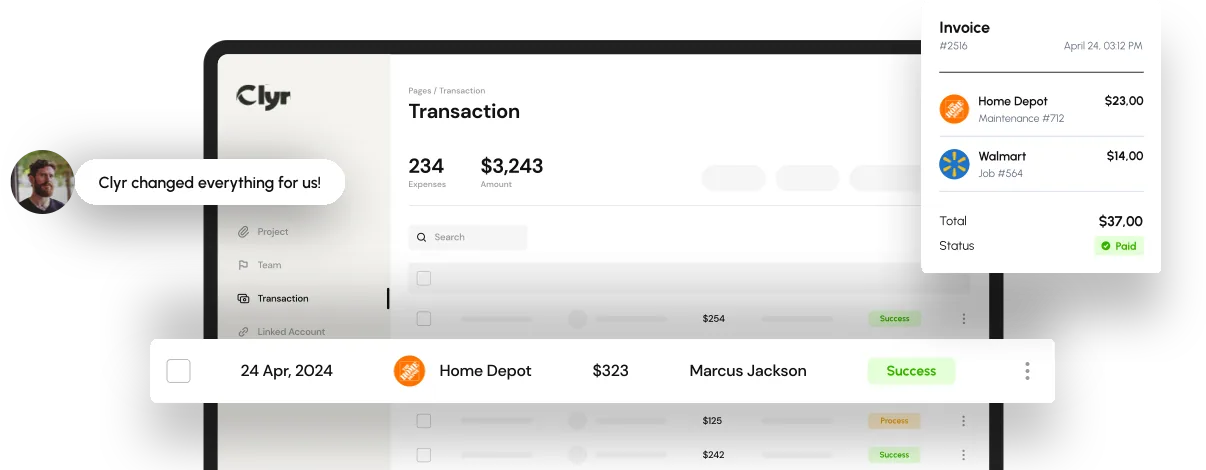
Modern expense management platforms like Clyr eliminate the inefficiencies of traditional workflows through automation and real-time data synchronization.
1. Automated Receipt Capture
Instead of chasing paper receipts, employees can photograph or email receipts directly to the system. Optical Character Recognition (OCR) extracts key data-merchant name, amount, date, and category-instantly and with remarkable accuracy.
2. Automatic Expense Coding
AI algorithms categorize transactions automatically according to company policies, departments, or job codes. This reduces human error and ensures consistent reporting standards.
3. Real-Time Expense Matching
Each transaction is automatically matched to its corresponding receipt and card payment, closing the loop instantly. This provides continuous oversight and prevents duplicate or fraudulent claims.
4. Policy Enforcement & Approval Flows
Expense policies can be embedded directly into the system. Any non-compliant submission is flagged automatically, and predefined approval chains ensure managers and finance departments only review valid expenses.
5. Seamless Integration with Financial Systems
Clyr integrates with leading ERP, CRM, and accounting software such as QuickBooks, Xero, and NetSuite. Two-way synchronization ensures expenses are posted to the right ledgers without manual intervention.
6. Automated Reimbursements and Audit Trails
Approved reimbursements can be processed automatically via ACH or payroll integration. Every action-submission, approval, rejection-is logged, creating a verifiable audit trail essential for compliance and financial transparency.
Benefits of Streamlined Expense Reporting
- Time Savings:
Automated expense reporting reduces data entry and approval times by over 80%. Finance teams can reallocate hours to strategic planning instead of chasing receipts. - Accuracy and Compliance:
With built-in policy enforcement and AI validation, errors and non-compliant claims drop dramatically. - Employee Satisfaction:
Faster reimbursements and intuitive mobile submissions eliminate frustration, improving morale and engagement. - Cost Control and Visibility:
Real-time dashboards give decision-makers clear insights into spending by department, project, or category-enabling proactive budget management. - Enhanced Security and Audit Readiness:
Digital recordkeeping ensures every transaction is documented, searchable, and ready for internal or external audits.
Best Practices for an Effective Expense Reporting Process
- Define Clear Expense Policies
Establish rules on what constitutes a reimbursable expense, spending limits, and documentation requirements. Ensure all employees are trained on these policies. - Adopt Mobile-First Tools
Employees increasingly operate in the field. Mobile submission via SMS or app ensures receipts are captured instantly, reducing lost data. - Automate Workflows
Implement automated approval chains and notifications to speed up processing and maintain accountability. - Ensure Real-Time Visibility
Use analytics dashboards to track spending trends and identify anomalies early. - Integrate Systems
Link expense reporting with accounting, payroll, and ERP systems to reduce duplicate data entry and maintain consistency across departments. - Review and Refine Regularly
Conduct quarterly reviews of your expense reporting process to identify bottlenecks, update policies, and adopt new automation features.
Common Mistakes to Avoid
- Ignoring Small Expenses: Even low-value expenses accumulate into significant annual costs if untracked.
- Failing to Update Policies: Outdated reimbursement limits or categories can create confusion and disputes.
- Neglecting Data Security: Expense data contains sensitive financial information-encrypt storage and use secure integrations.
- Delaying Reimbursements: Slow payments damage trust and can discourage policy compliance.
- Over-reliance on Spreadsheets: While familiar, spreadsheets are error-prone and lack real-time functionality.
Avoiding these pitfalls ensures a smoother, more transparent financial workflow.
Future Trends in Expense Reporting
The expense reporting process is evolving rapidly with technological innovation. Key trends shaping the next generation include:
- AI-Driven Forecasting: Predictive analytics will help finance teams forecast future spend patterns and optimize budgets.
- Voice and Chatbot Interfaces: Employees will soon be able to submit and query expenses through conversational AI tools.
- Blockchain for Transparency: Immutable ledgers could enhance expense verification and fraud prevention.
- Cross-System Automation: Integration between travel booking, card payments, and expense reporting will become seamless, providing an end-to-end financial ecosystem.
- Sustainability Tracking: Companies will start tracking carbon footprints alongside financial data in expense reports to meet ESG targets.
Expert Tips for Finance Teams
- Encourage Real-Time Submission: Require employees to submit receipts daily or immediately after purchase.
- Leverage Automation Insights: Use AI-based anomaly detection to catch suspicious spending patterns.
- Measure KPIs: Track approval times, reimbursement durations, and error rates to continuously optimize performance.
- Provide Transparent Communication: Let employees see approval statuses and reasons for rejections to promote accountability.
Invest in Scalable Software: Choose a platform that grows with your business and supports multi-currency and multi-entity operations.
Conclusion
A well-structured expense reporting process is fundamental to a company’s financial integrity. By adopting automated solutions like Clyr, businesses can transform expense reporting from a tedious chore into a strategic advantage-boosting accuracy, compliance, and overall efficiency. As automation, AI, and analytics continue to evolve, expense management will no longer be just about reimbursement-it will be about insight, foresight, and smarter financial decisions.
FAQs
Six: the employee captures the expense, attaches a receipt to validate it, groups expenses into a report by project, department or date, a manager reviews it against budget and policy, finance approves and allocates the cost to the right account, and the reimbursement is paid and the record retained for audit.
Data entry errors from transposed numbers, receipts that fade or go missing, reports sitting in a manager's inbox for days, unintentional policy breaches, no real-time view of spending, and missing documentation that becomes an audit problem later.
Receipts are captured by photo or email and read with OCR, transactions are coded automatically against policy and job codes, each receipt is matched to its card payment, non-compliant claims are flagged before review, data posts to the accounting ledger both ways, and every action is logged as an audit trail.
Write clear policies and train people on them, adopt mobile-first submission so field staff capture receipts on the spot, automate approval chains, use dashboards for real-time visibility, integrate with accounting and payroll, and review the process quarterly rather than leaving it fixed.
Ignoring small expenses, which accumulate into significant annual cost when untracked, and letting policies go stale - outdated reimbursement limits and categories create confusion and disputes that the system then has to absorb.