Managing company spending has always been one of the toughest tasks for finance teams. As organizations grow, the complexity of tracking receipts, reimbursements, vendor payments, and budgets multiplies. This is where the benefits of expense management software become apparent. Businesses that once relied on spreadsheets and manual reports are now embracing automated solutions that save time, reduce errors, and provide real-time visibility.
In this article, we’ll dive into the key advantages of expense systems, examine how they transform expense management processes, and outline best practices for companies looking to upgrade their financial workflows.
Why Businesses Struggle with Traditional expense management
Before looking at the software benefits, it’s important to understand the pain points of manual expense management. Common challenges include:
-
Lost Receipts and Delayed Reporting: Employees often misplace receipts or submit them late, creating bottlenecks in accounting.
-
Human Error: Manual entry into spreadsheets increases the risk of mistakes in coding, categorization, or reimbursement amounts.
-
Lack of Visibility: Managers may only see expenses after month-end, limiting their ability to control budgets proactively.
-
Employee Frustration: Long reimbursement cycles discourage staff and reduce satisfaction.
These challenges not only waste time but also harm financial accuracy and decision-making. That’s why companies are turning to automated platforms that simplify expense management across every level of the business.
Time-Saving Benefits of Expense Management Software
One of the clearest benefits of expense management software is time savings. Finance teams no longer need to chase down receipts, manually enter data, or reconcile mismatched reports. Instead:
-
Receipts can be uploaded via mobile apps, email, or even text message.
-
Transactions are automatically matched with receipts using AI-powered recognition.
-
Reports are generated instantly, allowing employees to submit expenses in seconds.
Real-world results show that companies adopting these tools save dozens of hours per month. That time can then be redirected toward more strategic financial planning rather than administrative tasks.

Increased Accuracy and Reduced Errors
Another major advantage is accuracy. Manual expense management processes are notorious for errors - typos in amounts, incorrect categories, or double counting. With modern platforms:
-
AI algorithms categorize and code transactions automatically.
-
Duplicate entries are flagged in real time.
-
Reports comply with company policies by default.
This not only ensures cleaner books but also protects businesses during audits and compliance checks. The precision delivered by software directly translates into better financial control and stronger governance.
Better Visibility and Control Over Spending
In many organizations, spending only becomes visible after budgets have already been exceeded. Expense management software flips this model on its head. Finance leaders can now:
-
View real-time dashboards showing current expenditures.
-
Drill down into departments, projects, or even individual employees.
-
Set approval workflows to control overspending before it happens.
This visibility is one of the most important benefits for companies managing multiple projects, teams, or locations. With accurate insights, leaders can quickly adjust budgets, negotiate with vendors, or identify trends in employee spending.

Improved Employee Experience
The success of any financial system also depends on how employees interact with it. Outdated expense management methods often frustrate staff with paperwork and delays. Expense management software, on the other hand, creates a smooth and user-friendly process:
-
Mobile apps let employees snap and upload receipts instantly.
-
Automated approvals speed up reimbursements.
-
Notifications remind staff to complete submissions without HR intervention.
By reducing friction, companies build trust and improve morale, while ensuring compliance with internal policies.
Cost Savings and ROI
For CFOs, one of the most persuasive benefits of expense management software is cost reduction. Automation lowers administrative overhead, minimizes errors that lead to financial loss, and ensures tighter control over budgets.
Many case studies show organizations saving tens of thousands of dollars annually after implementing an expense platform. Add in productivity gains and improved compliance, and the return on investment becomes undeniable.
Integration with Other Financial Systems
Today’s business environment relies on interconnected tools. Leading platforms for expense management integrate seamlessly with ERP, CRM, and accounting systems like QuickBooks or Xero. This eliminates the need for duplicate entries, ensures consistent reporting, and enhances financial oversight.
For example, when a receipt is captured and coded, the data can flow directly into the company’s accounting ledger, ensuring real-time synchronization. This level of integration strengthens accuracy across all financial functions.
Enhanced Compliance and Policy Enforcement
Compliance is another critical area where these solutions shine. Finance teams can configure rules directly within the platform:
-
Spending limits by department or role.
-
Restrictions on certain expense categories.
-
Automatic flagging of policy violations.
Instead of relying on manual oversight, expense management systems enforce company rules consistently and fairly, reducing the risk of fraud and unauthorized spending.
Scalability for Growing Companies
As companies expand, financial complexity increases. New employees, locations, and vendors add layers to the accounting process. One of the understated benefits of expense management software is scalability.
Whether you have 10 employees or 1,000, these systems adapt to volume without compromising accuracy or efficiency. This makes them essential tools for startups looking to grow sustainably or established firms seeking better operational control.
Benefits of Expense Management Software for Strategic Decision-Making
Another often-overlooked benefit is the ability to use financial data for strategy. Expense systems don’t just track spending - they generate valuable insights:
-
Trend analysis on recurring costs.
-
Identification of wasteful spending.
-
Forecasting for budget planning.
Finance leaders can use these insights to negotiate better vendor contracts, design more efficient budgets, and align spending with long-term goals. This is one of the most powerful benefits of expense management software for companies aiming to turn data into strategy.
Common Pitfalls to Avoid in expense management
While software provides immense advantages, companies should avoid common mistakes:
-
Lack of Training - Employees must understand how to use the system properly.
-
Ignoring Policy Setup - Without clear rules, automation can only go so far.
-
Not Reviewing Analytics - Insights are wasted if leadership doesn’t act on them.
-
Choosing the Wrong Tool - Ensure the system matches your company size and industry.
Avoiding these pitfalls ensures maximum return on your investment in digital expense management.

Future Trends in Expense Management Software
The future of these platforms is exciting. Innovations shaping the next wave include:
-
AI-Powered Forecasting - Predicting future expenses based on historical data.
-
Voice Command Features - Employees submitting expenses hands-free.
-
Deeper Integrations - Linking with HR systems to tie expenses directly to payroll.
-
Blockchain for Security - Ensuring tamper-proof expense records.
Companies that embrace these trends will stay ahead in efficiency, compliance, and financial control.
Conclusion
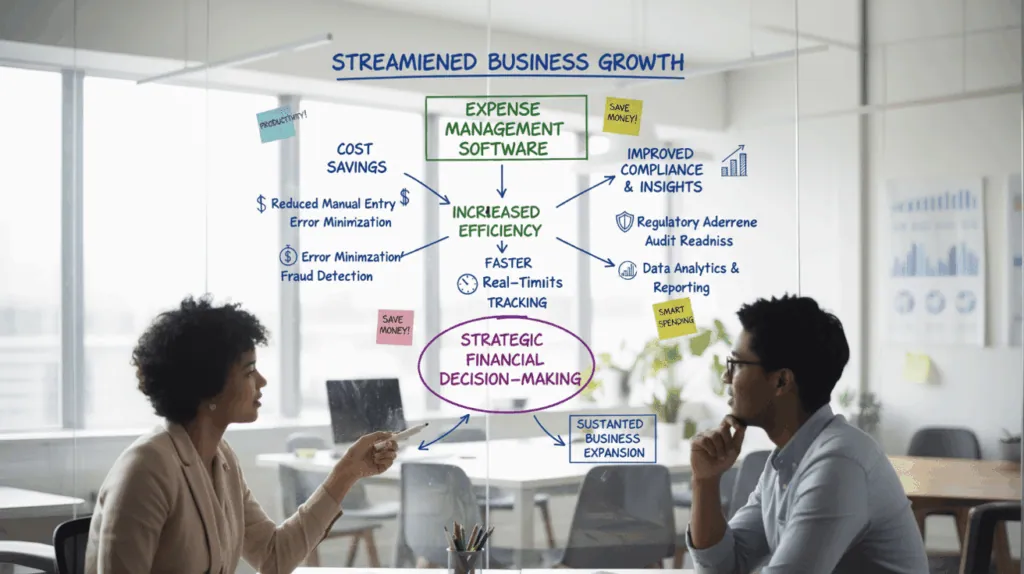
The benefits of expense management software extend far beyond automation. From saving time and reducing errors to improving compliance, scalability, and strategic insights, these tools have become indispensable for modern organizations. Companies that invest in smart solutions for expense management position themselves for stronger financial health, happier employees, and sustainable growth.
By adopting advanced systems, businesses move away from outdated, error-prone processes and embrace a future of clarity, efficiency, and control.
FAQs
The four the article opens with: receipts lost or submitted late, human error from manual entry into spreadsheets, no visibility into spending until after month-end, and long reimbursement cycles that frustrate employees.
The article reports companies saving dozens of hours per month, mainly because finance stops chasing receipts and re-keying data: submissions arrive by mobile, email or text, transactions match to receipts automatically, and reports generate instantly.
AI categorizes and codes transactions automatically, duplicate entries are flagged in real time, and reports are checked against company policy by default, so the errors that manual entry produces - typos in amounts, wrong categories, double counting - are caught before they reach the books.
Rules are configured in the platform rather than enforced by review: spending limits by department or role, restrictions on specific categories, and automatic flagging of violations. Enforcement becomes consistent instead of depending on who reviews the report.
Yes, and the article argues that is one of its most understated benefits. The same system handles ten employees or a thousand, absorbing new locations, vendors and volume without a proportional increase in finance headcount.