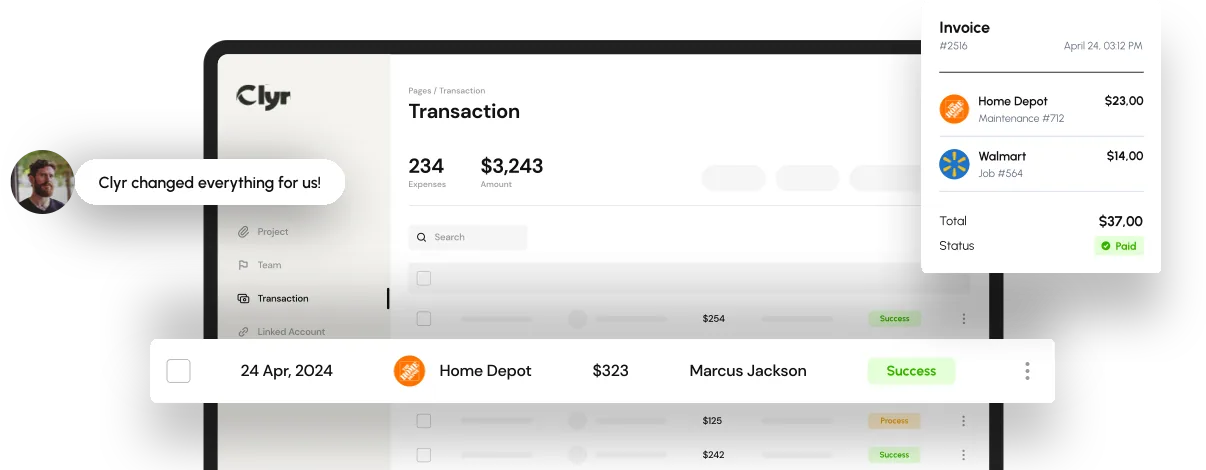

Managing expenses is one of the most important responsibilities of any business owner. Without clear financial records, small businesses face risks such as overspending, inaccurate tax filings, and reduced profitability. That’s why understanding how to track expenses for small business is essential - not only for compliance but also for long-term growth.
In this guide, we’ll explore the most effective ways to organize and track expenses, the role of automation, and how tools like Clyr can simplify the process for busy owners.
Why Tracking Expenses Matters for Small Business
Learning how to track expenses for small business isn’t just about recordkeeping. Accurate tracking directly impacts efficiency and decision-making.
- Tax compliance: Well-documented expenses ensure that deductions are maximized and reporting errors are avoided.
- Financial transparency: Real-time expense data helps small businesses understand cash flow and manage budgets effectively.
- Investor and lender confidence: Organized financial records build credibility with stakeholders.
- Operational control: Expense tracking prevents overspending and allows smarter allocation of resources.
The Core Steps: How to Track Expenses for Small Business
A structured system is crucial. Here are the most important steps in how to track expenses for small business:
1. Open a Dedicated Business Account
Separating personal and business finances ensures clarity and reduces errors.
2. Categorize Expenses Consistently
Group expenses under categories such as supplies, rent, utilities, travel, and payroll. Consistent categorization makes tax reporting simpler.
3. Capture Receipts Digitally
Use mobile apps or software to store receipts instantly. Automation prevents lost paperwork and ensures accuracy.
4. Automate Data Entry
Manual entry is time-consuming and error-prone. Automated tools scan receipts, match them with transactions, and code them into the right categories.
5. Reconcile Monthly
Review accounts regularly to ensure all expenses are captured correctly. Automated reminders make reconciliation easier.
6. Integrate Accounting Tools
Integration with platforms like QuickBooks or Xero ensures smooth financial reporting and eliminates duplicate data entry.

Expense Tracking Small Business: Why Automation Matters
Many owners ask if automation is really necessary. The truth is that modern expense tracking small business solutions provide advantages that manual methods can’t match.
With automation, small businesses can:
- Submit receipts via mobile, email, or SMS instantly.
- Categorize expenses automatically with AI-driven coding.
- Sync transactions across multiple accounts and credit cards.
- Generate real-time financial reports for better decision-making.
- Save hours of manual work each month.
For small businesses operating on tight margins and limited staff, automation is not just helpful - it’s a competitive advantage.

Real-World Example: Expense Tracking in Action
Imagine a small marketing agency with ten employees. Each month, staff travel to client meetings, pay for online tools, and manage advertising budgets. Before automation, the agency relied on spreadsheets and manual receipt collection, leading to frequent errors and delayed reimbursements.
After adopting an automated solution, expenses were captured in real time, categorized by project, and synced with the accounting platform. The result:
- 65% less time spent on bookkeeping.
- Near-zero error rates in expense reporting.
- Employees reimbursed within days instead of weeks.
This demonstrates why knowing how to track expenses for small business with automation is transformative.
Common Mistakes to Avoid in Tracking Expenses
- Mixing personal and business finances - Leads to messy books and missed deductions.
- Delaying expense entry - Waiting until tax season causes stress and errors.
- Ignoring small costs - Even minor expenses add up; automation ensures nothing is overlooked.
- Skipping backups - Relying only on paper receipts is risky. Digital storage provides long-term security.
Future of Expense Tracking for Small Business
The evolution of how to track expenses for small business will be shaped by technology. Expect innovations such as:
- AI and machine learning - Predicting spending patterns and flagging unusual activity.
- Blockchain records - Providing secure, transparent financial documentation.
- Mobile-first platforms -Allowing instant submissions from anywhere.
- Sustainability reporting - Helping businesses align expenses with ESG goals.

Expert Tips for Better Expense Tracking
- Standardize categories across all expense reports.
- Encourage mobile submissions for faster, on-the-go tracking.
- Review reports monthly to spot unusual spending patterns.
- Choose scalable software that can grow with your business needs.
Conclusion
Understanding how to track expenses for small business is critical to financial success. By combining structured processes with automation, owners gain not only accurate records but also real-time insights, reduced errors, and faster reimbursements.
With platforms like Clyr, small businesses can simplify expense tracking, improve compliance, and focus more on growth and strategy instead of paperwork. For modern entrepreneurs, automation isn’t optional - it’s the smarter way forward.
FAQs on How to Track Expenses for Small Business
It ensures compliance, maximizes deductions, and provides visibility into spending.
Yes, but manual systems are inefficient and prone to error. Automation saves time and improves accuracy.
Not necessarily - automation tools can track expenses by project within one account.
Digital storage through mobile apps or cloud-based tools is the most reliable method.
Absolutely. Many solutions, including Clyr, are designed with cost-effectiveness in mind.