Every small business owner eventually reaches a moment when they realize that “I think we’re okay” is not the same as actually knowing where the business stands financially. Sometimes it’s after a slow month, sometimes during tax season, sometimes when a new opportunity comes up and you’re not sure if you can afford it. Whatever the trigger, the question always becomes the same: How do I actually create a budget for my small business? And more importantly - how do I make it something I can stick to?
A budget isn’t a punishment and it isn’t a spreadsheet of restrictions. It’s simply a way to understand the rhythm of your business. It shows how money comes in, how it flows out, and what stays behind. When you understand that rhythm, decisions stop feeling like guesses.
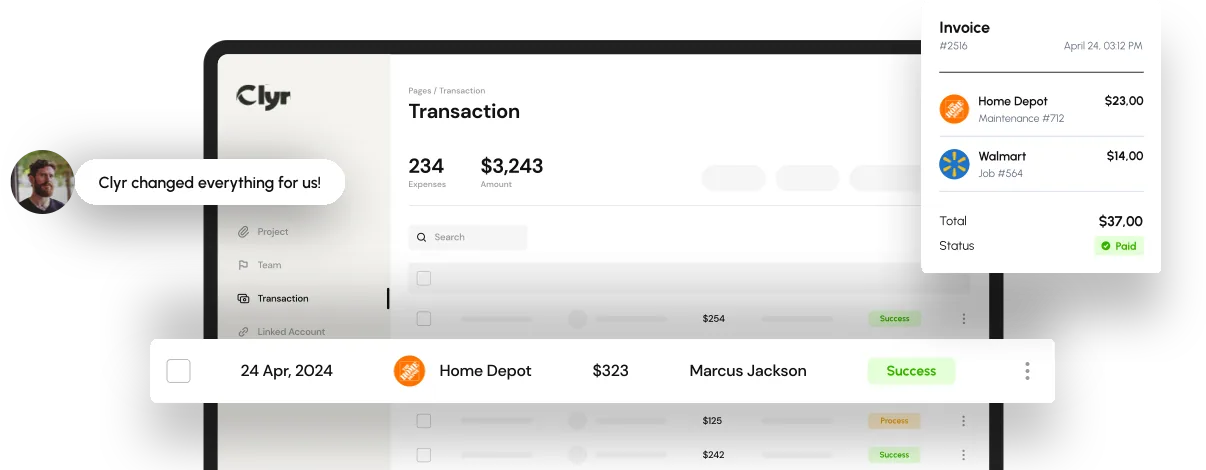
And this process gets dramatically easier when you’re not chasing receipts, guessing at totals, or struggling to remember what you spent last month. That’s where tools like Clyr naturally enter the picture - not as a sales pitch, but as part of a more modern way of running a business with clean, real-time numbers.
But first, the basics.
Key Takeaways
• A budget isn’t a strict financial document it’s a clearer way of seeing how your business behaves.
Once you understand what comes in, what goes out, and when it happens, decisions feel lighter and far less stressful.
• Your first budget won’t be perfect, and it doesn’t need to be.
Budgeting becomes accurate only when you revisit it month after month, adjusting it as your business grows.
• Revenue should be estimated with caution, but expenses should be tracked with honesty.
Businesses tend to remember their strong months and forget their true spending patterns. A realistic budget does the opposite.
• Profit shouldn’t be a surprise it should be planned.
Treating profit as a line in your budget changes the way you operate and gives you more stability long-term.
• Tools like Clyr don’t replace budgeting they make it clearer.
When your expenses are automatically organized, categorized, and visible in real time, creating a budget becomes far easier and more accurate.
• Cash flow matters just as much as revenue and expenses.
You can be profitable on paper and still feel constantly tight if money arrives too late or leaves too early.
The Real Starting Point: Get Comfortable Looking at the Numbers
A lot of business owners avoid budgeting because they’re quietly overwhelmed by the numbers. Not because they’re bad with money, but because the financial side feels like a different language.
The good news? You don’t need to learn a new language. You just need to gather the things you already have:
your bank statements, card transactions, supplier invoices, payroll, subscriptions - whatever touches your money. If you’re already using Clyr, that pile magically shrinks, because everything lives in one place, properly coded, instead of in your email or in a shoebox or scattered across accounts.
Once you have this snapshot, you can actually see your business, not guess about it. And from here, creating a budget becomes surprisingly natural.

Revenue: The Part Everyone Wants to Start With
When business owners think about budgeting, they usually jump straight to revenue. “We’ll make about X next month.” But revenue is the part you should treat with the most caution.
Think back over the last six months. They probably weren’t all identical. Most small businesses have good months, slow months, noisy months, quiet ones. So instead of taking your best month and building your budget around it, look for your average and lean slightly conservative.
This isn’t pessimism. It’s stability.
It’s the difference between sleeping well and hoping for the best.
Clyr won’t predict your revenue, but it does help you understand what patterns your spending follows - something every revenue prediction needs to take into account.
Expenses: The Part Nobody Wants to Look At
It’s strange how easy it is to forget how much we spend. Especially in small businesses where charges happen everywhere software renewals, vendor bills, small purchases, emergency fixes, subscriptions you forgot existed, new supplies because the old ones ran out.
This is exactly where business owners get the biggest shock when they first learn how to create a budget for their small business:
expense reality is always bigger than expense memory.
This is where Clyr actually shines in the background. When every transaction, every card, every employee purchase and every receipt is captured and categorized automatically, the “mystery expenses” disappear. Suddenly you’re budgeting with real numbers instead of guesses.
Because once you see your expenses clearly, the entire budgeting process becomes easier. You can’t control what you don’t see.
One Helpful Table - and Only One
This is the single table that helps bring clarity without turning the article into a math class:
| What You Track | Why It Matters |
| Revenue | Helps you understand your earning potential month by month |
| Fixed Costs | Tells you your baseline - the amount that leaves your account no matter what |
| Variable Costs | Reveals the expenses that rise and fall with your workload |
| Profit Goals | Turns profit into a priority, not an afterthought |
| Cash Flow Timing | Shows the difference between earning money and actually having money |
Everything else can be written in normal sentences. You don’t need a table every two paragraphs.
Profit Isn’t a Surprise. It Should Be a Line in Your Plan.
Too many small business owners treat profit as the bonus that appears if everything goes right. But sustainable businesses don’t survive on luck; they survive on intention.
A real budget doesn’t ask, “What’s left at the end of the month?”
It asks, “How much do we want left at the end of the month - and what needs to happen for that to become reality?”
This is where having real-time spending data is a secret weapon. If you’re using Clyr, you don’t wait until the end of the month to see if you overspent; you see it as it happens. That alone makes hitting your profit target more realistic.
Cash Flow: The Silent Trouble-Maker
Cash flow is the part of budgeting most people understand only after it burns them. A business can be profitable on paper and still constantly feel broke because the timing of money is off.
Clients pay late.
Bills don’t wait.
Taxes show up when they feel like it.
This is where learning how to create a budget for a small business becomes more than just math. It’s about understanding your cycle: when money actually arrives, when it leaves, and where the tight spots are.
Again, a tool like Clyr doesn’t “fix” cash flow, but it does show you exactly how fast money leaves your business and where. And when you have that clarity, you can plan around it instead of getting blindsided.
Putting the Budget Together
Once you have your revenue estimates, your expenses, your cash flow cycles, and your profit goals, building the budget is simply organizing what you already learned.
It looks something like this:
- “We usually make around X.”
- “Every month, Y goes out no matter what.”
- “Z is what fluctuates.”
- “This is how much we save for taxes.”
- “This is how much we want left over.”
There’s no magic formula. Just awareness + intention.
Where Clyr quietly helps is with the accuracy of the numbers. When your expenses are properly categorized and matched to transactions automatically, your budget becomes a reflection of your reality, not a rough sketch of what you think happened.
The Only Part That Really Requires Discipline: Monthly Check-Ins
A budget isn’t something you create and abandon. The whole point is watching how your business behaves over time.
A monthly check-in is all you need:
- Look at what you brought in.
- Look at what you spent.
- Compare it to what you planned.
- Adjust next month’s numbers.
- Fix what didn’t work.
- Repeat.
If you track expenses manually, this takes time.
If you use Clyr, half the work is done before you sit down.
The hardest part of budgeting is not making the budget - it’s keeping it alive.
The Mistakes Almost Everyone Makes
If there’s one universal budgeting pattern in small businesses, it’s this: the mistakes are predictable.
Most owners:
- underestimate expenses,
- overestimate revenue,
- forget small recurring charges,
- don’t plan for taxes,
- and forget that profit needs intentional space.
You’re not alone if you’ve done any of these. Every business does at some point. The goal is simply to get better and clarity is the first step.
Tools Can Help, But Habits Matter More
A spreadsheet can work. Accounting software can work. Writing numbers in a notebook can work. But using a platform like Clyr that automatically organizes every expense and gives you a clean picture of your spending? That makes budgeting easier, faster, and more accurate.
Tools don’t replace the budget.
They make the budget clearer.
And clarity is the whole point.
The Future of Small Business Budgeting
Budgeting is slowly shifting away from paperwork and manual tracking. More businesses are turning to automation not because it’s trendy, but because it removes friction. Platforms like Clyr are part of that shift: they reduce errors, track spending instantly, and provide real-time financial visibility that used to require an entire finance team.
Budgeting is becoming less about guesswork and more about insight. Less about creating documents and more about understanding your business as it moves.
Final Thought
Learning how to create a budget for a small business isn’t about mastering spreadsheets or memorizing financial formulas. It’s about understanding your own business more deeply how it earns, how it spends, and how it grows.
If you approach budgeting like a conversation with your business instead of a chore, it becomes something you actually want to do. And when tools like Clyr quietly support you behind the scenes, the entire process becomes lighter, clearer, and far more reliable.
FAQ
Start with whatever numbers you do have. Bank statements, card charges, invoices anything that reflects money moving in and out. Don’t worry if it’s imperfect. A budget is built from clarity, not perfection. And if you’re using a tool like Clyr, your expenses are already organized for you, which makes starting much less overwhelming.
Overestimating revenue and underestimating expenses. Businesses tend to remember their good months and forget the slow ones, or they track the big costs but overlook the dozens of small recurring ones. A realistic budget leans slightly conservative on revenue and fully honest on expenses.
Once a month is ideal. You want a rhythm something predictable. A 10 -15 minute check-in where you compare what you planned with what actually happened. If you use Clyr, a lot of the hard work is already done because the expenses are categorized and ready for review.
Absolutely. Profit shouldn’t be a surprise; it should be planned. When you treat profit as intentional not optional your business becomes more stable. A simple monthly target is enough to shift your entire financial strategy.
Use averages. Look at the last three to six months and find the real pattern. Most businesses have a “normal” level of income even if it fluctuates week to week. Budget from that baseline, not from your best-ever month. This gives your budget room to breathe.
The key is visibility. Overspending usually happens when expenses go unnoticed. Once you see them clearly, in one place they’re much easier to manage. Many businesses use Clyr for this exact reason: it shows spending in real time instead of at the end of the month, when it’s too late to adjust.
Not at all. You can create a perfectly good budget with a notebook or spreadsheet. Software simply makes it smoother. If your business has employees making purchases, multiple cards, or project-based costs, software like Clyr reduces the chaos by capturing everything automatically.
Budgeting tells you how much you expect to earn and spend.
Cash-flow planning tells you when the money actually moves.
You can be profitable and still have cash-flow issues if payments arrive too late or bills pile up at once. Tracking expenses in real time something Clyr handles well gives you a much clearer sense of how your cash moves.
It won’t. And that’s normal. Budgets get better by revisiting them. The first version is simply a starting point. Think of budgeting like building a muscle: the more you check in each month, the stronger it gets.