
In an age when business transactions occur across borders, devices, and currencies, expense management software has become an indispensable part of financial operations. What once required endless spreadsheets and manual approvals can now be handled in real-time with automation, artificial intelligence, and deep system integrations. But what truly defines great expense management software? Beyond basic expense logging, modern systems empower organizations with data-driven insights, control, and scalability.
This article explores the key features of expense management software, how they drive financial efficiency, and why they’ve become a cornerstone of modern business management.
The Evolution of Expense Management
Traditional expense tracking relied on manual entry, paper receipts, and reactive reporting. This approach was not only slow but also prone to errors and compliance issues. As businesses grew and transactions multiplied, finance teams needed tools that could automate repetitive tasks and provide real-time visibility.
Modern expense management software evolved to meet these needs. Today’s systems are cloud-based, AI-powered, and integrated with accounting and ERP tools-capable of managing everything from travel expenses to vendor invoices and employee reimbursements.
At its core, effective expense management software serves three major purposes:
- Automation - replacing manual processes with intelligent workflows.
- Visibility - providing real-time access to financial data and analytics.
- Control - ensuring compliance with company policies and budget limits.
1. Automated Receipt Capture and Data Entry
One of the most transformative features of modern expense software is automated receipt capture. Gone are the days of stapling receipts to reports or manually entering transaction details.
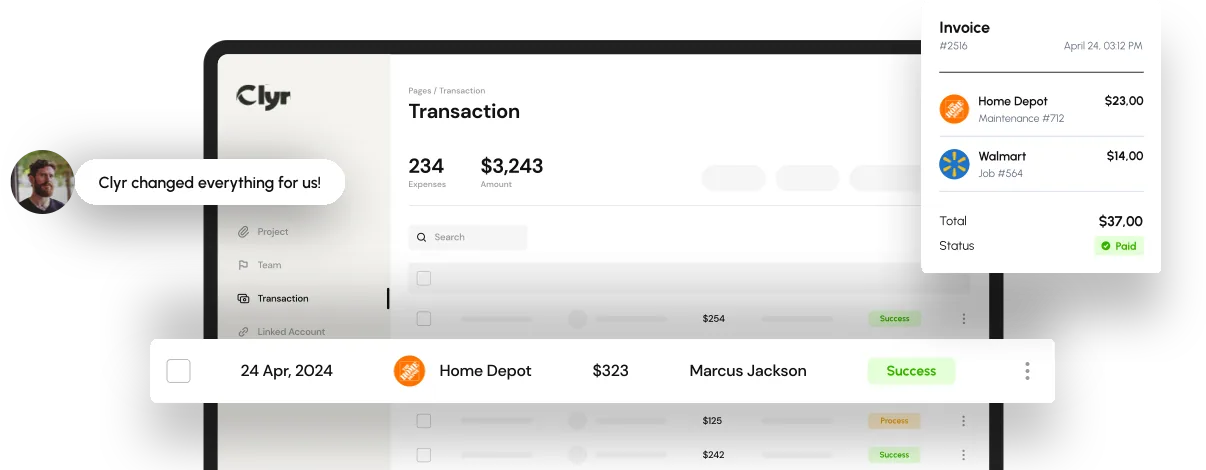
With technologies like Optical Character Recognition (OCR) and AI-based parsing, the software can extract essential information from a receipt-date, merchant, amount, and category-within seconds. Some platforms, such as Clyr, even allow employees to submit receipts via SMS or email, which are instantly matched to transactions in real-time.
Key Benefits:
- Eliminates manual entry errors.
- Accelerates reconciliation and reporting.
- Provides a digital audit trail for compliance.
Automation at this level saves finance teams hours each month and ensures that no expense slips through the cracks.
2. Real-Time Expense Tracking and Notifications
Visibility into company spending is critical for maintaining financial discipline. Expense management software enables real-time tracking, providing instant updates whenever an expense occurs.
For example, when an employee swipes a corporate card, the software immediately logs the transaction, notifies the employee to attach a receipt, and alerts managers if the amount exceeds policy limits.
This instant feedback loop offers transparency across departments and helps decision-makers control costs before they spiral. Tools like Clyr’s real-time transaction notifications give organizations a proactive rather than reactive approach to financial management.

3. AI-Powered Categorization and Coding
Artificial intelligence has elevated expense tracking from simple automation to smart financial management. AI engines can learn from previous coding patterns and automatically assign the right categories, cost centers, or job codes to each transaction.
In platforms such as Clyr, this accuracy reaches up to 95%, dramatically reducing the time finance teams spend reviewing and correcting entries. The software learns over time, improving precision and aligning expenses with company policies and tax reporting structures.
Example:
A construction company might have hundreds of receipts per project. Instead of manually sorting them, AI automatically codes each receipt under the correct project, vendor, and department-ensuring flawless reporting and simplifying job costing.
4. Integration with Accounting, ERP, and CRM Systems
A standout feature that defines effective expense management software is its ability to integrate seamlessly with existing business systems. The best solutions connect two ways with accounting platforms (like QuickBooks or Xero), ERP systems (like SAP, NetSuite, or Sage), and even CRM tools.
This means expenses recorded in the software automatically appear in the accounting system-no double entry, no import/export cycles. Clyr, for instance, offers two-way integration with over 50 platforms, syncing data instantly and maintaining consistency across financial operations.
Advantages of Integration:
- Eliminates manual data transfer and reconciliation.
- Enhances financial accuracy and reporting speed.
- Allows unified visibility across departments.
For businesses with multiple teams or subsidiaries, such integrations ensure that financial data remains centralized and error-free.
5. Employee Reimbursements and Approval Workflows
Employee reimbursements are one of the most time-consuming parts of financial operations. Expense management software simplifies this through automated reimbursement workflows that handle submission, validation, approval, and payout in a single flow.
Finance managers can set custom rules based on spending thresholds, departments, or roles. Approvals are routed automatically to the right manager, and employees can track reimbursement status in real-time.
Clyr’s rule-based engine, for instance, enables automated routing and ensures that reimbursements are processed promptly-often reducing approval times from days to hours.
Key Benefits:
- Faster reimbursement cycles.
- Transparent approval tracking.
- Improved employee satisfaction and trust.
6. Multi-Card and Multi-Account Compatibility
A common pain point in finance is managing multiple company cards or bank accounts. Leading platforms now provide universal card compatibility, allowing users to continue using existing credit, debit, or corporate cards while tracking all expenses within one interface.
This flexibility eliminates the need to switch providers or rely on proprietary cards. Whether it’s an AMEX corporate card, Visa, or Mastercard, the transactions flow directly into the system, maintaining consistency and real-time updates.
For instance, Clyr supports all cards and banks, making it ideal for organizations with diverse financial setups or international operations.
7. Accounts Payable (AP) Automation
Expense management isn’t limited to employee reimbursements-it also includes vendor payments, bills, and invoices. Advanced systems include Accounts Payable automation, handling the entire process from invoice capture to payment execution.
Features typically include:
- Invoice scanning and data extraction.
- Automated approval workflows.
- Payment scheduling via ACH, checks, or virtual cards.
- Real-time tracking of outstanding payables.
By automating AP, companies reduce manual workload, prevent duplicate payments, and maintain healthy supplier relationships through timely settlements. Clyr’s AP automation integrates directly with ERP systems, ensuring seamless reconciliation and visibility.
8. Custom Reporting and Analytics
Data is at the heart of effective financial control. Expense management software provides customizable reporting tools that allow companies to analyze spending patterns, identify inefficiencies, and forecast future budgets.
Typical reports include:
- Expense summaries by category, department, or project.
- Budget vs. actual spend analysis.
- Reimbursement cycle times.
- Vendor and card utilization trends.
Platforms like Clyr go further with AI-powered analytics, identifying potential cost-saving opportunities and providing actionable insights into team or project profitability. These data-driven reports transform expense management from a reactive function to a strategic advantage.
9. Job Costing and Budget Management
For industries like construction, manufacturing, and event production, job costing is an essential feature. Expense management software allows finance teams to assign costs to specific jobs, clients, or projects-giving an accurate view of profitability and budget adherence.
Real-time visibility into cost vs. budget ensures project managers can make timely adjustments and avoid overspending. Clyr’s AI-driven job costing system even categorizes expenses automatically, alerting teams when budgets are close to limits.
This functionality is critical for maintaining margin control and aligning expenses with business goals.
10. Compliance, Security, and Audit Trails
Handling financial data demands robust compliance and security protocols. Top expense management systems ensure data protection through:
- End-to-end encryption.
- Role-based access control.
- Detailed audit trails for every transaction.
- GDPR and SOC 2 compliance.
An embedded audit trail provides transparency for every stage of the expense process-submission, approval, and payment-making it easy to validate expenses during audits or regulatory reviews.
Common Mistakes When Choosing Expense Software
Despite the benefits, businesses often stumble during implementation. Some of the most common mistakes include:
- Choosing Based on Price Alone: Low-cost options often lack integration or scalability.
- Ignoring Employee Experience: If submission processes are cumbersome, adoption rates drop.
- Overlooking Integration Capabilities: Disconnected systems create silos and manual reconciliation.
- Underutilizing Automation: Many companies fail to activate advanced AI and rule-based features that could save hours weekly.
To maximize return on investment, organizations should prioritize systems that align with their existing workflows, integrate smoothly with accounting software, and scale with company growth.
Future Trends in Expense Management
The next generation of expense management software is leaning heavily on predictive intelligence and embedded finance. Expect to see:
- Predictive budget forecasting powered by machine learning.
- Voice or chat-based reporting through AI assistants.
- Automatic anomaly detection for fraud prevention.
- Full integration with digital payment ecosystems, enabling one-click reimbursements or supplier payouts.
These advancements will further reduce manual oversight, offering finance teams a 360° view of company spend while maintaining complete control and accuracy.
Expert Insight: Building Financial Confidence with Clyr
Among the leading solutions available, Clyr distinguishes itself by combining AI-powered automation, flexibility, and deep integration. Its ability to automatically capture, code, and reconcile transactions-while supporting any bank or card-makes it a powerful ally for companies of any size.
Clyr doesn’t just track expenses; it transforms financial management into an intelligent, effortless process that saves time, improves accuracy, and strengthens overall profitability.
Why Advanced Expense Management Features Matter
The features of expense management software go far beyond data entry. They automate workflows, provide instant insights, ensure compliance, and integrate seamlessly with existing financial systems. For organizations striving to operate with precision and agility, adopting a platform rich in these capabilities-like Clyr’s AI-driven expense management solution-isn’t just a smart move; it’s a strategic necessity for sustained financial efficiency and control.
FAQs
Automated receipt capture with OCR, real-time tracking and notifications, AI categorization and coding, two-way integration with accounting and ERP systems, reimbursement and approval workflows, multi-card and multi-account support, accounts payable automation, custom reporting, job costing, and audit trails.
The engine learns from previous coding patterns and assigns each transaction to the correct category, cost center or job code without human input, improving as it processes more data. The article reports accuracy reaching 95%, which removes most of the review and correction work from the finance team.
Not when the platform offers universal card compatibility. Existing credit, debit or corporate cards from any issuer feed transactions into the same interface, so there is no need to change providers or adopt a proprietary card programme.
Four recur: buying on price alone and losing integration or scalability, ignoring the employee submission experience so adoption drops, overlooking integration capability and creating data silos, and never switching on the AI and rule-based automation already included.
End-to-end encryption, role-based access control, a detailed audit trail for every transaction, and GDPR and SOC 2 compliance, so that submission, approval and payment can each be validated during an audit or regulatory review.