
Managing expenses effectively is one of the most critical aspects of running a successful construction business. The construction industry, with its complex projects, tight budgets, and varying costs, requires a systematic approach to keep everything on track. From managing labor costs to controlling material expenses, every dollar spent can impact profitability. In this article, we will cover the best expense management tips for the construction industry, offering strategies that help contractors, project managers, and construction business owners stay within budget, streamline processes, and boost their financial efficiency. That’s where expense management for construction comes into play.
1. Embrace Automation for Expense Tracking
One of the best expense management tips is to automate expense tracking using modern software solutions. For companies looking specifically at expense management for construction, automation ensures accuracy even when multiple teams and job sites are involved.
Automated systems allow for:
- Instant receipt capture: Construction workers on-site can take a picture of receipts and automatically upload them to the system, minimizing delays.
- Real-time expense categorization: With AI-driven software, transactions are automatically matched to the right job or project, saving valuable time and reducing the risk of mistakes.
- Reduced administrative overhead: By automating the tracking and approval process, your finance team can spend less time on manual tasks and focus on more strategic work.
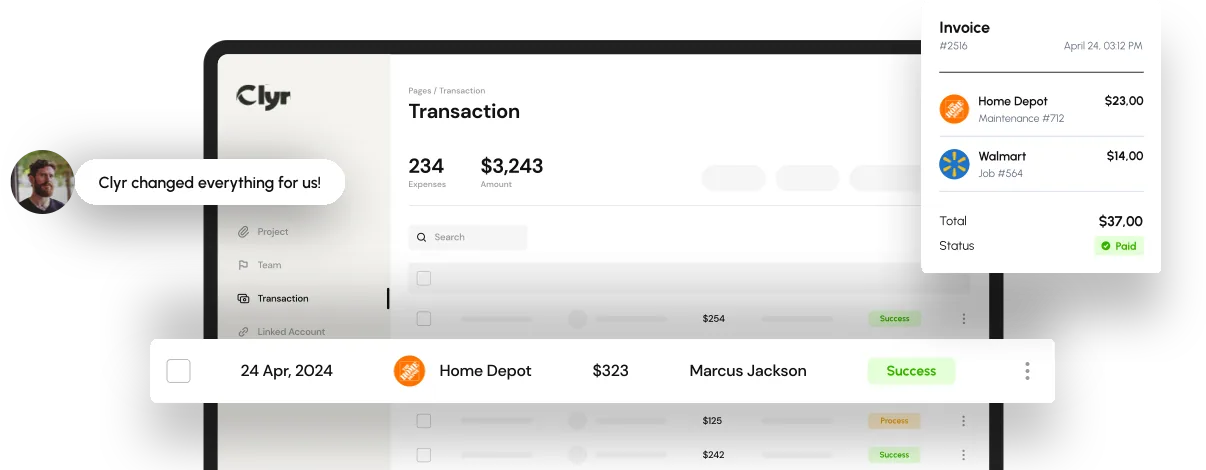
For example, platforms like Clyr offer cloud-based solutions where all receipts and transactions are captured and categorized automatically, ensuring greater accuracy and faster reporting.
2. Use Job Costing to Track Project Expenses
One of the most effective ways to manage construction costs is through job costing. Each construction project has its own unique set of costs materials, labor, equipment, and subcontractor fees - making it essential to track each expense accurately and on a per-project basis.
Job costing software allows you to:
- Track expenses for each job: You can allocate costs to specific projects and compare the actual spend to the planned budget.
- Avoid cost overruns: Real-time tracking gives you visibility into how much money has been spent at any given point, making it easier to adjust course if needed.
- Ensure profitability: By accurately tracking the expenses for each project, you can make data-driven decisions that improve project profitability.
Using a job costing system integrated with your accounting software ensures that project expenses are recorded and categorized correctly, reducing the likelihood of discrepancies.
3. Set Clear Policies for Employee Expenses
In construction, employees often incur expenses for things like tools, travel, or project-related materials. To avoid confusion and ensure that all employee expenses are appropriate and manageable, it’s essential to have clear expense policies in place. These policies should outline:
- What types of expenses are reimbursable: Clearly define which expenses employees can claim for reimbursement.
- Submission guidelines: Specify how and when employees should submit receipts, along with any necessary approval processes.
- Spending limits: For instance, set caps on how much can be spent on lodging or meals, especially for workers traveling to job sites.
Implementing a structured expense submission process helps reduce fraudulent claims and keeps employee reimbursements in line with company budgets. For businesses aiming to improve expense management for construction, clear employee policies are a must.

4. Leverage Mobile Expense Management Solutions
Construction work is dynamic, with teams often on-site or at remote locations. Managing expenses in real time while out in the field is a challenge, but with mobile expense management solutions, it becomes much easier.
These solutions enable:
- On-the-go receipt capture: Employees can snap photos of receipts and submit them via mobile apps, immediately logging expenses into the system.
- Instant transaction updates: As expenses occur, they are updated in real time, ensuring that the financial team always has an up-to-date view of the project’s budget.
Automatic reminders: Mobile apps can send notifications to employees reminding them to submit receipts or to fill out any missing information, ensuring that nothing falls through the cracks.
5. Streamline Vendor and Subcontractor Payments
Vendor and subcontractor expenses can make up a significant portion of a construction project’s budget. Delayed payments can harm relationships and potentially delay project timelines. That’s why streamlining vendor payments is crucial for expense management in the construction industry.
Implementing a vendor payment automation system provides:
- Timely payments: Vendors and subcontractors are paid on time, reducing the risk of late fees and strained relationships.
- Clear financial visibility: Track all invoices, ensure that payments match the agreed-upon terms, and reconcile payments efficiently.
- Consistency: Ensure consistent payments by setting up recurring payments or payment schedules for ongoing services or material supplies.
This level of organization not only helps build stronger relationships with suppliers but also ensures that the project stays on track financially.
6. Use Expense Reporting and Analytics for Better Financial Insights
To make informed decisions, construction businesses need access to accurate, actionable financial data. Expense reporting tools provide detailed insights into spending patterns, enabling managers to make more informed decisions. By regularly analyzing expense reports, construction businesses can:
- Identify cost-saving opportunities: Spot trends where spending may be out of control, such as excessive material costs or labor inefficiencies.
- Improve forecasting: With detailed expense data, companies can more accurately forecast future project budgets, helping to avoid unforeseen financial challenges.
- Measure profitability: Reports comparing actual versus projected costs can highlight which projects are most profitable and where improvements are needed.
Analytics tools allow construction businesses to track expenses over time, comparing them across different projects, contractors, or phases. This data-driven approach elevates expense management for construction by showing exactly where costs can be reduced.
7. Integrate Expense Management with Other Systems
Finally, integrating your expense management system with other business tools is crucial for maximizing efficiency. Many construction companies already use project management, accounting, and ERP systems to manage different aspects of their business. By integrating these systems with your expense management software, you can:
- Sync financial data: Ensure that expenses automatically flow into your accounting system, reducing the need for manual data entry and minimizing errors.
- Improve collaboration: Finance, project management, and operations teams can work with the same data, ensuring everyone is on the same page regarding project budgets and costs.
- Enhance workflow efficiency: Integration reduces the chances of errors and delays, allowing you to stay on top of your financial data.
Many modern expense management platforms offer built-in integration capabilities with popular project management and accounting software, making it easier than ever to connect the dots across your business
Final Thoughts
Effectively managing expenses in the construction industry requires a combination of automation, real-time tracking, and strategic oversight. With better financial visibility, streamlined processes, and integrated systems, construction businesses can enhance profitability and efficiency. In short, expense management for construction is not just about controlling costs - it’s about ensuring long-term business success.
FAQs Around Expense Management for Construction
Construction costs that can be expensed include labor, materials, equipment rentals, and subcontractor fees. Soft costs like permits, project management fees, and temporary site facilities may also qualify. Properly tracking these ensures accurate budgets and stronger expense management for construction.
The main rule of expense management is that every cost must be necessary, documented, and approved. Clear policies define what expenses are reimbursable and set spending limits. In construction, this prevents budget leaks and improves compliance across projects.
Construction expenses are typically divided into direct costs like labor, materials, and subcontractors, and indirect costs such as insurance or permits. Additional categories may include travel, site utilities, or safety gear. Proper categorization improves visibility, audits, and long-term financial control.
An example of expense management in construction is tracking employee purchases through an automated system. A site manager uploads a receipt, which is instantly categorized and checked against budget limits. This saves time, reduces errors, and ensures compliance with company policy.
Managing costs in construction starts with setting accurate budgets and using job costing for each project. Automation tools help track expenses in real time and streamline approvals. Regular reviews and vendor negotiations further reduce overspending and protect profit margins.