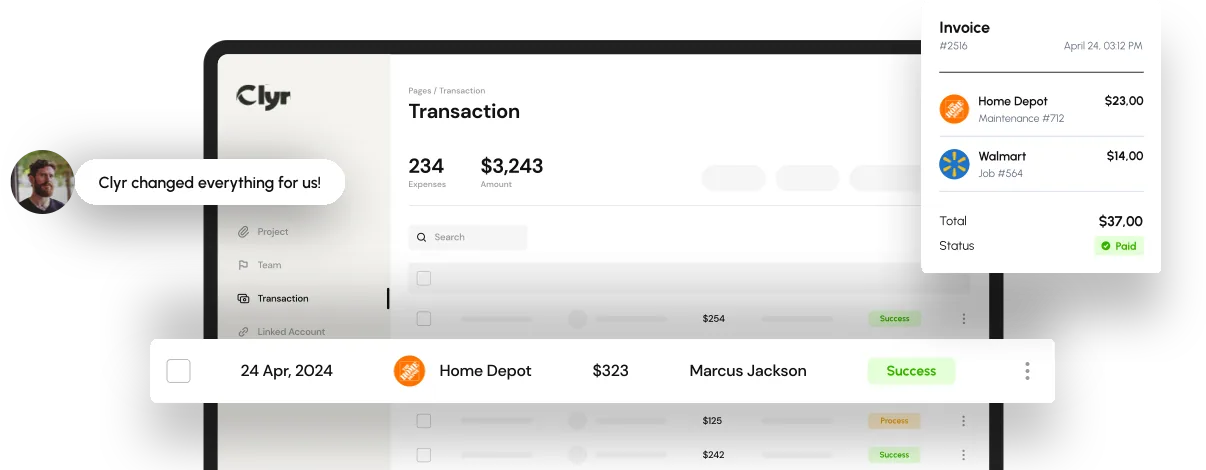

Managing business expenses has always been a balancing act between accuracy, accountability, and efficiency. Whether it’s tracking daily transactions, processing reimbursements, or analyzing budgets, finance teams often face mountains of receipts and manual data entry. A business expense tracker eliminates that chaos - turning disorganized spreadsheets into a streamlined, automated system that provides instant visibility and control over company spending.
What Is a Business Expense Tracker?
A business expense tracker is a digital tool that records, categorizes, and analyzes every business-related transaction in one centralized system. It automates the process of collecting receipts, matching them to transactions, and generating reports - replacing manual spreadsheets and paperwork with intelligent, real-time tracking.
Modern trackers, such as AI-powered platforms like Clyr, go far beyond simple record-keeping. They integrate with bank feeds, credit cards, and accounting systems to provide a continuous, accurate flow of financial data. This means finance teams always know where money is going, who’s spending it, and whether it aligns with company policies.
Why Businesses Need an Expense Tracker
1. Reduce Manual Work and Errors
Manually entering data from receipts is time-consuming and prone to mistakes. An expense tracker automates data capture using OCR (Optical Character Recognition) to extract details such as date, vendor, and amount, ensuring that every transaction is accurately logged without duplication or omission.
2. Improve Financial Visibility
Tracking expenses in real time allows managers to see exactly where company funds are going. Instead of waiting until month-end reports, finance leaders can monitor spending trends daily and take immediate corrective action if budgets are exceeded.
3. Ensure Compliance and Accountability
Expense policies are easier to enforce when every transaction is automatically recorded and categorized. A robust expense tracker flags out-of-policy purchases, duplicates, or suspicious claims - reducing fraud and ensuring compliance with company guidelines.
4. Speed Up Approvals and Reimbursements
With a digital system, employees can submit receipts instantly via mobile app, SMS, or email. Approvals can be automated based on pre-set rules, dramatically reducing turnaround time for reimbursements and improving employee satisfaction.
5. Enable Strategic Decision-Making
Expense data isn’t just about record-keeping; it’s a goldmine of insights. With a business expense tracker, companies can identify inefficiencies, monitor cost trends, and plan smarter budgets backed by accurate data.

Key Features to Look For in a Business Expense Tracker
1. Automated Receipt Capture
The most valuable feature of any tracker is its ability to automatically capture and read receipt data. Employees simply snap a photo, and the software extracts and codes the information in seconds.
2. Real-Time Transaction Matching
Smart trackers instantly match receipts to credit card transactions and categorize them under the correct project, department, or client. This ensures your books stay accurate and audit-ready.
3. Multi-Card and Multi-Account Support
Businesses often use several cards and accounts. A quality expense tracker syncs all financial sources - AMEX, Visa, Mastercard, or even local bank accounts - into one unified dashboard.
4. Customizable Approval Flows
Different teams require different approval hierarchies. Look for platforms that allow you to design custom workflows for reimbursement requests and ensure compliance at every step.
5. Integration with Accounting Systems
A business expense tracker should integrate with popular accounting tools like QuickBooks, Xero, NetSuite, or SAP to avoid double data entry and maintain financial consistency.
6. Mobile Accessibility
For businesses with remote or field teams, mobile functionality is essential. Employees should be able to capture receipts, categorize expenses, and view approvals from anywhere.
7. Advanced Reporting and Analytics
Beyond tracking, the best systems provide dashboards with spend analysis, category breakdowns, and budget comparison - enabling data-driven financial decisions.
Benefits of Using a Business Expense Tracker
1. Time Savings
Automating manual processes reduces time spent on administrative tasks. Finance teams can close books faster, managers approve expenses instantly, and employees focus on productive work.
2. Accuracy and Transparency
Real-time tracking eliminates human error, ensures transactions are properly categorized, and maintains clear audit trails for every financial activity.
3. Cost Reduction
Expense tracking software can reveal hidden inefficiencies - such as redundant subscriptions, duplicate vendor payments, or policy violations - helping companies save significantly.
4. Employee Empowerment
A transparent and easy-to-use system fosters trust. Employees appreciate quick reimbursements, clear communication, and a simple submission process that respects their time.
5. Smarter Budgeting
When expense data is accurate and accessible, forecasting becomes simpler. Businesses can plan budgets confidently and align spending with long-term financial goals.
Common Mistakes Businesses Make When Tracking Expenses
- Relying on Spreadsheets Too Long:
Spreadsheets are excellent for small businesses but quickly become error-prone as transactions scale. They lack real-time accuracy and collaboration capabilities. - Ignoring Integration Needs:
A tracker that doesn’t integrate with your accounting or banking systems creates data silos and double work. - Not Setting Expense Policies Early:
Without clear policies, even the best tool will struggle to enforce compliance or prevent misuse. - Underestimating Employee Training:
Adoption rates drop if users don’t understand how to use the system effectively. Training ensures smoother onboarding and long-term success. - Skipping Regular Audits:
Even automated systems need oversight. Regular reviews keep your financial data clean and policy-aligned.
How AI Enhances Business Expense Tracking
AI-driven expense trackers like Clyr take automation to the next level by learning from company behavior and adapting to new patterns. Here’s how:
- Intelligent Categorization: Learns from past expense data to predict and auto-code new transactions accurately.
- Anomaly Detection: Flags irregular spending or potential fraud using machine learning algorithms.
- Predictive Insights: Forecasts future expenses, helping CFOs plan budgets proactively.
- Automated Reminders: Sends notifications to employees with missing receipts or incomplete submissions, reducing back-and-forth communication.
- Continuous Learning: Improves accuracy over time as it processes more data, reducing human intervention even further.
By combining AI with automation, platforms like Clyr transform expense tracking from a clerical task into a strategic financial function.
Future Trends in Expense Tracking
1. Predictive Spend Analysis
Expense tracking will evolve to predict financial outcomes. Systems will alert businesses about budget overruns before they occur.
2. Unified Spend Management
Future solutions will integrate expense tracking, accounts payable, and procurement into a single financial ecosystem for full visibility.
3. Voice and Chat Interfaces
Employees will soon be able to submit and approve expenses through conversational tools like Slack or voice assistants.
4. Deeper Data Integration
AI will connect expense data with business performance metrics, linking spending habits directly to profitability.
Expert Tips for Implementing a Business Expense Tracker
- Start with Clear Goals: Define what you want to achieve-time savings, compliance, or deeper insights.
- Involve All Stakeholders: Finance, HR, and department heads should collaborate to set policies and workflows.
- Choose Scalable Software: Pick a solution that can handle future growth, multi-currency transactions, and global teams.
- Customize Approval Rules: Adapt automation to your business structure, not the other way around.
- Measure ROI Continuously: Track metrics such as processing time saved, compliance rate, and error reduction to assess the system’s impact.
The Bottom Line
A business expense tracker isn’t just a convenience-it’s a financial necessity in the era of digital transformation. It replaces guesswork with precision, delays with automation, and fragmented data with unified insight. For businesses managing multiple cards, teams, and vendors, the right system turns expense management into a strategic advantage.
Platforms like Clyr lead this evolution, combining automation, AI, and seamless integrations to simplify every step of the expense lifecycle-from receipt to reconciliation. The result: faster reporting, fewer errors, and smarter financial control.
FAQs
A digital tool that records, categorizes and analyzes every business-related transaction, replacing spreadsheets and paper receipts with one system that keeps card spend, reimbursements and approvals in a single place.
Automated receipt capture, real-time matching of receipts to card transactions, multi-card and multi-account support, customizable approval flows, integration with the accounting system, mobile access for field staff, and reporting with spend analysis.
Staying on spreadsheets past the point they scale, ignoring integration and creating data silos, leaving expense policies until after rollout, underestimating employee training, and skipping regular audits because the system is automated.
It learns from past coding to categorize new transactions, flags irregular spending that may indicate fraud, forecasts upcoming expenses for budgeting, chases missing receipts automatically, and grows more accurate the more data it processes.
Clear goals such as time saved or compliance rate, stakeholders from finance, HR and department heads, software that can scale to multi-currency and global teams, approval rules shaped around the business, and continuous ROI measurement.